Blog4/1/2026
Vertical Wall Shelving for Indoor Cats: Safe, Engaging Spaces
6 mins Read
The Briefing
Quick takeaways for the curious
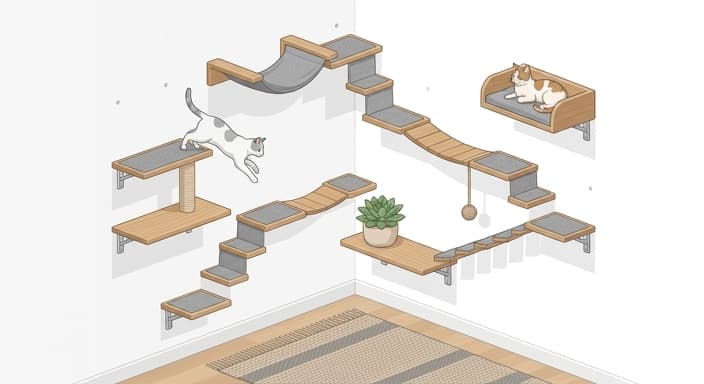
Vertical wall shelving provides feline vertical enrichment addressing natural arboreal instincts and helps cats feel secure at height.
Creating multi-level routes enables resource layering in multi-cat households and reduces direct confrontations and stress.
A cat-centric home audit ensures shelves are safe, accessible, and navigable for cats of varying mobility, including seniors.
Shelving design must consider dynamic load and use sturdy hardware anchored to studs to prevent wobble and accidents.
Prioritizing vertical enrichment and safe flow can mitigate environmental boredom and related health issues like anxiety, obesity-related lethargy, and cystitis.
There is a persistent, outdated myth in the interior design world that a cat’s environment should be confined to the floor, leaving many pet owners to assume that a standard cat tree and a few toys are sufficient to address the complex behavioral needs of an indoor feline. As a veterinarian consultant, I frequently consult with devoted cat parents who are surprised to learn that behavioral issues—such as chronic anxiety, inter-cat aggression, and weight-related lethargy—are often not deep-seated temperament flaws, but rather symptoms of "environmental boredom" caused by a lack of vertical territory. We are finally moving toward a more sophisticated, proactive standard of feline husbandry that prioritizes vertical enrichment, effectively closing the gap between a cat’s ancestral need for high-altitude vigilance and the limitations of a modern, flat-ground home.
The Evolutionary Imperative for Verticality
To understand why vertical wall shelving is a clinical recommendation rather than a home decor trend, we must look at the biological reality of the feline species. Domestic cats are not merely terrestrial pets; they are "semi-arboreal" predators. In the wild, height provides two critical survival advantages: it serves as a vantage point for hunting and, more importantly, a safe refuge from potential threats. When a cat is at ground level, they are potentially vulnerable to being cornered. When they are elevated, they feel secure.
From a behavioral perspective, providing vertical space is essentially an act of anxiety management. A cat that can traverse a room via wall-mounted bridges and perches is a cat that feels in control of its territory. This is particularly crucial in multi-cat households, where verticality allows for "resource layering." By creating multiple levels, you allow cats to bypass one another without direct confrontation, which significantly reduces the stress hormones—such as cortisol—that can lead to secondary health issues like idiopathic cystitis or over-grooming.
Assessing Your Home for Vertical Potential
Before you begin drilling into your drywall, it is vital to perform a "cat-centric" audit of your living space. As a veterinarian, I often see owners install shelves that are too slick, too narrow, or placed in dead-end locations that invite entrapment rather than exploration. A well-designed wall system should function like a feline highway—it should offer multiple entry and exit points, ensuring that no cat can be "trapped" on a high ledge by a more dominant housemate.
Consider the "flow" of your room. Are there pieces of existing furniture, such as bookshelves or sturdy cabinets, that can act as transition points? Cats prefer a "step-up" approach, where they can hop from a chair to a low shelf, then to a higher perch. This is especially important for senior cats or those with early-onset osteoarthritis. While we want to encourage activity, we must ensure that the path is navigable for their specific physical mobility. If you have an aging cat, look for carpeted or textured surfaces that provide traction, and keep the vertical steps closer together to reduce the impact on their joints.
Safety Standards and Clinical Considerations
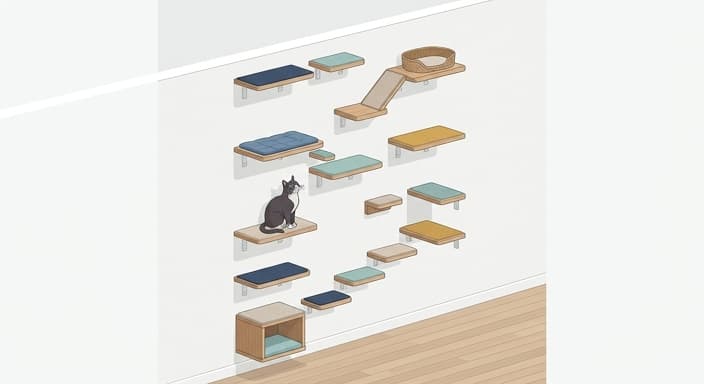
The most common mistake I see in my practice regarding wall shelving is the failure to account for "dynamic load." A cat doesn't just sit on a shelf; they jump, pounce, and sprint across them, exerting force that is significantly higher than their resting body weight. When selecting shelving, prioritize materials that are structurally sound and hardware that is properly anchored into wall studs. A shelf that wobbles or feels unstable will be avoided by the cat, rendering your investment useless and potentially dangerous.
Beyond the hardware, consider the materials. Many commercial shelves are made of smooth, polished wood or plastic. While these are easy to clean, they can be treacherous for a cat trying to navigate a sharp turn at a sprint. I always recommend adding a layer of sisal, carpet, or rubberized matting to the surfaces. This provides the necessary grip for the cat to dig their claws in, which is how they naturally stabilize themselves. Furthermore, ensure that the shelves are wide enough for your specific breed. A Maine Coon will require significantly more surface area to feel secure than a petite Siamese.
Enrichment Through Environmental Complexity
Vertical space is more than just a place to lounge; it is an opportunity for cognitive engagement. By integrating "destination points" along your wall system, you can turn a simple shelf into a high-value enrichment zone. Consider placing a food puzzle on a mid-level shelf or a favorite catnip toy on a high perch. This encourages the cat to "work" for their environment, mimicking the natural foraging and patrolling behaviors that keep an indoor cat mentally sharp.
We also see significant improvements in cats with weight management issues when vertical systems are introduced. The simple act of jumping, climbing, and navigating vertical pathways burns calories in a way that ground-level play often fails to do. It forces the cat to engage their core muscles and maintain balance, providing a low-impact workout that is far more sustainable than sporadic bursts of laser-pointer play. If you have a sedentary cat, placing a treat at the end of a "vertical route" is a fantastic way to lure them into a more active lifestyle without the stress of forced exercise.
Integrating Verticality in Multi-Cat Households
In a veterinary context, one of the most common reasons I am consulted is inter-cat conflict. The "social hierarchy" of cats is often dictated by who has access to the most desirable space. In a home with only floor-level furniture, the most confident cat usually claims the couch or the rug, effectively blocking access for the more timid members of the household.
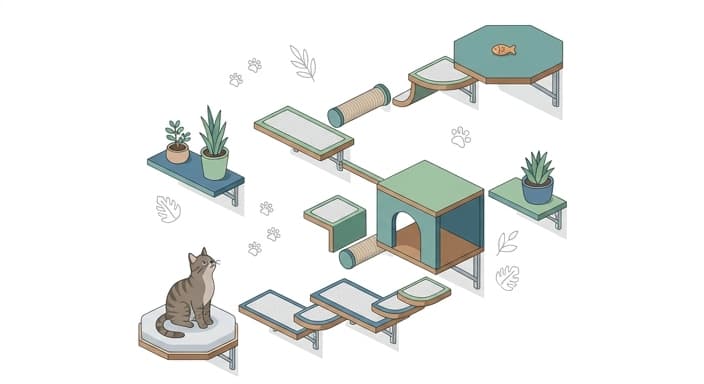
Vertical shelving acts as a social equalizer. By adding multiple high-altitude perches, you essentially create a "second floor" for your home. This allows a timid cat to navigate the room, move from the bedroom to the kitchen, and observe the household activities without ever having to descend to the floor and risk a confrontation. For the best results, ensure that there are at least two ways down from every high point, and try to place perches in areas that have clear sightlines. A cat that can see what is coming is a cat that feels significantly more confident in their surroundings.
The Holistic View of Feline Wellness
Ultimately, the addition of vertical shelving is an investment in your cat’s long-term mental health. We are moving away from the era of the "indoor pet" as a stationary house-ornament and toward a philosophy of "indoor enrichment." By satisfying the feline's innate need for height, safety, and surveillance, we reduce the behavioral frustrations that often manifest as destructive scratching, inappropriate elimination, or chronic anxiety.
Remember that no single piece of equipment is a cure-all, but a well-planned, safe, and strategically placed vertical system is perhaps the most effective tool in your arsenal to create a feline-friendly home. As you begin your project, observe your cat's natural patterns—where do they like to jump? What parts of the room do they avoid? By listening to their cues and building a space that respects their evolutionary heritage, you are not just decorating your walls; you are actively improving the quality of their life, one level at a time.
Common Questions
🤔
Frequently Asked Questions
What is vertical wall shelving and why is it recommended for indoor cats?▼
Vertical wall shelving is a system of wall-mounted perches, bridges, and shelves that give a cat access to multiple height levels. It aligns with a cat's natural semi-arboreal instincts, providing safe refuges, vantage points for monitoring territory, and opportunities for movement that ground-level setups lack. By expanding a cat's usable space upward, it reduces boredom, stress, and the likelihood of problematic behaviors that arise from confinement. Regular use supports better mental and physical health in indoor cats.
How should I assess my home for vertical potential?▼
Start with a cat-centric audit of rooms where the cat spends time. Look for transition points like sturdy bookshelves, cabinets, and existing furniture that can act as stepping stones, avoiding dead-end layouts that trap a cat on a high ledge. Ensure paths are navigable for aging cats by favoring carpeted or textured surfaces and closer vertical steps. Design the route so multiple entry and exit points exist to minimize inter-cat tension.
What safety standards should I follow when installing vertical shelving?▼
Prioritize dynamic load when selecting shelves; cats leap, sprint, and apply forces well above resting weight. Secure hardware to wall studs and choose sturdy, well-anchored structures rather than thin, wobbly options. Avoid slick surfaces that present slipping risks during high-speed turns, and prefer textured or carpeted steps for traction. Regularly inspect mounts to ensure continued safety with active use.
How does vertical shelving impact cat welfare and behavior?▼
Providing vertical enrichment helps cats feel in control of their environment, reducing anxiety and stress hormones that contribute to behaviors like aggression or over-grooming. It creates predictable access to safe spots and reduces conflicts in multi-cat households by enabling resource layering. In turn, cats may show improvements in activity levels and a reduction in obesity-related lethargy, contributing to overall health.