Blog3/31/2026
Vertical Wall Shelving for Indoor Cats: Enrich Their Space
6 mins Read
The Briefing
Quick takeaways for the curious
Vertical wall shelving provides crucial environmental enrichment for indoor cats by addressing their need for height and a sense of security.
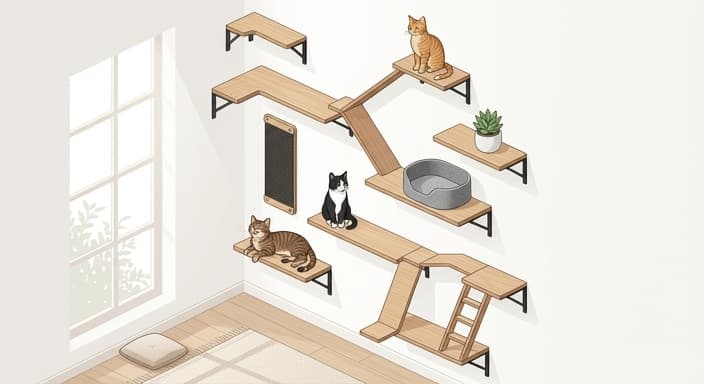
A true vertical landscape is a continuous "highway" of interconnected platforms, not isolated shelves, enabling fluid, floor-free navigation around a room.
Designing with anchors, gradual progression, and high-traction surfaces—such as sisal mats or non-slip pads—helps cats move confidently and safely.
Beyond fitness, vertical space supports emotional regulation, reduces inter-cat conflict by offering a retreat, and can ease anxious behavior.
Tailor the system to individual cats by adjusting spacing, surface area, and accessibility, prioritizing safety and senior-friendly options.
There is a persistent, outdated myth in the veterinary world that an indoor cat’s environment is complete as long as they have a food bowl, a litter box, and a soft place to sleep, leaving many pet owners to assume that living strictly indoors is a sedentary, low-stimulation existence. As a veterinarian consultant, I frequently consult with devoted cat parents who are surprised to learn that the domestic cat’s biological drive for vertical exploration is not a luxury, but a fundamental requirement for their mental and physical health. We are finally moving toward a more sophisticated, proactive standard of feline husbandry that prioritizes "environmental enrichment" through vertical wall shelving, effectively closing the gap between a stagnant indoor life and the instinctual, high-altitude confidence every cat deserves.
The Evolutionary Imperative for Verticality
To understand why vertical space is the missing link in so many indoor cat households, we must look at the biological reality of the feline species. Cats are both predators and prey; in the wild, this dual identity necessitates a three-dimensional view of their surroundings. Height provides a cat with a "panoptic" vantage point, allowing them to survey their territory, monitor for potential threats, and—most importantly—retreat to a place of safety when they feel overwhelmed.
When we force a cat to live exclusively on a two-dimensional floor plane, we effectively strip them of their primary coping mechanism. A cat that cannot climb, perch, or survey its environment from above is a cat living in a state of chronic, low-grade stress. This is often the root cause of "behavioral" issues like inappropriate scratching of furniture, inter-cat aggression in multi-pet households, or even idiopathic cystitis, which we know can be exacerbated by environmental anxiety. By installing vertical wall shelving, we aren't just adding home decor; we are fulfilling a deep-seated neurological need for security and agency.
Designing a Cat-Centric Vertical Highway
When planning a vertical shelving system, the most common mistake I see in my clinical practice is the "island" approach—placing a shelf in isolation without a way for the cat to navigate to or from it safely. A successful vertical landscape must be a "highway" that allows for fluid movement. Cats thrive on continuity; your goal should be to create a series of interconnected platforms that allow your cat to traverse an entire room without ever touching the floor.
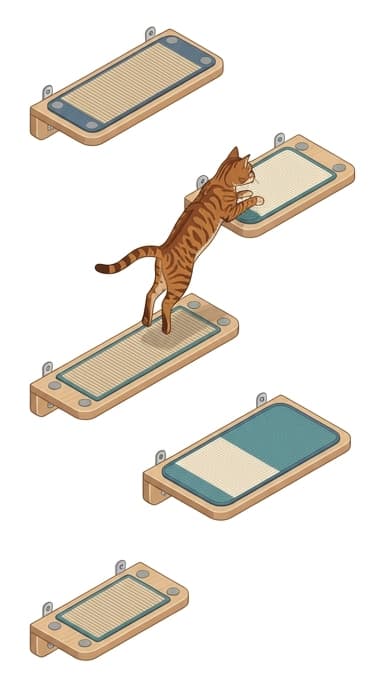
Think of it as a feline transit system. Start with a stable "anchor" point—a sturdy shelf or cat tree—and build outward with wall-mounted steps or platforms spaced at intervals that accommodate your cat’s jumping ability. For senior cats or those with joint issues, these intervals should be shorter and the surfaces wider. For younger, more agile cats, you can incorporate more challenging gaps to encourage physical exercise. Always prioritize high-traction surfaces; a slick, polished wooden shelf can be dangerous for a cat coming in for a landing at high speed. Consider adding sisal mats or non-slip adhesive pads to ensure your cat feels confident during their vertical excursions.
The Therapeutic Benefits of High-Altitude Living
Beyond the physical benefits of muscle tone and cardiovascular health, vertical shelving serves as a crucial therapeutic tool for feline emotional regulation. In a multi-cat household, verticality is the great equalizer. When two cats have a minor disagreement or simply need personal space, the cat that can retreat to a high shelf effectively opts out of the conflict, signaling to the other cat that they are not interested in engagement. This "vertical escape" reduces the need for physical confrontation and promotes a more harmonious multi-pet environment.
Furthermore, for cats with "hidden" anxiety—those who often retreat under beds or into closets—vertical shelving provides a massive confidence boost. Being high up allows these cats to observe the household activity from a position of power rather than a position of hiding. As a veterinarian, I have seen profound changes in shy, rescue-origin cats after their owners installed wall shelving. They begin to participate more in family life, their appetite often improves, and their overall demeanor shifts from reactive to observant. It provides them with the choice of engagement, which is the most powerful gift you can give an indoor animal.
Safety, Stability, and Structural Integrity
As a veterinarian, I am naturally concerned about the "what-ifs." I have treated far too many injuries resulting from poorly installed cat furniture. When choosing materials for your vertical wall system, prioritize weight-bearing capacity. Your cat may look lightweight, but when they initiate a jump, they exert significant force on the anchor points. Always use wall anchors appropriate for your home’s construction—whether you are mounting into drywall, studs, or masonry. If you are not comfortable with power tools, please consult a professional; a shelf that wobbles or gives way under a cat’s weight will permanently destroy their confidence in that space, and it poses a genuine injury risk.
Additionally, consider the "landing zones." Ensure that the area directly beneath your high shelves is clear of fragile items. Cats are graceful, but they are also impulsive. I often recommend placing a soft rug or a cushioned pet bed on the floor directly under the "exit" points of your vertical system to provide a gentle landing if a cat decides to jump down directly. Remember that as your cat ages, their ability to navigate these heights will change. Periodically reassess your setup to ensure it still meets their physical capabilities, perhaps adding a "gentler" ramp or a lower stepping stone as your companion enters their golden years.
Creating a Destination, Not Just a Path
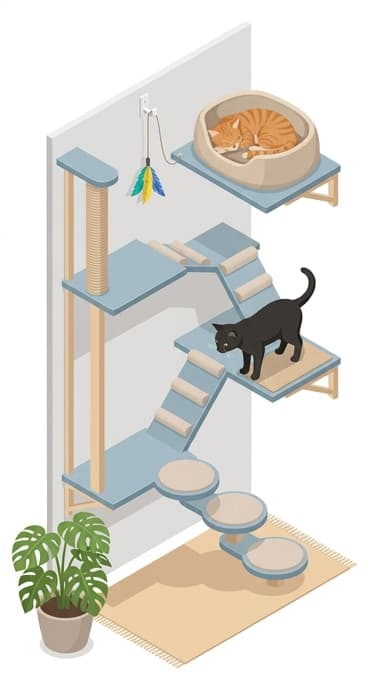
Finally, remember that vertical shelving should be more than just a transit route; it should be a destination. Incorporate "high-value" zones into your wall system. This might mean placing a super-soft, washable cat bed on the highest shelf, or installing a small hook nearby to hang a favorite feather toy. Some owners even create "viewing galleries" by placing shelves directly adjacent to windows, allowing their indoor cats to engage in bird-watching—a form of visual enrichment that is biologically vital for predator species.
By integrating these destination points, you encourage your cat to spend time in these high-altitude zones, which effectively maximizes your home's square footage. You aren't just adding furniture; you are expanding your cat’s world. When you provide the tools for a cat to express their natural behaviors—climbing, perching, and surveying—you move away from the mindset of "pet ownership" and toward a partnership that honors their wild instincts.
In conclusion, the transition to a vertical home environment is one of the most impactful upgrades you can make for your indoor cat’s long-term wellness. By honoring their evolutionary need for height, safety, and territory, you are doing more than just preventing boredom; you are cultivating a sense of security and confidence that touches every aspect of their health. Whether you start with a single shelf or a full-wall climbing complex, every inch of vertical space you add is an investment in your cat’s happiness and a testament to your commitment to their unique, feline perspective.
Common Questions
🤔
Frequently Asked Questions
What is the main purpose of vertical wall shelving for indoor cats?▼
Vertical wall shelving addresses a cat’s intrinsic need for height and environmental monitoring. It provides mental stimulation and physical exercise that indoor life often lacks. By letting cats survey, retreat, and navigate their space from above, it can reduce chronic stress and related behaviors.
How should you design a cat-centric vertical highway?▼
Start with a stable anchor point like a solid shelf or cat tree. Build outward with wall-mounted steps or platforms that form an interconnected path the cat can traverse without touching the floor. Space the steps to match your cat’s jumping ability, with shorter gaps for seniors or joint issues and wider, high-traction surfaces. Prioritize safety with non-slip pads and avoid slick, polished wood.
What safety considerations should be addressed when installing vertical shelving?▼
Ensure all mounting points are securely anchored to wall studs or appropriate anchors for your wall type. Choose high-traction, non-slip surfaces and add sisal mats to reduce slipping. Avoid long, high leaps by spacing platforms within safe reach. For senior cats, keep intervals short and surfaces wide to support confident landings.
How does vertical shelving impact multi-cat households and anxious cats?▼
In multi-cat households, vertical shelving can act as an equalizer by giving each cat a personal retreat to avoid direct confrontations. The ability to retreat to a high shelf communicates a desire for space, reducing the frequency and intensity of conflicts. For cats with hidden anxiety, vertical space provides a confidence boost and a predictable coping outlet.