Blog4/4/2026
Vertical Space Solutions for Indoor Cats: Enrichment and Health
6 mins Read
The Briefing
Quick takeaways for the curious
Indoor cats benefit from a thoughtfully designed vertical environment that reduces stress and channels predatory instincts into safe, elevated exploration.
Height and high ground are a biological imperative for cats, helping them feel secure and lowering the risk of stress-related health issues.
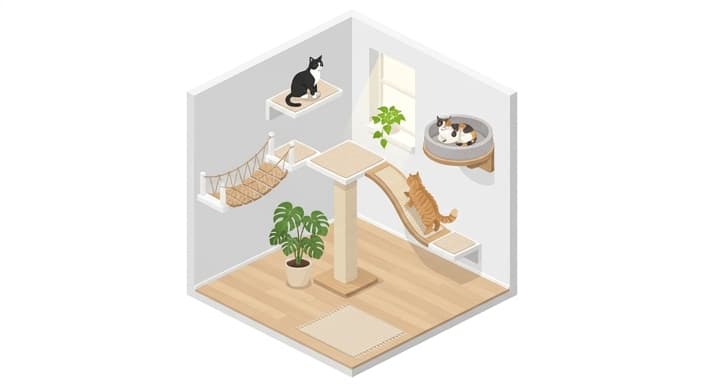
A well-planned cat superhighway uses connected shelves, platforms, and textured surfaces to create safe routes that minimize floor-level conflicts, especially in multi-cat households.
When installing vertical features, choose grip-friendly materials such as carpet, sisal, or textured rubber, and ensure landing strips and clear routes to improve usability and safety.
Vertical space also supports physical fitness by providing low-impact activities that promote joint health and help combat indoor cat obesity.
There is a persistent, outdated myth in the feline wellness community that indoor cats are perfectly content living their entire lives on a single, two-dimensional plane, leading many owners to believe that a few floor-level toys are enough to satisfy their pet’s complex predatory instincts. As a veterinarian consultant, I frequently speak with frustrated pet parents who view their cat’s destructive clawing of furniture or sudden "zoomies" as behavioral flaws, failing to realize that these are often the symptoms of an environment that lacks the necessary vertical depth for a feline to feel secure and fulfilled. We are finally moving toward a more sophisticated, proactive standard of indoor feline enrichment that leverages vertical architecture not as a luxury home decor upgrade, but as a foundational pillar of behavioral health, effectively closing the gap between basic indoor survival and the complex, ancestral needs of our feline companions.
The Biological Reality of Feline Elevation
To understand why vertical space is non-negotiable for our indoor cats, we must first look at the biological reality of the feline species. Cats are descendants of small, solitary wild hunters who relied on height for two primary evolutionary imperatives: protection and perspective. In the wild, height provides a vantage point to survey for potential threats while simultaneously allowing the cat to scan the terrain for prey. Even after thousands of years of domesticity, the domestic cat’s brain remains hardwired to seek out "high ground" to reduce anxiety and increase confidence.
When we deny a cat access to vertical space, we essentially trap them in a state of chronic hyper-vigilance. On the ground, a cat is vulnerable to "ambushes" from other household pets, children, or simply the sudden movements of humans. By providing a cat-centric vertical landscape, we allow them to opt-in or opt-out of social interactions, which is essential for maintaining a low-stress environment. A cat that can view its kingdom from a high shelf is a cat that feels in control of its territory, leading to a measurable reduction in stress-related issues like over-grooming, urinary cystitis, and inter-cat aggression.
Designing a Cat-Centric "Superhighway"
Creating an effective vertical environment requires us to think like an architect who prioritizes feline biomechanics. The goal is to create a "cat superhighway"—a series of interconnected platforms, shelves, and scratching posts that allow a cat to navigate a room without ever touching the floor. This is particularly vital in multi-cat households where individual space is the primary currency for peace. When cats have the ability to move vertically, they can navigate around each other or retreat to a "safe zone" without the need for physical confrontation.
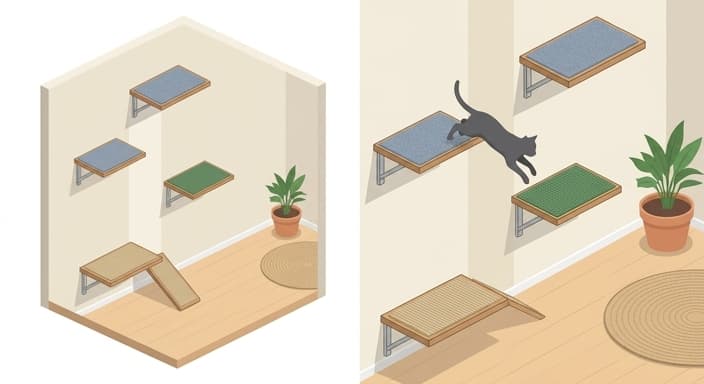
When installing wall-mounted shelves, prioritize materials that provide grip; slippery surfaces like polished wood or glass can lead to dangerous slips, especially as our cats age. Look for carpeted, sisal-wrapped, or textured rubber surfaces that allow for confident leaping and landing. Furthermore, consider the "landing strip" for each platform. Always ensure there is a clear, unobstructed route to and from the platform. A shelf that requires a leap of faith into a cluttered area or a steep, narrow path often goes unused because the cat perceives the risk of injury as too high.
The Intersection of Fitness and Joint Health
Beyond psychological security, vertical space is a cornerstone of feline physical fitness. In a sedentary indoor environment, feline obesity has reached epidemic proportions, leading to a cascade of secondary health issues like diabetes and arthritis. Vertical exploration serves as a natural, low-impact exercise regimen. The act of jumping, climbing, and balancing engages core muscles and maintains joint range of motion in a way that ground-level play simply cannot replicate.
For younger cats, this is a playground that burns off excess energy, preventing the common "boredom-induced" behavioral issues. For our senior patients, we must adapt this vertical philosophy. As cats age, they may experience age-related joint stiffness or osteoarthritis. Rather than removing vertical access entirely, we should assist them. Think of "stair-stepping" platforms—a series of lower, closely spaced shelves or a ramp that allows them to reach their favorite high-up spots without the need for high-impact vertical leaps. By maintaining their access to these vantage points, we keep them mentally stimulated and physically active, which is the best way to keep those joints moving comfortably into their golden years.
Strategic Placement for Maximum Impact
Where you place these vertical solutions is just as important as the structures themselves. As a veterinarian, I often see owners place cat trees in isolated corners where the cat feels tucked away, but not truly "involved" in the family. To maximize the benefit, place your vertical structures in "high-traffic" areas where the family congregates. Cats are social creatures; they want to be part of the pack, even if they prefer to do it from a distance. A sturdy cat tree placed near a window or in the corner of the living room allows the cat to participate in the household dynamic while maintaining their desired level of separation.
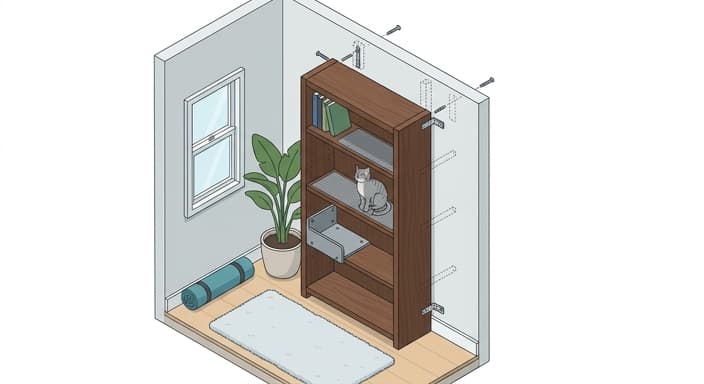
Additionally, utilize the "sun-seeking" instinct. Cats are heliophilic, meaning they love to bask in warmth. Integrating a vertical perch near a sun-drenched window can significantly boost a cat's mood and vitamin D synthesis. If you are limited by square footage, look toward "verticalizing" existing furniture. A tall bookshelf can become a feline sanctuary if you clear off a few shelves and add non-slip mats. The key is to ensure that the structure is stable. There is nothing more damaging to a cat’s confidence than a wobbly perch that collapses under their weight; always secure wall-mounted units into studs to ensure they can handle the force of a cat jumping onto them at full speed.
Troubleshooting Common Vertical Hurdles
Even with the best intentions, some owners find their cats hesitant to use new vertical installations. This is rarely a sign of disinterest, but rather a lack of confidence or a poor layout. If your cat is ignoring your new wall shelves, observe their behavior. Are the shelves too high? Is the distance between them too great for your cat’s current fitness level? Are they positioned in a drafty area or near a source of loud noise, like a furnace?
To encourage use, use positive reinforcement. Place a few high-value treats or a favorite toy on the platforms to create a positive association. Avoid picking up your cat and placing them on the shelf, as this can feel like a forced, trapping experience. Instead, let them discover the elevation on their own terms. If you have multiple cats, ensure there are multiple high points. If a dominant cat claims the only "top-tier" spot in the room, the other cats will feel cornered. By providing "multiple summits," you ensure that every cat in the house has a place to retreat, which is the single most effective tool for preventing household friction.
The Holistic View of Feline Enrichment
Vertical space is ultimately a bridge between the wild instincts of the feline and the safety of the modern home. When we provide these vertical opportunities, we aren't just decorating; we are fulfilling a core biological necessity that honors the cat’s predatory nature and need for autonomy. From the perspective of a veterinarian, I view these solutions as preventative medicine for the mind and body. A cat that can safely jump, climb, and survey its environment is a cat that is less likely to suffer from obesity, less likely to develop anxiety-based behavioral issues, and more likely to lead a long, enriched life by our side. By viewing our living spaces as three-dimensional landscapes rather than just floor plans, we unlock a new level of well-being for our indoor companions, proving that for the cat, the sky really is the limit.
Common Questions
🤔
Frequently Asked Questions
Why is vertical space so important for indoor cats?▼
Vertical space is important because cats evolved to seek high ground to monitor for threats and potential prey. Providing height reduces anxiety and gives cats control over their social interactions, which lowers stress-related behaviors such as over-grooming and aggression. A cat with access to vertical space can retreat to a safe vantage point, leading to a calmer, more balanced home environment. This aligns indoor life with the feline instinct to elevate and observe their territory.
What should I consider when designing a cat-friendly vertical space?▼
Designing a cat-friendly vertical space requires planning practical routes that are easy to navigate. Use connected shelves and platforms with clear paths, avoid clutter and dead ends, and ensure each step is accessible for confident entry and exit. Choose materials with grip and consider age and mobility, as older cats benefit from softer landings and non slip surfaces. In multi cat homes, vertical layouts can reduce conflict by offering individual routes and private retreat points.
Which materials are best for vertical structures and why?▼
Best materials provide grip and durability, such as carpet, sisal wrapped posts, and textured rubber surfaces. Avoid slippery surfaces like polished wood or glass, which increase fall risk especially as cats age. Textured, high friction surfaces help cats acquire traction for climbing and landing. Durability and ease of cleaning are also important since these surfaces will see daily activity.
How does vertical space support the physical health and exercise of indoor cats?▼
Vertical exploration offers natural, low impact exercise that strengthens core muscles and maintains joint range of motion. Climbing and jumping routines help combat indoor cat obesity and associated issues like diabetes. For aging cats, careful design with gradual elevations and sturdy landings supports mobility and reduces injury risk. Overall, vertical space translates to better fitness and long term health.