Blog3/26/2026
Vertical Space Solutions for Indoor Cats: Elevate Their Play
6 mins Read
The Briefing
Quick takeaways for the curious
Vertical space is essential for feline behavioral health, not merely a function of floor area.
Cats are evolutionarily wired to observe from height to detect threats and prey, and denying vertical access can cause chronic anxiety.
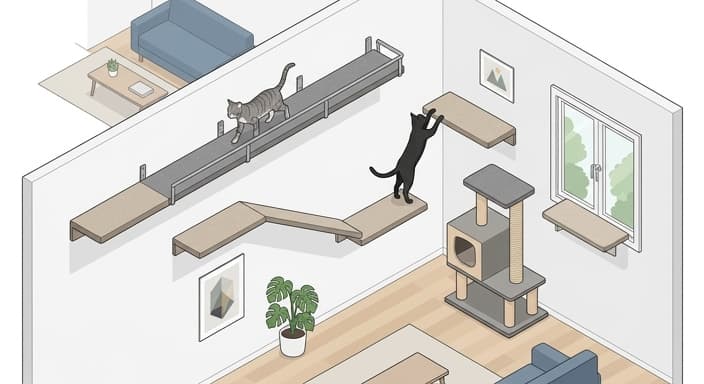
The cat superhighway concept creates a continuous network of elevated shelves, perches, and furniture tops that lets a cat move through a room without touching the floor.
For traction and safety, mount shelves with carpet or rubber backing, especially for senior cats with early arthritis.
In multi-cat homes, vertical space mediates social tension by offering multiple routes around rivals and reducing bottlenecks at food or litter areas, provided each elevated station has at least two exits.
There is a persistent, outdated myth in the veterinary world that a cat’s environment is defined solely by the square footage of their floor space. As a veterinarian, I frequently consult with pet parents who lament that their indoor cats seem bored, destructive, or lethargic, assuming that a larger apartment is the only solution, when in reality, these cats are suffering from "environmental under-stimulation." We are finally moving toward a new, proactive standard of cat care where vertical architecture is not just an aesthetic interior design choice, but a fundamental requirement for feline behavioral health and physical longevity.
The Evolutionary Mandate for Verticality
To understand why your cat seems obsessed with the highest shelf in your kitchen or the top of your refrigerator, we must look at their evolutionary biology. Cats are not just predators; they are also prey. In the wild, their survival is inextricably linked to their ability to observe their surroundings from an elevated vantage point. This "high ground" serves two critical functions: it provides a tactical view to scan for potential threats and a strategic position to spot unsuspecting prey.
When we bring cats into our homes, we often provide them with comfortable beds on the floor, ignoring the fact that a cat’s nervous system is hardwired to seek height to feel secure. A cat that cannot access vertical space is often a cat that lives in a state of chronic, low-level anxiety. When they are constantly restricted to the floor—where foot traffic, vacuum cleaners, and other pets create a sense of being "cornered"—they lose the ability to self-regulate their stress levels. Providing vertical options isn't just about fun; it is about providing the physiological safety necessary for a cat to truly decompress.
Designing the "Cat Superhighway"
A common mistake I see in my clinical practice is the "island" approach to cat furniture. Many owners purchase a single, tall carpeted cat tree and place it in a corner, hoping it will solve all their cat’s enrichment needs. While a tall tree is a great start, it often becomes an isolated tower that doesn't allow the cat to traverse the room without returning to the floor. To unlock your home’s full potential, you should focus on creating a "cat superhighway."
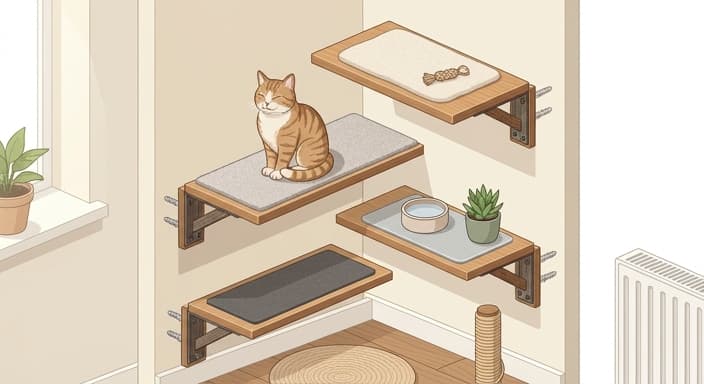
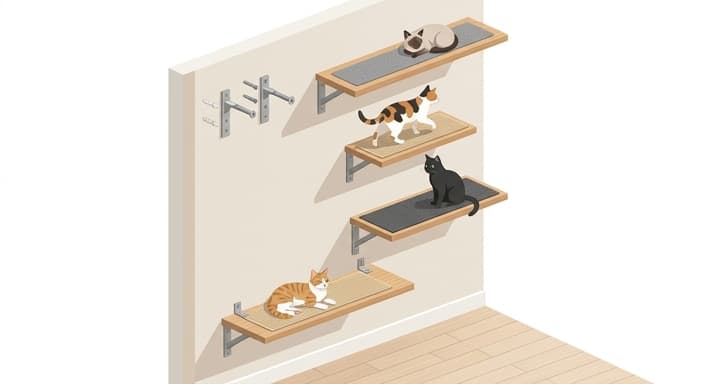
A cat superhighway is a continuous path of elevated surfaces—shelves, mantles, window perches, and furniture tops—that allows your cat to navigate an entire room without ever touching the floor. This mimics the canopy-dwelling behavior seen in many wild felids. By mounting sturdy, wall-anchored shelves at varying heights, you allow your cat to move through their territory with confidence. As a veterinarian, I recommend using carpeted or rubber-backed surfaces on these shelves to prevent slipping, especially for senior cats who may have early-stage arthritis and require more traction.
The Role of Verticality in Multi-Cat Households
If you share your home with multiple cats, vertical space becomes the single most important tool for social harmony. In feline behavioral medicine, we often discuss the "resource hierarchy." When two cats do not get along, it is rarely because they are "mean"; it is usually because they lack the physical space to avoid one another.
In a single-level home, if Cat A is occupying the path to the food bowl or the litter box, Cat B is forced into a confrontation. Verticality acts as a mediator. By providing a "high road," Cat B can bypass Cat A entirely, effectively neutralizing the territorial tension. I always advise my clients with multiple cats to ensure that every elevated station has at least two exit points. A dead-end shelf can actually heighten anxiety because the cat feels "trapped" by a dominant peer. By designing your vertical space with "flow" in mind—where a cat can jump up at one point and climb down at another—you provide them with the social autonomy they need to coexist peacefully.
Selecting Materials for Safety and Longevity
When you begin your journey into vertical design, aesthetics often take center stage, but as a veterinarian, I must emphasize structural integrity and safety. I have treated far too many injuries resulting from "wobbly" cat towers that tipped over or poorly anchored shelves that ripped out of the drywall.
When choosing materials, prioritize durability and cleanability. While plush, fuzzy fabrics look cozy, they are notorious for trapping allergens, shedding hair, and harboring dust mites, which can exacerbate feline asthma and skin sensitivities. Instead, look for high-quality plywood or solid wood shelves finished with non-toxic, pet-safe paints. For the surface, consider sisal mats or replaceable carpet tiles. These materials provide the necessary "grip" for your cat to jump safely, and they are much easier to keep hygienic. Furthermore, always ensure your mounting hardware is rated for your cat’s weight—and then some. A leaping, active cat generates significant force, so anchoring into wall studs is non-negotiable.
Senior Cats and the "Graduated" Approach
We often assume that as cats age, they lose their desire for height. This is a clinical misconception. While a senior cat with osteoarthritis may no longer be able to make a six-foot vertical leap, their innate need for the security of an elevated vantage point remains unchanged. The goal for the aging cat is not to remove the vertical space, but to modify it.
If you have a senior pet, focus on creating a "staircase" of surfaces. Instead of one tall, vertical jump, use a series of smaller, staggered steps (ottomans, specialized wall steps, or lower shelving units) that allow them to reach their favorite high spot with minimal joint strain. This "graduated approach" keeps your senior cat mentally engaged and physically active without subjecting their hips and shoulders to the high-impact landings that can cause pain. Observing your cat’s ability to navigate these steps is also a fantastic way for you to monitor their mobility, giving you early warning signs if their joint health begins to decline.
The Psychological Benefit of Environmental Enrichment
Ultimately, the verticalization of your home is about respecting the "whole cat." When we provide a complex, three-dimensional landscape, we are acknowledging that our cats are intelligent, sensory-driven animals that require more than just a bowl of food and a warm lap. A home that encourages climbing, perching, and surveying is a home that fosters confidence and curiosity.
By shifting your perspective and viewing your walls and furniture as opportunities for feline engagement, you are doing more than just decorating; you are prescribing a lifestyle that aligns with their evolutionary needs. The result is a calmer, more confident cat who is less prone to stress-related behaviors like over-grooming or inappropriate elimination. As you start small—perhaps with a single window shelf or a set of wall-mounted stairs—you will quickly notice the change in your cat’s demeanor. They will move with more purpose, sleep with more security, and interact with your home in the way nature intended. Remember, the best environment is one that empowers your cat to be the apex predator of their own little world, even if that world is a fourth-floor apartment.
Common Questions
🤔
Frequently Asked Questions
Why is vertical space important for indoor cats?▼
Cats are hardwired to seek height to monitor their surroundings and regulate stress. Vertical access reduces chronic anxiety caused by being confined to the floor and exposed to foot traffic and appliances. Providing height supports both safety and decompression, contributing to better behavioral health.
What is a 'cat superhighway' and how do I design one in my home?▼
A cat superhighway is a continuous network of elevated shelves, perches, and furniture tops that lets a cat move around a room without touching the floor. Design involves wall-mounted, sturdy shelves at varying heights with carpeted or rubber-backed surfaces for traction. Plan for multiple exits at each elevated station to preserve autonomy and reduce bottlenecks, and avoid isolated towers.
How does verticality help in multi-cat households?▼
Vertical space acts as a social mediator by giving cats private routes to bypass others, reducing confrontations over shared resources. Ensure every elevated station offers at least two exits so a dominant cat cannot trap a more submissive one. A well-designed vertical layout helps maintain peace by supporting the natural resource hierarchy.
What practical steps should I take when implementing vertical space, especially for senior cats?▼
Choose stable, slip-resistant materials like carpet or rubber on shelves and ladders. Mount shelves securely to walls and position them at reachable heights for aging cats. Introduce changes gradually, monitor for signs of stress or fatigue, and ensure that senior cats have easy access to resting spots and safe routes down.