Blog3/22/2026
Vertical Home Design for Happy Cats: Elevate Their World
6 mins Read
The Briefing
Quick takeaways for the curious
Cats need vertical space to observe their environment and feel secure, not just a place to sleep.
Elevation serves both predator and prey instincts by providing a panoramic view and a psychological comfort zone.
Restricting cats to floor space can create chronic stress and contribute to behavioral problems such as inappropriate urination or aggression.
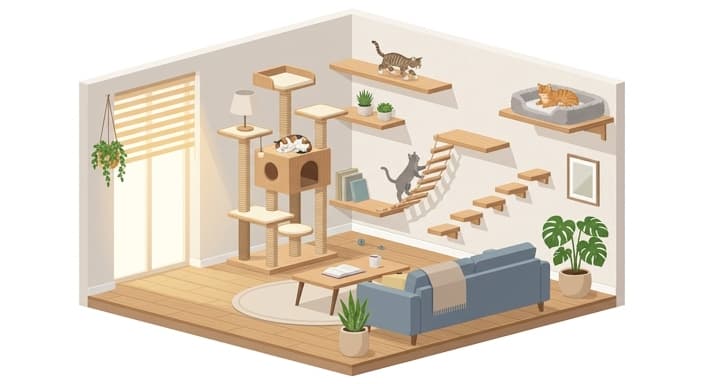
A catification audit—adding floating shelves, wall-mounted steps, and sturdy perches—creates safe, accessible vertical pathways.
Vertical enrichment doubles as a gentle exercise program, improving muscle tone, joint flexibility, and overall metabolic health.
There is a pervasive, outdated myth in the feline world that a "complete" home is defined solely by the square footage of the floor space we provide. As a veterinarian, I frequently walk into homes where cats are living in a state of chronic, low-level environmental stress, not because they aren't loved, but because their world is strictly two-dimensional. By failing to account for the vertical dimension, we are denying our feline companions their most basic biological imperative: the need to observe, survey, and navigate their territory from a position of elevation.
The Evolutionary Imperative: Why Heights Matter
To understand why your cat seems obsessed with the top of your refrigerator or the highest shelf in your office, we have to look back at their evolutionary history. Cats are unique in the animal kingdom; they are both predators and prey. In the wild, height serves two vital functions. First, it provides a "panoramic view" of the environment, allowing a cat to scan for potential threats or encroaching rivals while remaining safely out of reach. Second, elevation is a psychological comfort zone. When a cat is stressed—whether by a loud vacuum, a house guest, or a multi-cat household—their instinct is not to run into a corner, but to head for the clouds.
When we force our cats to live entirely on the floor, we are essentially keeping them in a state of perpetual vulnerability. In a clinical setting, I often see "behavioral" issues like inappropriate urination or inter-cat aggression that are actually symptoms of an environment that lacks vertical escape routes. Providing vertical access isn't just about giving them a place to sleep; it’s about providing them with the autonomy to dictate their own level of engagement with the household.
Assessing Your Home’s Vertical Potential
You don’t need to live in a mansion to maximize your cat’s vertical territory. In fact, some of the happiest, most well-adjusted cats I treat live in modest urban apartments. The key is to view your home as a three-dimensional grid rather than a series of flat surfaces. Start by observing your cat’s natural tendencies. Do they prefer to be tucked away in a dark, quiet corner, or do they like to be in the "thick of things" on a bookshelf overlooking the living room?
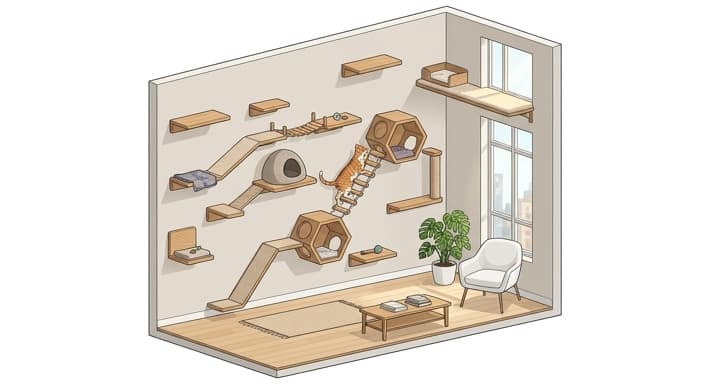
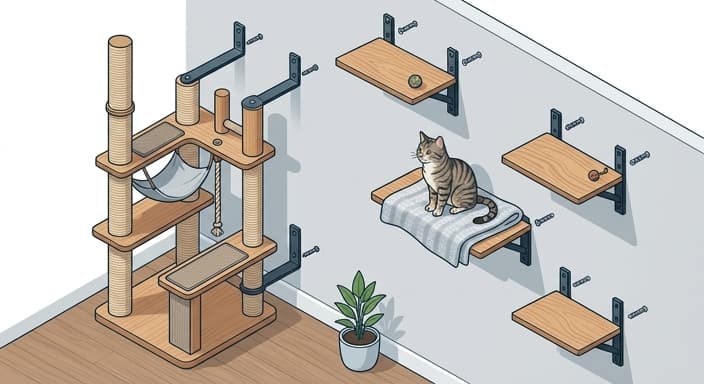
I recommend a "catification" audit of your space. Look at your furniture, your wall space, and even your window treatments. Can you add a series of floating shelves that create a "cat highway" across a wall? Are there sturdy pieces of furniture you can rearrange to create a staircase effect? The goal is to build paths that allow your cat to travel from one side of the room to the other without ever touching the floor. This provides them with a sense of security and control, which is the cornerstone of feline mental health.
The Clinical Benefits of Vertical Enrichment
From a veterinary perspective, the physical benefits of vertical design are just as important as the psychological ones. Obesity is the most common health issue I treat in domestic cats, and it is largely a result of a sedentary lifestyle. A flat-floor environment rarely encourages the kind of explosive, athletic movement that keeps a cat’s musculoskeletal system strong and their metabolism firing.
When you incorporate vertical elements—cat trees, wall-mounted steps, or climbing towers—you are essentially building a feline gym. The act of jumping, stretching, and navigating uneven surfaces helps maintain muscle tone, joint flexibility, and bone density. Furthermore, cats that are physically challenged by their environment are less likely to develop the boredom-induced behaviors that plague many indoor pets, such as over-grooming or destructive scratching of your furniture. By providing a vertical landscape, you are turning your home into a dynamic, interactive environment that keeps your cat physically lean and mentally sharp.
Designing Safe and Sustainable Vertical Spaces
When you begin the process of adding vertical features, safety must be your top priority. I have seen too many injuries resulting from poorly secured cat shelves or flimsy, top-heavy cat trees. When installing wall-mounted furniture, always ensure that the structures are anchored directly into wall studs. If you are using adhesive-based solutions, be mindful of weight limits, particularly if you have a larger breed or a cat that tends to "crash-land" after a big jump.
Consider the surface materials as well. Cats need traction to feel confident. Slippery surfaces like polished wood or glass can be intimidating and lead to accidents. Look for shelves covered in sisal, carpet, or high-quality felt that provide a non-slip grip. Additionally, consider the placement of these structures in relation to other pets. If you have a dog, your vertical design should allow the cat to retreat to a height that is completely inaccessible to the canine, ensuring that your cat always has a "safe harbor" where they can retreat and decompress in total peace.
Managing Multi-Cat Dynamics with Elevation
If you have a multi-cat household, vertical design is the single most effective tool for preventing social friction. In nature, cats are solitary hunters; in our homes, we often force them into social groups they didn't choose. Disputes often arise over "high-value" territory—the best sunbeam, the window view, or the prime sleeping spot.
Vertical space acts as a social buffer. By providing multiple, interconnected high points, you allow cats to share the same room while maintaining a comfortable distance from one another. If one cat is feeling grumpy, they can simply move to a higher shelf rather than engaging in a conflict. When designing your vertical landscape, aim for "multiple exits." A cat should never feel "trapped" on a high perch. Always ensure there are at least two ways to get on and off any structure, which allows them to bypass one another without having to pass through a high-tension zone.
Conclusion: Elevating Your Cat's Quality of Life
Vertical home design is much more than a trendy interior design concept; it is an essential component of responsible feline ownership. By shifting our perspective from the floor to the ceiling, we provide our cats with the safety, exercise, and mental stimulation they need to thrive in an indoor environment. Whether it's a series of simple floating shelves or an elaborate floor-to-ceiling climbing structure, every bit of vertical space you add is an investment in your cat’s longevity and happiness. Start small, observe how your cat uses their new territory, and watch as they reclaim the confidence and curiosity that nature intended them to have. Your cat’s world is waiting to be expanded, and the sky—or at least the ceiling—is the limit.
Common Questions
🤔
Frequently Asked Questions
Why is vertical design important for cats?▼
Cats evolved as both predators and prey, so elevation gives a panoramic view to scan for threats while staying out of reach. Elevation also provides a psychological comfort zone; when stressed, cats seek height rather than the floor. A floor-only layout can leave them chronically vulnerable and stressed, contributing to behavioral problems. Vertical enrichment lets them control their level of engagement and escape when needed.
How can I assess and increase vertical potential in a small home?▼
Start with a catification audit: watch where your cat naturally retreats or interacts in the room, and note whether they prefer quiet corners or active perches. Look at existing furniture, walls, and windows for potential mounting points. Plan a 'cat highway' with floating shelves, wall-mounted steps, and sturdy trees that connect from room to room. You don't need a mansion—prioritize safe, accessible routes that feel like a three-dimensional grid.
What are the health and behavioral benefits of vertical enrichment?▼
Vertical elements encourage jumping, stretching, and climbing, turning your home into a feline gym that supports muscle tone and joint flexibility. They promote bone density and help manage weight by increasing activity in daily life. Cats with vertical routes are less prone to boredom, which reduces destructive scratching and inappropriate urination. Overall, you gain leaner, more mentally engaged cats.
How do I design safe and sustainable vertical spaces?▼
Use sturdy mounting, weight-bearing surfaces, and non-slip materials to prevent slips or falls. Choose a mix of heights and routes to mimic a predator's landscape while keeping feeding, water, and litter areas accessible. Keep cords and small items out of reach, and introduce new elements gradually to avoid stress. Regularly inspect shelves and cat structures for wear and safety, and prefer modular pieces you can rearrange as your cat's preferences change.