Blog3/28/2026
Vertical Home Design for Cat Enrichment: Elevate Their World
6 mins Read
The Briefing
Quick takeaways for the curious
Cats evolved as arboreal predators and need vertical space to survey, retreat, and feel secure; a strictly floor-level home can lead to chronic under-stimulation and behavior problems.
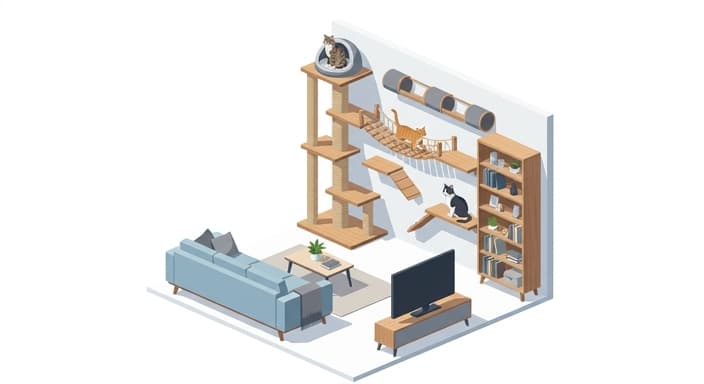
A 'cat superhighway'—a connected network of elevated, cat-safe surfaces—creates an indoor obstacle course that supports movement, joints, and mental engagement.
Vertical enrichment increases usable space and reduces inter-cat conflict by giving lower-ranking cats safe, high viewpoints away from ground-level competition.
Providing height can function as a preventative health measure by encouraging low-impact activity that helps prevent obesity and arthritis.
Elevated vantage points satisfy autonomy and control, which can lower stress hormones like cortisol and curb behaviors such as scratching or over-grooming.
There is a persistent, outdated myth in the veterinary world that a cat’s happiness is solely determined by the quality of their food and the frequency of their play sessions, leaving many owners to wonder why their indoor companions still exhibit signs of stress, boredom, or behavioral issues. As a veterinarian, I frequently consult with frustrated cat parents who are trying to solve "naughty" behaviors like furniture scratching or excessive vocalization with treats or toys, when in reality, we are finally moving toward a more sophisticated standard of feline environmental enrichment that recognizes the cat as a creature of the canopy, not just the floor.
The Biological Imperative of Verticality
To understand why the movement toward vertical home design is so critical, we must look at the evolutionary reality of the domestic cat. Unlike dogs, which are cursorial predators designed for ground-level pursuit, cats are arboreal-leaning hunters. In the wild, their survival depends on their ability to survey territory from a height, retreat to safety when threatened, and escape potential predators. When we keep cats in a strictly two-dimensional living space—where their entire world exists only at the level of the carpet—we are denying them a fundamental expression of their biology.
A cat that cannot climb, perch, or survey their surroundings from an elevated position is a cat that is chronically under-stimulated. This isn't just about "fun"; it is about confidence. When a cat has access to vertical space, they can choose to remove themselves from a stressful situation, such as a noisy vacuum or a boisterous guest, by simply jumping to a high shelf. This autonomy is a cornerstone of feline mental health. Without it, the cat feels trapped, which often manifests in the very behaviors owners find most challenging, such as territorial aggression, redirected frustration, or compulsive over-grooming.
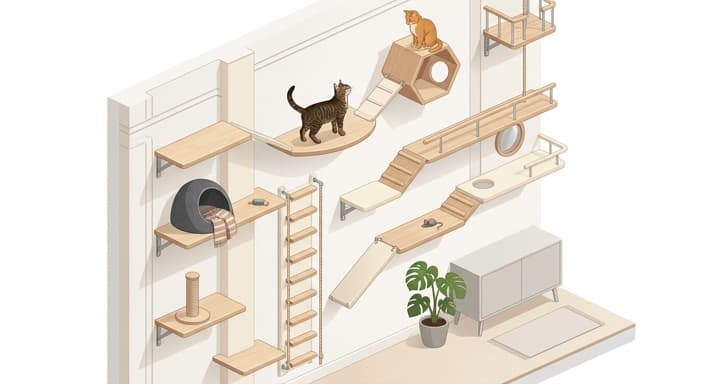
Creating a "Cat Superhighway" for Physical and Mental Health
One of the most effective ways to transform a home for a cat is to build what behavioral experts call a "cat superhighway." This is essentially a series of elevated paths that allow a cat to traverse a room without ever touching the floor. Think of it as an indoor obstacle course that keeps their joints supple and their minds sharp. As a veterinarian, I often see cats suffering from sedentary-related issues like obesity and arthritis; vertical enrichment is, quite literally, a preventative health measure that keeps them moving in a natural, low-impact way.
To start your own superhighway, look at your existing furniture. A bookshelf, a sturdy armoire, or a floating wall shelf can become part of a network. The key is to ensure the surfaces are "cat-safe"—meaning they have enough grip (sisal or carpet) to prevent slips—and that they are connected logically. You want to avoid "dead ends" where a cat feels cornered. If you have multiple cats, this is even more crucial. Vertical space effectively increases the square footage of your home, allowing cats to coexist with less friction by providing them with separate "territories" that exist on different planes.
Managing Feline Stress Through Height
In a multi-cat household, the most common veterinary complaints I hear involve "inter-cat conflict." Often, this is a resource issue. If you have one litter box, one water bowl, and one favorite sunny spot, you have a recipe for competition. Verticality is the secret weapon for harmony. By providing multiple high-up resting spots, you allow lower-ranking cats to observe the household from a position of safety without having to engage with more dominant housemates on the ground level.
From a clinical perspective, elevation is a powerful tool for lowering cortisol levels. When a cat is perched high, they feel "in control" of their environment. This is why many cats love the top of a cat tree or the highest point of a bookshelf; they are literally looking down on their surroundings, which gives them a sense of security. If you have a shy or fearful cat, I always recommend creating a "vertical sanctuary"—a tall cat tree placed in a quiet corner where they can go to escape the bustle of the home. Within days, you will often see a noticeable change in their demeanor; a cat that feels safe is a cat that is more social, affectionate, and relaxed.
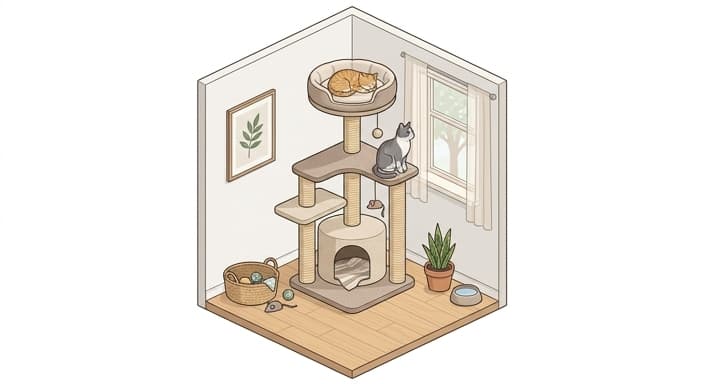
Designing for Aging and Mobility
As your cat enters their senior years, vertical design becomes even more important, but the approach must shift to accommodate their changing physical needs. We cannot simply expect an eighteen-year-old cat to make a five-foot vertical leap to a bookshelf. However, we also shouldn't remove their access to heights, as this can lead to depression and muscle atrophy. Instead, we adapt the environment.
This is where "stair-stepping" comes into play. By arranging ottomans, small stools, or specialized ramps, you can create a gentle ascent that allows your senior cat to reach their favorite perches with minimal joint strain. I often see owners remove cat trees entirely when their cat hits age twelve, assuming they are "too old" for it. In my practice, I encourage the opposite: modify the access. Keep the heights available, but make the journey to them accessible. This keeps their muscles engaged and their minds active, which is essential for warding off cognitive decline. Watching a senior cat navigate a series of gentle steps to reach a sun-drenched perch is one of the most rewarding sights for any pet parent, as it demonstrates that we are supporting their dignity and their biology throughout every stage of life.
Practical Tips for the Modern Cat Home
If you are ready to start your vertical journey, you don't need an expensive custom-built interior. You can achieve excellent results with a few simple, budget-friendly strategies. First, prioritize stability. Any cat shelf or tree must be anchored securely. A cat that falls from a wobbly structure will lose confidence and may never return to that space. Use wall-mounted brackets and ensure all vertical platforms are load-bearing enough for your cat's weight.
Second, consider the "view." Position your vertical elements near windows or in high-traffic areas where your cat can watch the world go by. Remember that cats are visual hunters; watching birds, squirrels, or even the neighbors is a form of environmental stimulation that is vital for their mental health. Finally, rotate your perches. Just as you rotate toys, periodically moving a cat hammock or adding a new shelf can turn a routine environment into an exciting new territory to explore. By viewing your home as a three-dimensional landscape rather than a flat floor plan, you are providing your cat with the most essential enrichment they need: the freedom to climb, observe, and live like the predator they were born to be.
Vertical home design is not just a trend for the "catified" home; it is an essential component of responsible, compassionate feline guardianship. By acknowledging and honoring your cat’s need for height, you are doing more than just saving your sofa from scratches—you are fostering a deeper, more trusting relationship with your companion, ensuring they feel secure, stimulated, and physically capable throughout their entire life.
Common Questions
🤔
Frequently Asked Questions
Why is vertical space important for indoor cats?▼
Indoor cats rely on height to survey territory, feel safe, and regulate stress. In a strictly floor-level environment, many cats become chronically under-stimulated, which can manifest as scratching, over-grooming, or vocalizing. Vertical space gives them control and choice, reducing triggers for conflict or fear. When used thoughtfully, elevation supports mental well-being as much as physical fitness.
What does a cat superhighway look like and how do I start?▼
Look for a network of connected, cat-safe surfaces that keeps the cat off the ground. Use sturdy shelves, a cat tree, bookcases linked by ramps or mounted boards, and secure with grip-enhancing materials like sisal or carpeting. Avoid dead ends and ensure there are pathways between levels so cats can retreat or change routes easily. Begin with a few pieces and expand gradually as your cat explores them.
How can vertical design help with multi-cat households?▼
Vertical enrichment creates separate 'territories' at different heights, which reduces competition for ground-level resources. Providing high resting spots helps lower-ranking cats observe the home from safety without challenging more dominant cats. This can lower cortisol and friction, improving overall harmony.
What practical considerations should I keep in mind when adding vertical enrichment?▼
Begin with a safety assessment of potential routes, ensuring shelves and perches are securely mounted and have grip. Choose cat-safe materials and avoid surfaces that could slip or collapse. Plan routes with multiple access points and no dead ends, so cats can retreat if overwhelmed. Introduce the features gradually and observe which paths your cats prefer, adjusting as needed.