Blog4/7/2026
Vertical Cat Wall Shelving: Essential Setup Tips for Enrichment
7 mins Read
The Briefing
Quick takeaways for the curious
Vertical wall shelving reframes enrichment as a foundational pillar, not mere decoration, for indoor cats.
Indoor cats rely on three-dimensional movement; elevation provides security, improves observation, and can reduce stress-related behaviors.
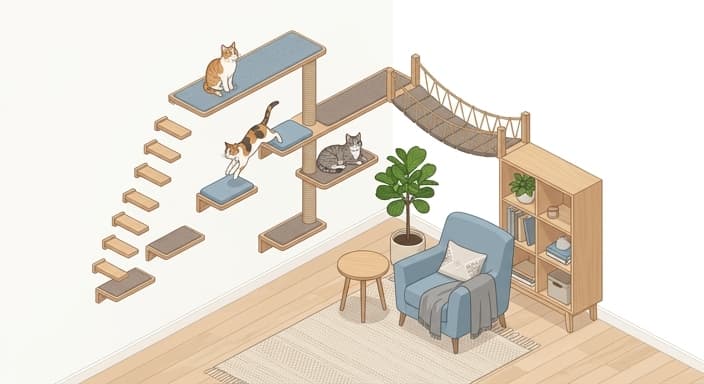
A successful setup functions as a cohesive cat highway, allowing movement around a room without descending to the floor.
Begin by identifying high-traffic areas and connect them with wall-mounted steps, carpeted ledges, or cat bridges to form a continuous circuit.
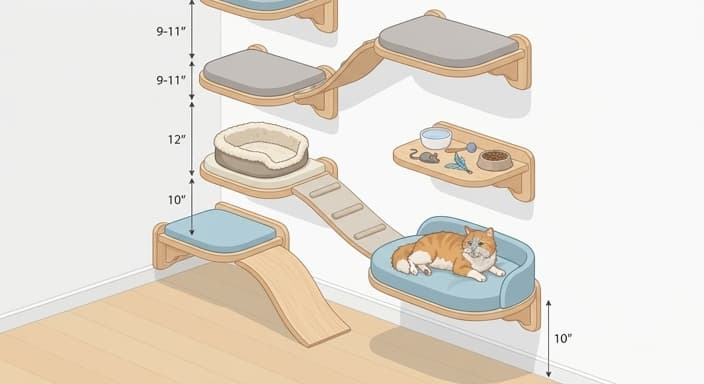
For most adult cats, aim for a stair-step spacing of about 12 to 16 inches between shelves to maintain confidence and accessibility.
There is a persistent, outdated myth in the indoor feline community that a cat’s environment is complete once they have a bowl of food, a soft bed, and a few toys scattered across the floor, leading many owners to believe that flat-surface living is sufficient for a species evolved for the canopy. As a veterinarian consultant, I frequently speak with devoted pet parents who view their indoor cat’s lethargy or destructive scratching as a behavioral "personality quirk," failing to realize that these are often the direct results of an environment that ignores the fundamental biological need for three-dimensional movement. We are finally moving toward a more sophisticated, proactive standard of feline enrichment that leverages vertical wall shelving not as a mere home décor aesthetic, but as a foundational pillar of environmental psychology, effectively closing the gap between a bored, sedentary house cat and the agile, confident predator they were designed to be.
The Biological Reality of the "Three-Dimensional Predator"
To understand why vertical space is a non-negotiable requirement for the modern indoor cat, we must first look at the biological reality of the feline nervous system. Unlike humans, who are terrestrial creatures, cats are arboreal-leaning predators; their anatomy—from the flexible, floating clavicles that allow for precise climbing to the specialized vestibular system that governs their exceptional balance—is hardwired for elevation. In the wild, a cat’s survival depends on their ability to survey territory from a high vantage point to identify both threats and prey. When we confine them to a two-dimensional floor plan, we are essentially stripping away their primary defensive and observational mechanism.
From a veterinary behavior perspective, "territory" for a cat is not just floor space; it is a volume of air. When a cat is stressed, bullied by another pet, or simply feeling overwhelmed by household commotion, their instinct is not to hide under a bed—which is a dead-end street—but to "get high." Elevation provides a sense of security, granting them the visual overview necessary to feel in control of their environment. By installing wall shelving, we are providing a "superhighway" that allows them to navigate their home without ever touching the floor, which drastically reduces cortisol levels and mitigates anxiety-related behavioral issues.
Designing a "Catification" Layout That Prioritizes Flow
When designing your vertical wall system, the most common mistake is creating "islands" of shelving—disconnected platforms that leave the cat stranded once they climb up. A successful vertical setup must function as a cohesive, continuous circuit. Think of your living room as a feline landscape that should allow your cat to traverse the entire perimeter of the room without descending to the floor. This "cat highway" is essential for multi-cat households, as it allows a submissive cat to avoid a more dominant companion without needing to confront them in a narrow hallway or corner.
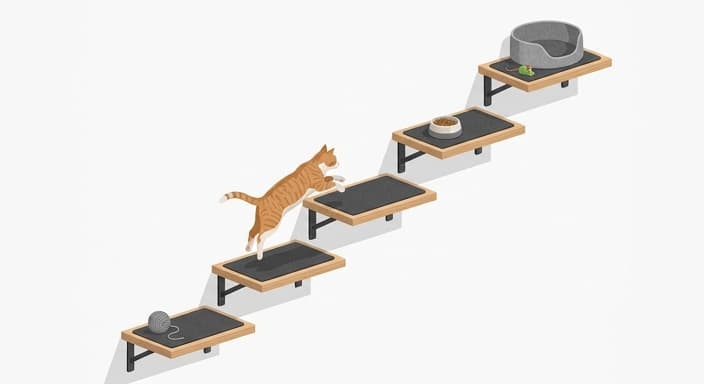
Start by identifying high-traffic areas where your cat already spends time, then extend that comfort zone upward. Use wall-mounted steps, carpeted ledges, or even cat-specific bridges to connect existing furniture like bookshelves or armoires to your new wall installations. The key is to ensure that the transition between levels is intuitive. If the gap between two shelves is too wide or the surface is too slippery, your cat will lose confidence, and the system will remain underutilized. Remember: your cat is an athlete, but they are also a pragmatist. If a shelf is hard to access, they will simply choose to ignore it. Aim for a "stair-step" configuration where the vertical distance between platforms is no greater than 12 to 16 inches for the average adult cat.
Safety First: Engineering for the "Leap of Faith"
As a veterinarian, I often treat cats for soft tissue injuries and fractures resulting from poorly secured furniture or slippery shelves. Before you pick up a drill, you must consider the structural integrity of your wall and the surface friction of your materials. Cats engage in what we call "explosive movement"—they don't just step onto a shelf; they often launch themselves at it with significant force. Therefore, all shelving must be anchored directly into wall studs, not just drywall anchors, which are prone to pulling out under the weight of a jumping cat.
Surface material is equally critical. While polished wood or sleek metal shelves might look modern, they are a safety hazard. Cats require traction to feel secure during their ascent and descent. I always recommend adding sisal matting, high-density carpet tiles, or non-slip rubber grips to every landing surface. This provides the necessary "claws-in" grip that allows them to propel themselves forward or brake safely upon landing. Additionally, consider the "landing strip" at the base of your wall system. Ensure that the floor area beneath the shelves is clear of breakables or sharp objects, as accidents can happen, especially with senior cats whose depth perception or agility may be slightly compromised.
Enrichment Beyond the Climb: Strategic Placement
Once the physical structure is sound, the next step is maximizing the enrichment value of your vertical space. A shelf is just a shelf until it serves a purpose. I advise clients to place high-value "destinations" at the end of each vertical route. This might be a cozy, sun-drenched perch near a window where your cat can watch birds—providing essential visual stimulation—or a soft, elevated hammock tucked away in a quiet corner of the room for deep sleep.
Strategically placing these nodes of activity encourages movement and curiosity. You can even use the vertical wall to manage dietary intake or play. For example, placing a treat-dispensing toy on a high, wide shelf can turn a sedentary cat into an active hunter, requiring them to climb and navigate to earn their reward. By associating the vertical space with positive experiences—grooming, observation, bird-watching, and play—you reinforce the cat’s internal drive to utilize the vertical dimension, effectively "gamifying" their environment and preventing the boredom that often leads to destructive scratching on your curtains or sofa.
Accommodating the Aging Feline: Modifying for Longevity
One of the most frequent questions I receive is whether vertical shelving is appropriate for senior cats. The answer is a resounding yes, provided you are willing to adapt the design to their changing physiology. As cats age, they often develop osteoarthritis, which can make high-leaping painful. However, this does not mean they should lose their access to vertical space. Instead of a series of high, dramatic leaps, transition your setup to a "ramp-based" or "low-step" system.
By creating a gentler grade of ascent—perhaps by adding extra, closer-spaced steps or small, sturdy ramps between levels—you allow your aging companion to reach their favorite high-altitude spots without the strain of vertical jumping. Observe your cat closely as they navigate the shelves; if you notice hesitation, missed jumps, or long periods of staring at a shelf they used to frequent, it is time to lower the entry points. Maintaining this access is vital for their mental health, as it allows them to remain part of the family "flow" rather than being relegated to the floor, which can exacerbate feelings of vulnerability in older animals.
The Psychological Payoff: A Confident Cat
Investing in a vertical wall shelving system is one of the most impactful decisions you can make for your cat’s long-term welfare. By honoring their evolutionary need for three-dimensional movement, you are doing more than just saving your furniture from claw marks; you are providing the psychological security that every cat requires to feel truly "at home." A confident cat is a cat that is comfortable in their skin, less prone to stress-induced conditions like cystitis or over-grooming, and far more engaged with their human family.
Remember that this is a living, breathing project. Your cat’s needs will evolve as they grow from a curious kitten into a bold adult and eventually into a wise senior. Periodically reassess your wall layout, swap out worn-out carpet pads, and observe how your cat uses the space. When you see your cat lounging contentedly on a high perch, watching over their kingdom with a slow blink, you will know that the time and effort invested were well worth it. You have effectively created a feline sanctuary that respects their instincts while fostering a deeper, more harmonious bond between you and your companion.
Common Questions
🤔
Frequently Asked Questions
Why is vertical wall shelving important for indoor cats?▼
Vertical wall shelving aligns with a cat’s natural need for elevation and territorial surveillance. Elevation provides a sense of security and control, which can lower cortisol levels and mitigate anxiety-related behaviors. By creating a ‘superhighway’ on the walls, you allow exploration and exercise without forcing daily commutes on the floor. This approach treats environmental enrichment as a core aspect of feline health, not a luxury.
How do I design a cohesive cat highway rather than isolated shelves?▼
Plan a continuous circuit that lets your cat move around the room without descending to the floor. Use a combination of wall-mounted steps, carpeted ledges, and cat-specific bridges to connect furniture and shelving. Extend routes from existing high-traffic areas and ensure transitions between levels are intuitive. Avoid gaps or slippery surfaces that could erode confidence and discourage use.
What spacing should I aim for between shelves?▼
Aim for a stair-step configuration with vertical gaps of roughly 12 to 16 inches for the average adult cat. Adjust spacing for smaller kittens or larger breeds to maintain reach and confidence. Ensure surfaces are stable and non-slip to encourage continuous movement. If gaps are too wide or surfaces too slick, your cat may bypass the setup altogether.
What safety considerations are essential when installing vertical shelves?▼
Choose sturdy mounts and verify weight limits for each shelf and mounting surface. Securely anchor shelves to wall studs and use anti-tip methods to prevent accidents. Test the setup gradually with supervised sessions before allowing full unsupervised use. Prioritize non-slip surfaces and smooth transitions to minimize the risk of soft tissue injuries or fractures.