Blog3/25/2026
Vertical Cat Space Design Tips for Elevated Habitats
6 mins Read
The Briefing
Quick takeaways for the curious
Vertical space is essential for feline welfare and should be treated as a standard component of indoor design, not a luxury.
Cats evolved as both predators and prey, so they rely on elevated vantage points to feel secure and monitor their environment, reducing anxiety when height is available.
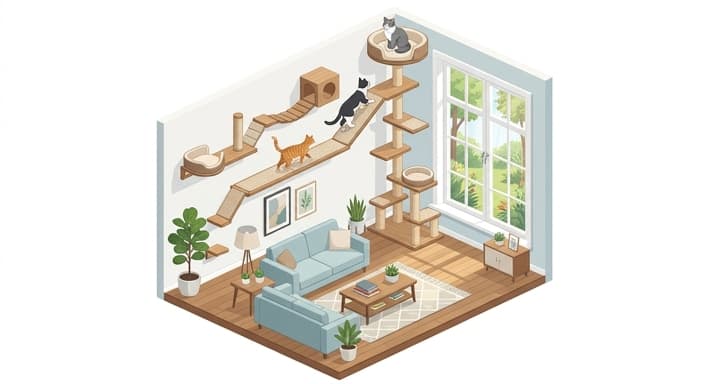
A true vertical solution works as a connected 'cat highway' rather than a single perch, allowing cats to move through a room without touching the floor.
Design plans should use a triangle of access with gentle inclines and accessible stepping stones, ensuring even senior cats can reach higher perches without big leaps.
For multi-cat households, vertically integrated routes help prevent conflict by providing separate paths and reducing bottlenecks.
There is a persistent, outdated myth in the veterinary world that a cat’s environment is defined solely by the square footage of their floor space. As a veterinarian, I frequently consult with pet parents who lament that their indoor cats seem bored, destructive, or lethargic, assuming that a larger apartment is the only solution, when in reality, these cats are suffering from "environmental under-stimulation." We are finally moving toward a new, proactive standard of cat care where vertical architecture is not just an aesthetic interior design choice, but a fundamental requirement for feline behavioral health and physical longevity.
The Evolutionary Mandate for Verticality
To understand why your cat seems obsessed with the highest shelf in your kitchen or the top of your refrigerator, we must look at their evolutionary biology. Cats are not just predators; they are also prey. In the wild, their survival is inextricably linked to their ability to observe their surroundings from an elevated vantage point. This "high ground" serves two critical functions: it provides a tactical view to scan for potential threats and a strategic position to spot unsuspecting prey.
When we bring cats into our homes, we often provide them with comfortable beds on the floor, ignoring the fact that a cat’s nervous system is hardwired to seek height to feel secure. A cat that cannot access vertical space is often a cat that lives in a state of chronic, low-level anxiety. When they are constantly at "eye level" with household stressors—be it the vacuum cleaner, a boisterous dog, or the comings and goings of family members—they lack a true "safe zone." By designing vertical pathways, we allow our cats to exercise their natural instincts, which leads to a significant reduction in stress-related behaviors like over-grooming, urinary marking, and redirected aggression.
Designing a "Cat Highway": The Anatomy of a Successful Climb
Creating a vertical space is not as simple as throwing a single cat tree in the corner of the living room. For a vertical system to be truly effective, it must function as a "cat highway"—a series of connected surfaces that allow your cat to traverse a room without ever touching the floor. This is particularly important in multi-cat households, where vertical pathways can act as traffic management systems, preventing conflict by allowing one cat to pass another overhead.
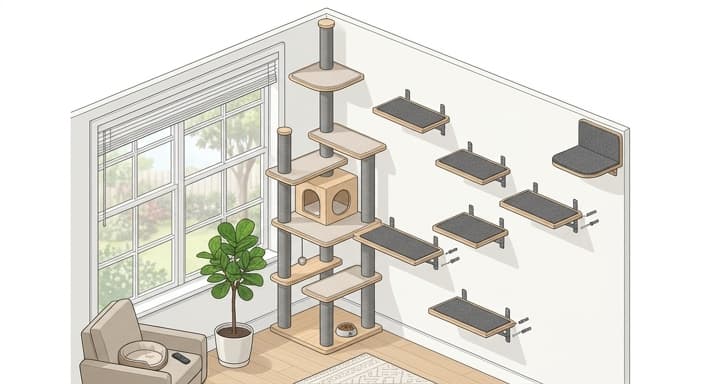
When planning your layout, keep the "triangle of access" in mind. Every platform should be accessible via a gentle incline or a series of stepping stones, rather than requiring a giant, vertical leap that might be difficult for senior cats or those with joint issues. Start by placing a stable base, like a floor-to-ceiling cat tree, near a window. From there, use wall-mounted shelves covered in non-slip carpeting to lead them across the wall to a higher perch. The goal is to create a circuit that encourages movement and stretching. Remember to ensure that every shelf is securely anchored to the wall studs; a platform that wobbles will immediately lose your cat’s trust and will never be used again.
The Veterinary Perspective: Joint Health and Age-Appropriate Design
One of the most frequent questions I receive in the clinic is, "Is it safe for my aging cat to climb?" The answer is a resounding yes, provided the design is modified for their changing mobility. Just as we wouldn't expect a human senior to navigate a rock-climbing wall, we shouldn't expect an arthritic cat to navigate a vertical circuit of widely spaced, slippery perches.
For senior cats, vertical space is arguably more important than for kittens, as it allows them to remain "above the fray" and avoid the physical annoyance of younger, more energetic housemates. However, the design must change. Focus on "stairs" rather than "leaps." Use lower-profile steps, ramps with good traction, and memory foam-lined perches that support aging joints. If you notice your cat has stopped using their vertical space, it is rarely because they have become "lazy." More often than not, it is a clinical indicator that the jump has become painful. If you see this transition, don't remove the vertical space—reconfigure it to be more accessible. By doing so, you keep your cat mentally engaged and physically active well into their senior years, which helps prevent muscle atrophy and weight gain.
Enrichment Beyond the Climb: Adding Sensory Complexity
Vertical space is the foundation, but the "experience" of that space is what truly enriches your cat’s life. Think of your wall-mounted shelves as prime real estate that should be curated for maximum sensory input. The most valuable piece of vertical real estate in any home is the "window-view shelf." Cats are visual creatures; watching birds, squirrels, and the movement of the outside world provides essential mental stimulation that prevents the stagnation of indoor life.
Beyond the view, consider the texture and temperature of the perches. I recommend using a variety of materials: sisal for scratching, plush fabric for warmth, and even cool wood or ceramic tiles for hot summer days. You can also integrate "vertical hunting" by occasionally placing treats or high-value toys on different levels of the cat highway. This forces the cat to engage their muscles and their brain to "forage" for their rewards. This small adjustment turns a static piece of furniture into an interactive puzzle, keeping their cognitive functions sharp and their hunting drive satisfied in a healthy, domestic way.
Common Mistakes to Avoid in Vertical Design
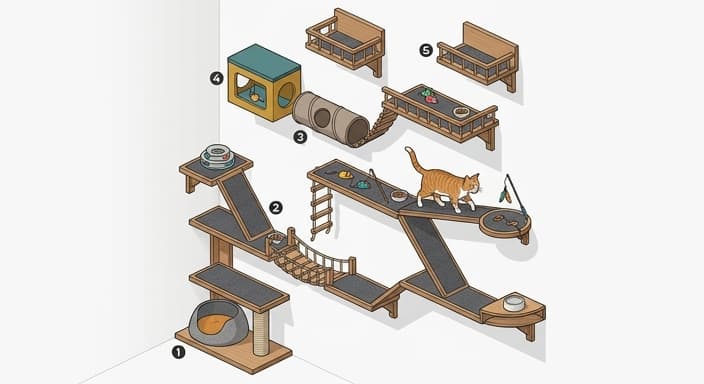
In my years of practice, I have seen many well-intentioned owners create vertical spaces that, while beautiful, are functionally flawed. The most common error is the "dead-end trap." A cat should never feel cornered on a high perch. If a cat is up on a shelf and feels threatened, they need an "escape route"—a way to move from that spot to another without having to climb down the exact same path they came up. In a multi-cat home, this is essential for preventing bullying. If one cat can block the only exit from a shelf, the cat on that shelf is essentially trapped, which leads to significant behavioral fallout.
Another mistake is placing vertical structures too close to high-traffic areas or loud appliances. If your cat’s favorite perch is directly above the laundry room door, the vibration and noise will make it impossible for them to achieve the deep, restorative sleep they need. Remember that for a cat, sleep is a vulnerable state. They need to feel that their high perch is a sanctuary of silence and stability. If you find your cat isn't using the setup you've spent hours installing, look at it from their perspective: Is it too loud? Is it too wobbly? Is it blocked by a shadow? Often, a simple adjustment to the placement or the addition of a soft, familiar-smelling blanket is all it takes to turn a neglected ledge into a favorite resting spot.
Empowering Your Cat’s Environment
Vertical cat space design is a powerful tool in your arsenal as a pet parent. It is a proactive, low-cost, and high-impact way to improve your cat’s quality of life. By shifting our perspective from the floor to the walls, we honor our cats' wild heritage while providing them with the comfort and security they deserve in our modern homes. Whether you are building a custom complex or simply adding a few well-placed shelves, the investment you make in your cat’s vertical environment will pay dividends in their confidence, their physical health, and the depth of the bond you share. Start small, observe how your cat uses their new terrain, and be willing to iterate. Your cat will thank you from the highest point in the room.
Common Questions
🤔
Frequently Asked Questions
Why is vertical space important for a cat's well-being?▼
Vertical space taps into a cat's instinct to monitor from above, which helps them feel secure in a busy home. When height is available, cats show fewer stress-related behaviors and are less likely to engage in over-grooming or aggression toward other pets. A well-designed vertical setup provides a safe zone where they can retreat from noise, dogs, or family activity. In short, elevating their environment supports both mental calm and physical longevity.
How should you design a cat highway in practice?▼
A cat highway is a connected sequence of surfaces that lets a cat traverse a room without touching the floor. Start with a stable base near a window and build outward with wall-mounted shelves, ramps, and non-slip perches that are securely anchored to wall studs. Use gentle inclines and a series of stepping stones so even seniors can climb without large leaps. The goal is a continuous circuit that encourages motion and exploration while feeling safe.
What considerations should you make for aging or arthritic cats?▼
For aging or arthritic cats, reduce the need for big leaps by using stairs, ramps, and lower-perches with good traction. Choose memory-foam or cushioned resting spots to support joints and minimize pressure points. Place essential routes near familiar views like windows, and allow rest stops at intervals along the circuit. Monitor mobility and adjust spacing and surface textures as needed to keep them confident and engaged.
What are common design pitfalls to avoid?▼
Common mistakes include wobbly platforms, anchors that fail, and surfaces that are slippery or too far apart. Also avoid forcing a cat to navigate large leaps or a circuit that blocks regular room use. Ensure every element is securely anchored, uses non-slip materials, and includes resting spots and clear routes around obstacles. Regularly inspect the setup for wear and reposition elements to maintain safety and engagement.