Blog4/23/2026
Calming Enrichment Routines for Anxious Dogs: Science-Based
6 mins Read
The Briefing
Quick takeaways for the curious
Calming enrichment reframes canine anxiety as a physiological state that can be mitigated through structured, enrichment-based interventions rather than punishment.
Enrichment builds self-regulation by engaging the dog's nervous system and promoting a shift from fight-or-flight to rest-and-digest.
Olfactory enrichment, especially scent work and sniffing, is a highly effective, grounding activity that can physically lower arousal and slow heart rate.
Mealtime can be transformed into calming practice through scatter feeding and sniffing tasks that challenge the brain and prolong engagement.
Oral fixation activities like chewing and licking provide rhythmic, soothing stimulation that supports coping and reduces repetitive pacing.
There is a persistent, outdated myth in the modern pet care community that canine anxiety is a behavioral "choice" or a sign of poor training, and that the only way to manage a stressed dog is through strict discipline or total avoidance of triggers. As a veterinarian consultant, I frequently speak with devoted pet parents who feel trapped by their dog’s reactive behavior, failing to realize that anxiety is a physiological state of hyperarousal that can be significantly mitigated through the science of enrichment. We are finally moving toward a more sophisticated, compassionate standard of pet wellness that views calming enrichment not as a "distraction," but as a vital therapeutic intervention, effectively closing the gap between a dog trapped in a cycle of constant stress and one who is empowered to find a state of calm, balanced equilibrium through the natural expression of their innate behaviors.
The Neurobiology of Enrichment: Why Calming Matters
To understand why enrichment represents a paradigm shift for our anxious companions, we must first demystify the biomechanics of the canine brain. When a dog experiences stress, the amygdala—the brain’s alarm system—fires, releasing a cascade of cortisol and adrenaline. In an anxious dog, this system is often stuck in the "on" position. Enrichment, specifically activities that focus on olfactory stimulation and rhythmic chewing, acts as a biological "reset" button.
When a dog engages in scent work or intensive licking, they are not just "having fun"; they are physically altering their internal chemistry. Licking and sniffing release oxytocin, the "feel-good" hormone that acts as a natural antagonist to cortisol. By providing structured, calming outlets, we are helping our dogs self-regulate, shifting their nervous system from a sympathetic state (fight or flight) to a parasympathetic state (rest and digest). This isn't about teaching them to be "good"; it is about giving them the tools to feel safe in their own skin.
The Power of Olfactory Enrichment: Following the Nose
The most effective tool in any anxious dog’s toolkit is their nose. A dog’s olfactory bulb is proportionally 40 times larger than a human’s, and engaging this sense is the most metabolically demanding and calming activity a dog can perform. When a dog sniffs, their heart rate slows, and their focus shifts from the internal "worry" cycle to the external environment, grounding them in the present moment.
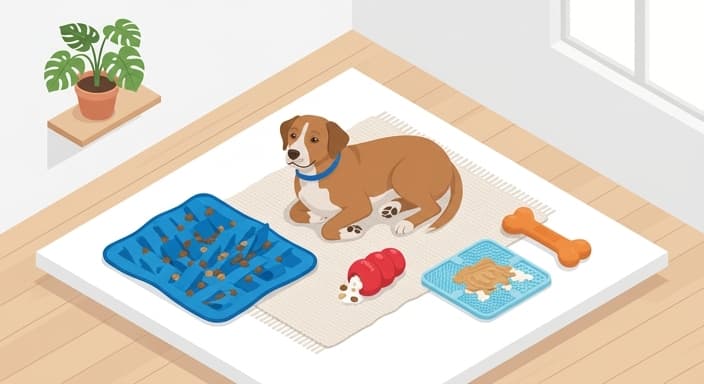
For the anxious dog, I recommend "scatter feeding" as a cornerstone of their daily routine. Instead of utilizing a standard food bowl—which allows them to gulp calories in seconds—try spreading their meal across a snuffle mat, a clean rug, or even a patch of grass in the yard. This forces the dog to work for their food, turning mealtime into a 15-to-20-minute meditative search. The act of scanning, sniffing, and focusing on the task at hand naturally lowers their physiological arousal levels. For dogs who suffer from separation anxiety, this activity is particularly potent; it provides a high-value, confidence-building task that can be introduced just before you leave, helping them associate your departure with a positive, calming event rather than a stressful one.

Oral Fixation: The Science of Chewing and Licking
If sniffing is the brain’s way of grounding, chewing and licking are the body’s way of soothing. In nature, dogs spend a significant portion of their day foraging and gnawing. In our homes, we often inadvertently strip away these outlets, leaving them with nothing to do but pace or fret. Introducing "calming chews"—such as stuffed, frozen Kongs, natural beef cheek rolls, or lick mats smeared with plain Greek yogurt or pumpkin puree—provides a repetitive, rhythmic motion that is inherently therapeutic.
The key here is the "rhythmic motion" aspect. The repetitive action of licking a textured mat or working on a durable, safe chew toy mimics the comforting behavior puppies exhibit with their mothers. This triggers a release of endorphins that acts as a natural sedative. When implementing this, ensure you are choosing items that are age-appropriate and safely sized to prevent choking. I tell my clients: don't wait for the panic to start to offer these. By providing a "calming station" during periods when you know the dog is typically anxious—such as the arrival of the mail carrier or the evening wind-down—you are proactively teaching your dog how to settle, effectively preempting the anxiety cycle before it gains momentum.
Environmental Design: Curating a "Safe Zone"
Anxiety often stems from a lack of agency. When a dog feels they cannot escape a perceived threat or a noisy environment, their stress levels spike. As pet parents, we can use environmental enrichment to give our dogs a sense of control and security. This is often referred to as a "denning" strategy.
Your dog’s safe zone should be an area where they are never bothered—no children, no vacuum cleaners, and no forced social interaction. Enhance this space with enrichment that encourages relaxation, such as a white noise machine or a dedicated "calm" playlist of classical music or reggae, which studies have shown can lower canine heart rates. Add a scent-based element, such as a pheromone diffuser or a bandana treated with a dog-safe calming essential oil like lavender, to create a sensory sanctuary. By creating a physical space that is inherently low-arousal, you provide your dog with a retreat where they can practice the art of doing nothing, which is often the most difficult skill for an anxious dog to master.
Implementing the "Enrichment Calendar"
Consistency is the secret ingredient to any behavioral protocol. Anxiety thrives in the unknown, whereas calm is built on predictability. I encourage owners to create a simple "enrichment calendar" that incorporates these calming activities into the daily rhythm. This doesn't need to be a massive time commitment; it just needs to be intentional.
Start your morning with a "nose work" session, such as hiding treats in a cardboard box or a puzzle toy to kickstart their day with a win. Mid-day, if you are working from home, offer a lick mat during your own lunch break to mirror their need for rest. In the evening, when the house is winding down, provide a long-lasting, safe chew to help them transition into a relaxed state for the night. By making these activities a non-negotiable part of their routine, you are reinforcing the message that they are safe, they are supported, and they have clear, fulfilling jobs to perform. Over time, these routines rewire the dog’s expectation of the day, moving them from a state of hyper-vigilance to one of confident, calm expectation.
A Holistic Commitment to Calm
Managing an anxious dog is a marathon, not a sprint, and it requires us to change our perspective on what it means to be a "good" pet parent. It is not about silencing a dog’s personality or expecting them to be perfectly still; it is about recognizing their physiological needs and providing the enrichment necessary to meet them. By leaning into the science of olfactory stimulation, the rhythmic comfort of chewing, and the creation of intentional, safe spaces, you are doing more than just managing symptoms. You are building a foundation of resilience that will serve your dog for the rest of their life. Remember, the goal isn't to create a dog that never feels stress—that is impossible—but to create a dog that has the tools to navigate that stress and return, safely and quickly, to their calm, balanced self. Take it one day at a time, stay consistent, and watch as your dog begins to trade their anxiety for a sense of quiet, empowered peace.
Common Questions
🤔
Frequently Asked Questions
How does enrichment differ from punishment for anxious dogs?▼
Enrichment addresses underlying physiological arousal by giving the dog tools to self-regulate rather than relying on punishment. It leverages natural behaviors such as sniffing and chewing to help shift the nervous system toward a calmer state. This approach reframes anxiety as solvable through environment and activities, not as misbehavior. It aims to empower the dog to feel safe and in control.
What are practical starter activities for a highly anxious dog?▼
Begin with olfactory enrichment like scatter feeding using a snuffle mat or a patch of grass to turn meals into a 15- to 20-minute sniffing task. Pair sniffing with calming chews or lick mats to provide rhythmic licking and chewing. Use stuffed, frozen Kongs, beef cheek rolls, or yogurt/pumpkin spread on a mat to reinforce repetitive, soothing behavior. Introduce these before triggers or departures to build positive associations with calm.
How can enrichment help with separation anxiety?▼
Scatter feeding before you leave gives your dog a high-value task that supports a positive routine rather than a stress cue. Olfactory and oral enrichment naturally lowers arousal during your absence and helps the dog feel secure in their space. Over time, these activities can reduce distress signals and improve coping when you’re away.
How should I progress and measure success with calming routines?▼
Start with simple, consistent daily practices and observe changes in pacing, restlessness, and attention during tasks. Gradually increase task duration or complexity as arousal decreases. Keep a brief log or video diary to track improvements and adjust the routine based on your dog’s responses.