Blog4/8/2026
Vertical Cat Space Design Ideas for Enriched Indoors
6 mins Read
The Briefing
Quick takeaways for the curious
Vertical space aligns with the feline biology of arboreal predation, giving indoor cats the elevation and range their nervous systems expect.
A properly designed cat superhighway provides a connected system of shelves, bridges, and perches that lets a cat move across a room without ever touching the floor.
Safety should guide every installation, including anchoring into wall studs, using non-slip materials, and designing shelves with 10 to 12 inches of depth.
In multi-cat homes, vertical layers create territorial buffers that reduce conflicts and allow each cat to claim separate space.
Without vertical enrichment, even well-fed cats can display lethargy, anxiety, or stress-related behaviors that point to an environment mismatch.
There is a persistent, outdated myth in the indoor feline community that a cat’s environment is complete once they have a bowl of food, a soft bed, and a few toys scattered across the floor, leading many owners to believe that flat-surface living is sufficient for a species evolved for the canopy. As a veterinarian consultant, I frequently speak with devoted pet parents who view their indoor cat’s lethargy, anxiety, or redirected aggression as a behavioral "personality quirk," failing to realize that these are often the direct results of an environment that ignores the fundamental biological need for three-dimensional movement. We are finally moving toward a more sophisticated, proactive standard of feline enrichment that leverages vertical wall shelving not as a mere home décor aesthetic, but as a foundational pillar of environmental psychology, effectively closing the gap between a bored, sedentary house cat and the agile, confident predator they were designed to be.
The Biological Reality of the "Three-Dimensional Predator"
To understand why vertical space is a non-negotiable requirement for the modern indoor cat, we must first look at the biological reality of the feline nervous system. Unlike humans, who are terrestrial creatures, cats are arboreal-leaning predators; their anatomy—from the flexible, floating clavicles that allow for precise climbing to the specialized vestibular system that governs their exceptional balance—is hardwired for elevation. In the wild, a cat’s survival depends on their ability to survey territory from a high vantage point, which provides both a tactical advantage for hunting and a defensive shield against larger threats.
When we force a cat to live exclusively on the floor, we are essentially placing them in a permanent state of low-level vulnerability. Elevation provides the "safe zone" that every cat craves when they feel overwhelmed by household activity, visitors, or even the presence of other pets. By installing vertical pathways, you aren't just adding furniture; you are restoring your cat’s ability to utilize their natural coping mechanisms. A cat that can escape to a high shelf is a cat that feels empowered, and an empowered cat is significantly less likely to develop stress-related illnesses like feline idiopathic cystitis or compulsive grooming habits.
Designing the "Cat Superhighway": Safety and Flow
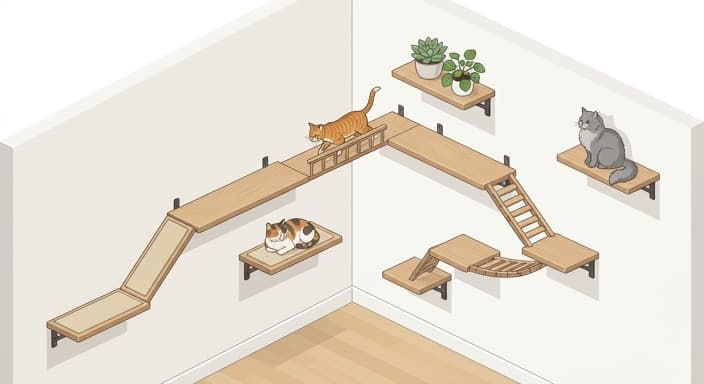
When planning your vertical design, it is vital to avoid the "dead-end trap." A common mistake is installing a single, isolated shelf that leads nowhere. From a behavioral standpoint, a shelf that requires a cat to jump down the same way they came up can create a sense of being "trapped" or cornered. Instead, think in terms of a "cat superhighway"—a connected system of shelves, bridges, and perches that allow your cat to traverse an entire room without ever touching the floor.
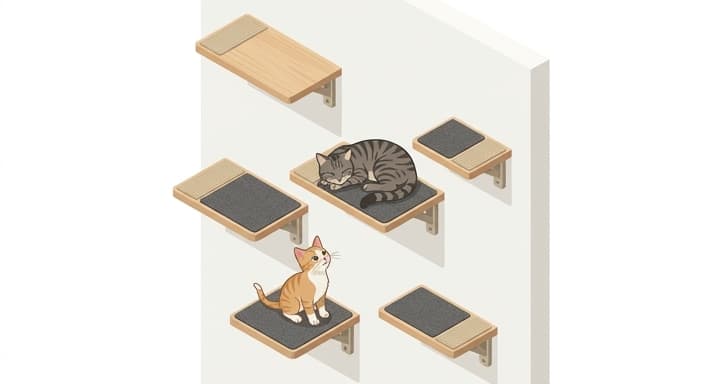
Safety, of course, is the veterinarian’s primary concern. Every installation must be anchored into wall studs, not just drywall, to handle the kinetic energy of a cat leaping or landing with force. Use materials that provide traction; while glass or polished wood may look elegant, they can be terrifyingly slippery for an aging cat or a playful kitten. Consider adding non-slip carpet tiles or sisal pads to your shelves. The width of the shelving is also critical—aim for at least 10 to 12 inches of depth to ensure your cat feels secure enough to sit or lie down comfortably without the fear of falling.
Creating Vertical Layers of Territory and Comfort
In multi-cat households, vertical space is the most effective tool for managing social dynamics. Cats are not necessarily pack animals in the way dogs are; they are solitary hunters who prefer to maintain their own personal "territorial buffers." If your cats are prone to hissing or stand-offs, it is often because they are competing for the same limited resources on the ground. By creating multiple vertical tiers, you allow your cats to share the same room while maintaining the distance they need to feel safe.
Think of your walls in terms of height-based hierarchy. The highest point in the room should be reserved for the most confident cat or the one who needs the most peace, while lower tiers can serve as "transition zones." Providing a variety of textures—a plush-lined hammock for deep sleep, a rigid wooden platform for surveying, and a sisal-wrapped post for scratching—allows your cat to utilize these spaces for different moods. This is the essence of "environmental complexity": providing choices that allow the cat to exert control over their surroundings.
Integrating "High-Value" Vertical Destinations
Not all shelves need to be identical. To keep your cat engaged and mentally stimulated, treat your vertical setup like a series of destinations. One shelf might be located near a window to act as a "bird-watching deck," while another, placed in a quiet corner, could serve as a "napping sanctuary" away from high-traffic areas. I often recommend placing a high-value item—such as a puzzle feeder or a favorite interactive toy—on a specific shelf to encourage exploration.
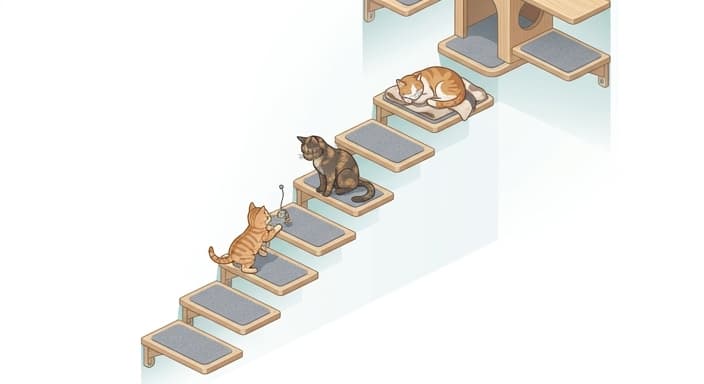
When designing these destination points, consider the "landing zones." As cats age, their joint health may change, making long, athletic jumps more difficult. If you have a senior cat, ensure your vertical layout includes "stepping stones"—shorter, tiered shelves that act as a staircase. This allows them to reach high places without putting excessive strain on their hips or shoulders. By making your vertical space inclusive of all life stages, you ensure that your cat remains active and mobile well into their golden years, keeping their muscles toned and their joints lubricated through gentle, consistent movement.
The Psychological Benefits of Environmental Enrichment
The impact of vertical space extends far beyond mere physical exercise; it is a profound booster of psychological well-being. A cat that lives on the floor is limited to a two-dimensional view of their world. When you elevate their living space, you increase their "visual territory" by several hundred percent. This is particularly important for indoor-only cats who do not have the stimulation of the outdoors. The ability to watch the world from above is a form of cognitive enrichment that reduces boredom, which is a leading cause of behavioral issues such as shredding curtains or attacking ankles.
When a cat has a "throne" from which they can observe their domain, they feel more secure in their territory. This security translates into a more confident, relaxed personality. I have seen countless cases where destructive scratching was resolved simply by providing a proper vertical scratching post or a high-up shelf that allowed the cat to mark their scent in a way that felt natural to them. By honoring their evolutionary heritage, you are not just keeping a pet; you are creating a sanctuary that mirrors the complexity of their natural environment.
Final Thoughts on Vertical Living
The transformation from a floor-dweller to a vertical explorer is perhaps the single most impactful change you can make for your cat’s quality of life. It is an investment in their health that pays dividends in the form of reduced stress, improved mobility, and a deeper, more trusting bond between you and your companion. As you begin your DIY project or consult with a professional, remember that your cat’s needs are simple: they want to be safe, they want to be in control, and they want to be high enough to see the world. By providing them with the vertical architecture to fulfill these drives, you are effectively closing the gap between a house-bound companion and the agile, vibrant predator they were always meant to be. Start small, prioritize stability, and watch as your cat discovers a whole new dimension of joy within the walls of your home.
Common Questions
🤔
Frequently Asked Questions
What defines a cat superhighway in vertical space design for indoor cats?▼
A cat superhighway is a connected network of shelves, bridges, and perches that enables a cat to move through a room without touching the floor. It should avoid dead ends and ensure routes continue to accessible spaces, so the cat always has a clear path to retreat or explore. Use anchored supports and textured surfaces to provide grip, and ensure each shelf is deep enough for resting. The goal is continuous elevation that supports exploration, retreat, and physical activity.
What safety considerations are crucial when installing vertical cat spaces?▼
Install shelves into wall studs rather than drywall to withstand the forces of jumping and landing. Choose traction-friendly materials such as textured carpet, sisal, or non-slip pads, and avoid slick options like glass or polished wood. Aim for shelf depths of about 10 to 12 inches to help cats sit or lie down securely. Regularly inspect anchors and keep walkways clear to prevent accidents.
How does vertical space influence multi-cat dynamics and territorial behavior?▼
Vertical space creates personal territorial buffers that reduce ground-based competition and aggression. By offering multiple tiers, cats can choose above-ground resources, which lowers confrontations over shared space. A well-connected system allows shy or anxious cats to retreat while confident cats continue exploring, improving overall harmony. This setup can reduce stress-related behaviors such as hissing and redirected aggression.
What practical steps can a homeowner take to start creating vertical cat space in a home?▼
Begin by auditing available wall space and room layout to avoid blocking doors or windows. Start with a small, connected set of shelves and gradually add bridges and additional perches as your cats use the space. Choose durable, non-slip materials and anchor everything into sturdy wall studs. Observe how your cats interact with the setup and adjust depth, spacing, and access points to match their temperament and activity level.