Blog4/13/2026
Vertical Cat Shelving for Indoor Enrichment: Elevate Play
6 mins Read
The Briefing
Quick takeaways for the curious
Indoor cats benefit from vertical space because it satisfies predatory instincts and reduces perceived vulnerability by providing vantage points.
Vertical enrichment creates an indoor jungle gym that promotes jumping, climbing, and balance, helping to maintain muscle tone and joint health.
Providing high perches can lower cortisol levels, which translates to fewer behavioral issues such as inappropriate elimination and destructive scratching.
Designing safe vertical layouts requires attention to anatomy and ergonomics, including a clear non-slip path and safe landing zones to minimize injury risk.
Well-planned vertical systems can support aging cats by preserving range of motion and encouraging activity throughout life.
There is a persistent, outdated myth in the modern pet care community that indoor cats are perfectly content living their entire lives on a single, horizontal plane. As a veterinarian consultant, I frequently speak with well-meaning cat parents who believe that as long as there is a cozy bed and a full food bowl, their feline companions are thriving, failing to realize that by ignoring the vertical dimension of their home, they are inadvertently suppressing their cat’s most fundamental biological instincts. We are finally moving toward a more sophisticated, proactive standard of environmental enrichment that treats vertical space not as a home décor choice, but as a foundational pillar of feline mental and physical health, effectively closing the gap between a cat who exists in a state of sedentary boredom and one who enjoys a life of predatory confidence, territorial security, and fluid movement.
The Ethology of Elevation: Why Cats Need the High Ground
To understand why vertical shelving is a non-negotiable requirement for indoor cats, we must look at the "evolutionary landscape" of the feline brain. Cats are both predators and prey; in the wild, this dual identity necessitates a sophisticated understanding of topography. Elevation provides a cat with a "vantage point"—a strategic location from which they can survey their territory, monitor for potential threats, and safely observe the movement of other household members.
When we force a cat to spend 100% of their time on the floor, we are essentially keeping them in a state of constant, low-level vigilance. On the ground, a cat feels vulnerable to "ambush" from behind or from corners. By providing vertical pathways, shelves, and cat trees, we are allowing them to satisfy the ancestral urge to "get high" to feel safe. This isn't just about fun; it’s about neurobiology. A cat that has access to high perches is a cat that experiences significantly lower levels of cortisol—the primary stress hormone—leading to fewer behavioral issues like inappropriate elimination, destructive scratching, or inter-cat aggression.
The Mechanics of Movement: Preventing Feline Atrophy
Beyond the psychological benefits, vertical enrichment serves as a critical tool for physical conditioning. Domestic cats are prone to obesity and sedentary-related pathologies, largely because the modern indoor environment lacks the "topographical challenge" required to maintain muscle tone and joint health. In a natural environment, a cat’s day is filled with jumping, climbing, balancing, and navigating uneven surfaces—actions that engage the core, strengthen the stabilizers of the shoulders and hips, and maintain skeletal density.
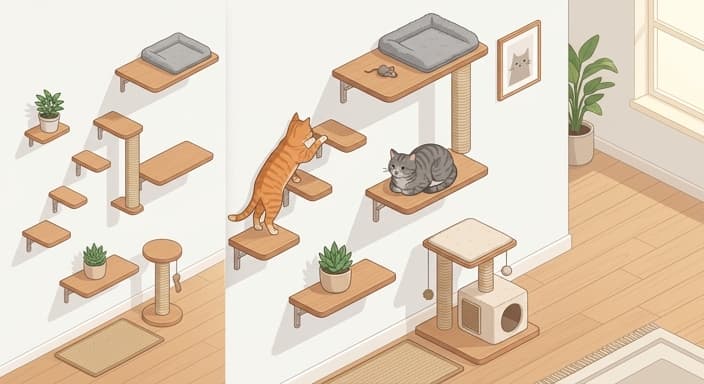
When we install a series of wall-mounted shelves, we are essentially creating an "indoor jungle gym" that encourages functional movement. This is particularly important for aging cats. While we often think that senior cats should be kept on the ground to prevent falls, the reality is that the gradual loss of muscle mass—a condition known as sarcopenia—is often accelerated by the lack of opportunities to climb. By designing vertical layouts that utilize staggered shelving heights, we allow our cats to maintain their range of motion well into their golden years, provided the layout is safe and accessible.
Designing a Vertical Highway: Safety and Ergonomics
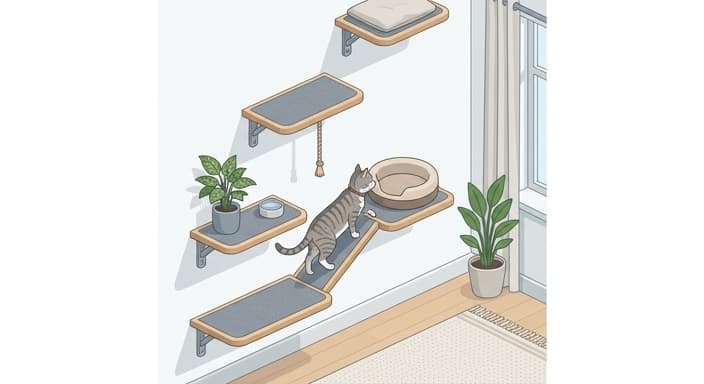
Creating a vertical landscape is not as simple as drilling a few planks into the wall. As a veterinarian, I often see injuries—such as strained ligaments or ligamentous tears—resulting from poorly placed shelves that do not account for a cat’s natural biomechanics. A proper vertical highway must be designed with the "three-point rule": there should always be a clear, non-slip path for a cat to move up and down without needing to leap from dangerous heights.
When selecting materials, prioritize surfaces with high friction. Many commercial cat shelves come with slick, laminate finishes that look great in a living room but are treacherous for a cat trying to navigate them at speed. Consider adding sisal carpet, rubberized mats, or even heavy-duty felt to the surface of your shelves. Furthermore, placement is paramount. Shelves should be positioned near windows to provide "cat TV"—the visual stimulation of birds and outdoor movement—which is a powerful antidote to indoor boredom. Avoid placing high-traffic perches directly above food or water stations, as cats generally prefer not to eat or drink in areas where they feel they might be trapped or "cornered" by other pets.
Integrating Enrichment into the Household Ecosystem
Vertical shelving should be viewed as an extension of the cat’s territory, not an imposition on your own. For multi-cat households, verticality is the single most effective way to reduce tension. In the wild, cats resolve conflict by avoiding one another; in a confined indoor space, they cannot always do this. By providing multiple, interconnected vertical "highways," you allow subordinate cats to pass over or through a room without having to cross the path of a more dominant cat on the floor.
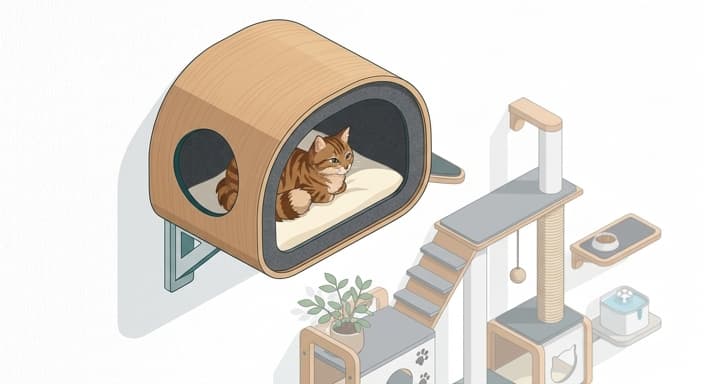
I often advise clients to create "circular" routes—where a cat can jump up, traverse the wall, and descend in a different location. This creates a sense of agency and control, which is the cornerstone of feline behavioral health. When a cat has the ability to choose their vantage point, their confidence increases, and their reliance on attention-seeking behaviors (like meowing at 3 AM or scratching the sofa) often diminishes significantly. If you have a particularly shy or fearful cat, a high-mounted, covered "cove" shelf can act as a sanctuary where they can retreat when the house gets too loud or busy, providing them with a much-needed sense of psychological autonomy.
Maintenance and Monitoring: The Proactive Approach
Once you have installed your vertical system, your work isn't quite done. Regular maintenance is essential to ensure the longevity of both the equipment and your cat’s safety. Periodically check all mounting hardware; cats generate significant force when they launch themselves from a shelf, and vibration over time can loosen screws or brackets. If you notice a shelf wobbling, address it immediately. A cat that loses confidence in the stability of their furniture will stop using it, effectively rendering your enrichment efforts useless.
Furthermore, keep a close eye on your cat’s interaction with the shelves as they age. A shelf that was easy for a two-year-old cat to navigate may become difficult for a twelve-year-old. If you notice your cat hesitating before a jump, or if they stop using the higher tiers, consider adding "bridge" shelves or steps to break up the distance. By staying attuned to your cat’s physical capabilities, you transform these shelves from static furniture into a dynamic, evolving environment that supports them through every stage of their life.
Conclusion
Transforming your home into a vertical landscape is one of the most compassionate and effective investments you can make in your cat’s long-term wellness. By honoring their innate need for elevation, you are providing them with the tools they need to feel safe, confident, and physically active within the confines of the indoor environment. Whether you are building a simple wall-mounted bridge or an elaborate, room-spanning circuit, remember that the goal is to provide a sense of agency, security, and enrichment. When we bridge the gap between our human living spaces and our cats’ biological needs, we move away from simply keeping a pet and toward truly facilitating a life of feline fulfillment.
Common Questions
🤔
Frequently Asked Questions
Why is vertical cat shelving considered essential for indoor enrichment?▼
Cats evolved as both predators and prey, relying on height for safety and surveillance. Giving them elevated paths satisfies this instinct and reduces floor-level vigilance. When cats can observe from above, stress levels tend to drop, which can reduce behavioral problems like scratching or inappropriate elimination. In short, elevation supports mental well-being and a harmonious home.
How should I design and arrange vertical shelves to maximize safety and accessibility?▼
Start with biomechanics in mind and use a three-point rule so cats always have three contact points on the ascent or descent. Choose high-friction materials and secure mounting to walls or studs, avoiding slick laminates. Arrange shelves in a staggered sequence with intermediate landings and ensure safe landing zones to reduce the risk of falls.
What are the health and behavioral benefits of vertical enrichment across life stages?▼
Younger cats benefit from exploration and exercise, while aging cats gain opportunities to maintain muscle mass and mobility, helping slow sarcopenia. Vertical layouts encourage movement, which supports weight management and cardiovascular health. Reduced stress from elevated vantage points can also lessen problem behaviors such as scratching or litter box avoidance.
What materials and maintenance practices promote longevity and safety of a vertical cat habitat?▼
Choose durable, high-friction materials and avoid slick finishes that invite slips. Use sturdy hardware and anchor points rated for cat use, and inspect regularly for loosened screws or wobbling shelves. Clean surfaces to remove oils that reduce grip, and promptly replace damaged components. Avoid toxic coatings and keep electrical cords and other hazards out of reach.