Blog3/31/2026
Vertical Cat Architecture for Stress Reduction at Home
6 mins Read
The Briefing
Quick takeaways for the curious
Vertical architecture addresses a core feline drive for height, safety, and observation, improving mental and physical health.
Elevating cats helps reduce stress-related behaviors by providing a safe, elevated retreat away from floor-level chaos.
A well-planned vertical landscape can improve multi-cat harmony by reducing direct contact and dominance displays.
Safety, stability, and ergonomics are essential; use continuous Cat Highways with sturdy anchors and non-slip surfaces.
Designing with enrichment in mind turns indoor life into a proactive, mental and physical health strategy rather than a passive setting.
There is a persistent, outdated myth in the veterinary world that an indoor cat’s environment is complete as long as they have a food bowl, a litter box, and a soft place to sleep, leaving many pet owners to assume that living strictly indoors is a sedentary, low-stimulation existence. As a veterinarian consultant, I frequently consult with devoted cat parents who are surprised to learn that the domestic cat’s biological drive for vertical exploration is not a luxury, but a fundamental requirement for their mental and physical health. We are finally moving toward a more sophisticated, proactive standard of feline husbandry that prioritizes "environmental enrichment" through vertical architecture, effectively closing the gap between a stagnant indoor life and the instinctual, high-altitude confidence every cat deserves.
The Evolutionary Imperative for Verticality
To understand why vertical space is the missing link in so many indoor cat households, we must look at the biological reality of the feline species. Cats are both predators and prey; in the wild, this dual identity necessitates a three-dimensional view of their surroundings. Height provides a cat with a "panoptic" vantage point, allowing them to survey their territory, monitor for potential threats, and—most importantly—retreat to a place of safety when they feel overwhelmed.
When we force a cat to live exclusively on a two-dimensional floor plane, we effectively strip them of their primary coping mechanism. In the wild, if a cat feels threatened or stressed by an encroaching predator, their instinct is to climb. In a home, if a cat is stressed by a vacuum cleaner, a new guest, or the presence of another pet, but lacks a high-up retreat, they are forced to deal with that stressor head-on, often leading to redirected aggression, anxiety-related house soiling, or chronic physiological stress. By installing vertical architecture, we provide a "safe zone" that empowers the cat to self-soothe by removing themselves from the immediate environment of their anxiety.
Managing Anxiety Through Elevated Observation
In my clinical practice, I often treat "idiopathic cystitis" or over-grooming issues that are rooted in chronic environmental stress. When I review the living conditions of these patients, the common denominator is almost always a lack of vertical territory. Cats possess a natural desire to be "up and away," which serves as a psychological buffer. When a cat occupies a high shelf or a wall-mounted perch, their cortisol levels drop because they are physically removed from the "floor-level chaos" of a busy household.
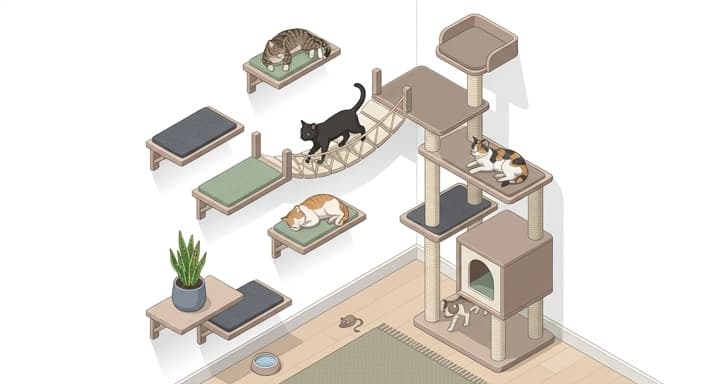
This is particularly crucial in multi-cat households. Vertical architecture creates a "territorial map" that allows cats to navigate their shared space without coming into constant physical contact. By creating a system of shelves, bridges, and cat trees, you allow your cats to pass over one another rather than through one another. This reduces the need for dominance displays and physical altercations. If you have a shy or timid cat, vertical access is essentially a prescription for confidence; they are much more likely to interact with their environment if they know they have an escape route that keeps them out of reach of more assertive housemates.
Designing Your Vertical Landscape: Safety and Ergonomics
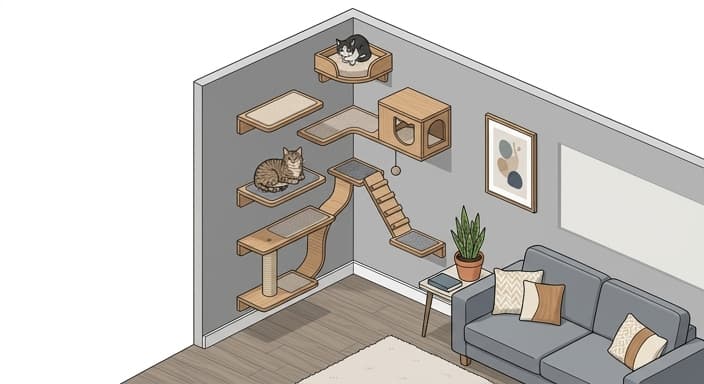
When you begin the transition to a vertical home, it is essential to prioritize the "cat-friendly" design over simple aesthetic appeal. A shelf that is too slippery, too narrow, or poorly anchored will be avoided by the cat, defeating the purpose of the installation. From a veterinary standpoint, I always recommend the "Cat Highway" approach—continuous, connected paths that allow a cat to traverse a room without ever touching the floor.
Stability is non-negotiable. Use heavy-duty wall anchors and studs to ensure your shelving can support the weight of a jumping, landing, or lounging cat. Surfaces should be covered with non-slip, high-friction materials like sisal carpet or textured rubber. When planning the layout, keep the "aging cat" in mind: as our cats enter their senior years, they may struggle with mobility. Incorporate "staircase" elements—smaller, closer-together steps—that allow them to reach their favorite perches without high-impact jumping. If your cat is reaching for a ledge and struggling to find a grip, you have created a hazard rather than a sanctuary.
Vertical Enrichment and Physical Conditioning
Beyond the psychological benefits, verticality is an incredible tool for physical health. Sedentary indoor cats are prone to obesity, which in turn leads to joint issues, diabetes, and cardiovascular strain. Vertical architecture turns a static living room into an active gymnasium. By strategically placing perches at varying heights, you encourage your cat to climb, stretch, and balance—movements that engage core muscle groups that are rarely used while walking across a flat carpet.
This type of "active furniture" also provides intellectual stimulation. Cats are naturally curious, and they enjoy solving the "puzzle" of how to get from point A to point B. You can enhance this by placing cat-safe flora, bird feeders outside the window near a high perch, or even simple catnip-infused toys on the higher shelves to reward their exploration. This mental engagement is just as tiring as physical play, which is a major benefit for owners of high-energy, "bored" cats who might otherwise turn their attention to scratching your sofa or curtains.
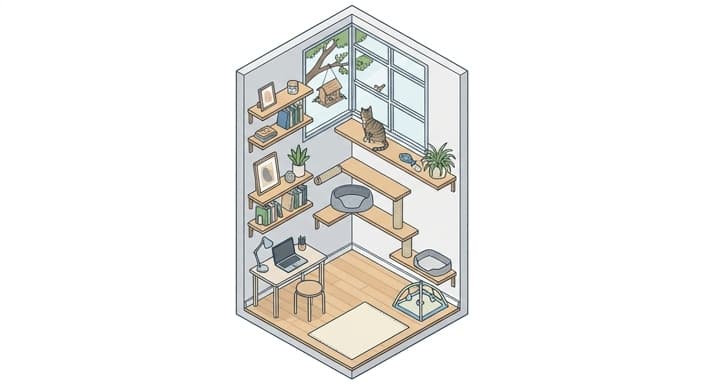
Implementing a Vertical Strategy in Small Spaces
A common misconception is that vertical architecture requires a mansion or a dedicated "cat room." In reality, small apartments often benefit most from vertical expansion. By utilizing the upper third of your wall space, you effectively double the usable square footage of your cat’s territory without sacrificing your living space.
Start by identifying the areas in your home where your cat already spends time. If they like to hide behind the curtains, that’s a perfect spot for a high-mounted corner shelf. If they watch you while you cook, a wall-mounted bridge in the kitchen can keep them engaged without them being underfoot. Remember the "Rule of Three": in a multi-cat home, ensure you have multiple paths so that no one cat can "blockade" a high-traffic vertical route. If you only provide one way up and down a large tree, a dominant cat can effectively trap a subordinate cat on a shelf, which is the opposite of the stress-reduction we are aiming for.
The Holistic Path to a Happier Cat
Integrating vertical architecture into your home is one of the most proactive, compassionate decisions you can make as a cat owner. By acknowledging and providing for their ancestral need to survey their world from a height, you are doing more than decorating a wall; you are fostering an environment where your cat can feel safe, confident, and physically challenged.
Whether you are building a custom complex or starting with a few strategically placed wall shelves, the goal remains the same: creating a "three-dimensional sanctuary" that honors your cat’s unique biology. When we reduce their environmental stress through verticality, we see the results in their behavior—less aggression, better litter box habits, more playfulness, and a deeper, more trusting bond with their human companions. Take the time to observe your cat’s natural climbing patterns and start small, building their confidence shelf by shelf. Your cat will thank you with the quiet, purring contentment that only a truly "enriched" feline can express.
Common Questions
🤔
Frequently Asked Questions
What is vertical cat architecture and why is it important for indoor cats?▼
Vertical cat architecture refers to shelves, perches, cat trees, and wall-mounted bridges that create a three-dimensional habitat for felines. It aligns with the feline drive for height, observation, and retreat, providing an elevated vantage point to monitor the environment and escape potential stressors. Without vertical space, many cats experience chronic stress or misdirected behaviors because they lack a safe sanctuary at height. Providing vertical space serves as essential environmental enrichment that supports mental and physical health.
How does elevated space reduce stress and cortisol in cats?▼
Cats use high places to distance themselves from floor-level chaos and feel safe. When a cat can retreat to an elevated perch, it experiences reduced arousal and a calmer baseline, which is reflected in lower cortisol levels. Over time, this environmental buffer helps prevent stress-related behaviors such as over-grooming or urine marking. The result is a more relaxed, confident cat with fewer behavior problems.
What design considerations ensure safety and engagement on vertical installations?▼
Prioritize stability over aesthetics; choose heavy-duty wall anchors and secure shelves to studs to support jumping and lounging. Surfaces should be non-slip and wide enough for comfortable turns and rests, and there should be continuous, connected pathways—what veterinarians call a Cat Highway—to allow movement without touching the floor. Proper spacing and gradual access prevent falls and encourage exploration. Also consider easy maintenance and the ability to reposition elements as the cat's preferences change.
How can vertical space improve behavior in multi-cat households?▼
Vertical landscapes create a territorial map that lets cats pass over one another rather than collide, reducing direct confrontations. They provide escape routes for shy or timid cats, fostering confidence and gradual social interaction. By decreasing competition for floor space and eye-level resources, you minimize dominance displays and stress-related aggression, supporting more harmonious coexistence. Introducing vertical space should be done gradually and with enrichment to encourage positive associations.