Blog4/6/2026
Smart Tech for Monitoring Pet Health with Wearables
6 mins Read
The Briefing
Quick takeaways for the curious
Traditional annual exams miss subtle shifts in a pet's health; wearable technology enables continuous, data-driven monitoring that bridges gaps in care.
Pets naturally mask illness, so wearables can detect silent signals such as changes in resting heart rate, activity, and sleep patterns to reveal pre-symptomatic issues.
Modern wearables go beyond steps, using high-fidelity sensors to track behavioral biometrics and identify early problems like arthritis or cognitive decline.
Smart hydration and nutrition devices provide precise intake data, helping detect dehydration, diabetes, thyroid issues, and infections earlier by tracking volume and frequency.
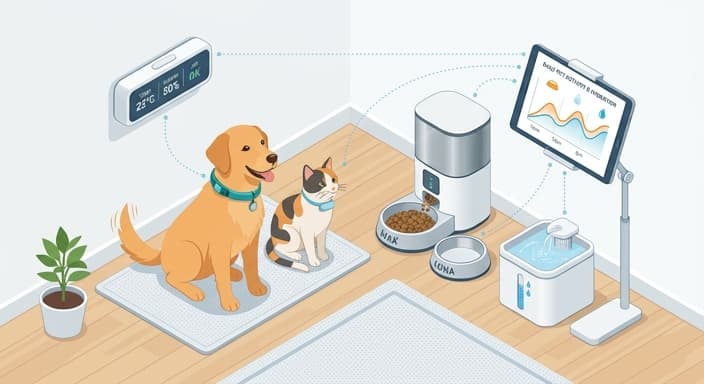
Smart environmental sensors complement wearables by monitoring home conditions like air quality, temperature, and humidity that influence health and trigger timely adjustments.
There is a persistent, outdated myth in the modern veterinary landscape that a pet’s health status can only be accurately assessed during the fleeting 20-minute window of an annual physical exam, leading many owners to believe that subtle shifts in behavior or physiology are invisible until they manifest as full-blown clinical symptoms. As a veterinarian consultant, I frequently speak with devoted pet parents who view their pet’s health as a "wait and see" proposition, failing to realize that we now live in an era where wearable technology can bridge the gap between reactive treatment and data-driven wellness. We are finally moving toward a more sophisticated, proactive standard of pet monitoring that leverages smart devices not as mere gadgets for the tech-obsessed, but as a foundational pillar of preventative medicine, effectively closing the gap between basic guesswork and the precise, real-time health insights our pets deserve.
The Biological Reality of the "Silent Symptom"
To understand why smart health monitoring is a non-negotiable upgrade for the modern pet, we must first look at the biological reality of animal evolution. As a survival mechanism, both dogs and cats are masters of masking pain and illness; in the wild, displaying weakness is a liability that invites predation. This inherent "stoic" nature means that by the time a pet shows a noticeable limp, a change in appetite, or lethargy, the underlying condition has often been present for weeks or even months. In a younger, resilient pet, the body may compensate for minor imbalances, but these physiological "silent signals"—such as an increased resting heart rate, subtle variations in activity levels, or changes in sleep quality—are constantly being broadcast by the autonomic nervous system. Smart tech acts as a diagnostic bridge, capturing these data points that the human eye simply cannot see, allowing us to identify the "pre-symptomatic" phase of disease before it becomes a crisis.
Wearables: Beyond Step Counting
The current generation of pet wearables has evolved far beyond simple pedometers. Today’s sophisticated devices utilize high-fidelity accelerometers and photoplethysmography (PPG) sensors to track a pet's vital signs with clinical-grade precision. When we look at the data provided by these devices, we aren't just looking at how much a dog ran; we are analyzing trends in "behavioral biometrics." A decrease in total daily activity might be the first indicator of early-onset arthritis or a subclinical joint injury, while a sustained increase in nocturnal restlessness might point toward pruritus (itchiness) from environmental allergies or even early cognitive dysfunction in senior pets. By integrating these metrics, we can provide a longitudinal health map to your veterinarian, turning a subjective conversation about "how they seem" into an objective discussion based on real, quantifiable evidence.

Smart Hydration and Nutrition Management
One of the most critical aspects of preventative health that often escapes the radar of busy pet parents is the nuance of hydration and caloric intake. Chronic dehydration is a hidden epidemic in the feline population, contributing significantly to urinary tract disease and chronic kidney issues. Smart water fountains and connected feeding stations now allow for a granular level of monitoring that was previously impossible. These devices track the exact frequency and volume of a pet’s intake, alerting owners to subtle decreases that often precede a diagnosis of diabetes, hyperthyroidism, or systemic infection. By automating the tracking of these inputs, we remove the human error of estimation and ensure that any sudden deviation from a pet's established baseline triggers an immediate investigation, often allowing for early intervention that preserves long-term organ function.
The Role of Smart Environmental Sensors
While wearable tech monitors the pet, smart environmental sensors monitor the world around them. Our pets spend the vast majority of their lives indoors, and the quality of that environment plays a massive role in their respiratory and dermatological health. Smart air quality monitors and temperature sensors are particularly vital for brachycephalic (flat-faced) breeds, who are highly susceptible to heat stress, or pets with asthma and chronic bronchitis. By maintaining an optimal, data-backed living environment, we can prevent "flare-ups" of chronic conditions before they start. When the environment is optimized, the body is under less oxidative stress, allowing the immune system to focus on maintenance rather than constant defense. This proactive environmental control is the next frontier in minimizing the need for long-term corticosteroid use in allergy-prone pets.

Bridging the Gap: Data-Driven Veterinary Consultations
The ultimate value of smart technology lies in how it transforms the veterinarian-client relationship. In a traditional setting, a vet relies on a "snapshot" of the pet’s health. However, with the integration of smart tech, that snapshot becomes a high-definition, long-exposure video. When you walk into an exam room armed with an exported health report from your pet’s tracker—showing a three-month trend of heart rate variability, sleep quality, and activity levels—you are providing your veterinarian with the most valuable diagnostic tool in existence: context. This data allows for more accurate medication dosing, more effective monitoring of treatment efficacy, and, most importantly, the ability to catch degenerative conditions in their infancy. We are no longer waiting for the fire to start; we are monitoring the temperature of the room to ensure it never does.
Practical Steps for Implementation
If you are ready to integrate smart technology into your pet’s wellness routine, start with a "needs-first" approach rather than a "tech-first" approach. Begin by identifying your pet’s specific risk profile. Is your dog a high-energy breed prone to orthopedic issues? Prioritize a wearable with advanced activity and gait analysis. Is your cat a senior prone to weight fluctuations or renal concerns? Focus on a smart scale and a connected water fountain. Once you have the devices, the most important step is the "baseline period." Allow the tech to track your pet for at least two weeks without interference to establish what "normal" looks like for your specific companion. Finally, share this data with your primary veterinarian. Not every clinic is tech-fluent yet, but most will be thrilled to see objective data that helps them provide better, more personalized care for your pet.
The integration of smart technology into pet health is not about replacing the intuition of a loving owner or the clinical expertise of a veterinarian; it is about empowering both with the clarity of data. By moving away from the reactive "wait and see" approach and embracing the proactive, data-driven insights provided by modern wearables and sensors, we are fundamentally changing the trajectory of our pets' lives. We are giving them the gift of a proactive healthcare partner, ensuring that the years they spend with us are not just long, but vibrant, comfortable, and defined by the high quality of life they truly deserve.
Common Questions
🤔
Frequently Asked Questions
What is the value of recognizing 'silent symptoms' and how do wearables help detect them?▼
Pets evolved to hide illness, so by the time you notice a limp or loss of appetite, disease may have been present for weeks. Wearables capture objective data—changes in resting heart rate, activity levels, and sleep quality—that escape the human eye. By tracking these trends over time, veterinarians can identify a pre-symptomatic phase and intervene earlier. This shifts care from reactive treatment to proactive prevention.
What metrics do pet wearables measure and how should owners interpret them?▼
Today’s pet wearables use accelerometers and sensors like photoplethysmography (PPG) to monitor movement and vital signs with clinical-grade precision. They produce a longitudinal health map, not just a daily step count, by tracking trends in activity, sleep, and resting heart rate. A dip in total daily activity or a rise in nocturnal restlessness can signal arthritis, allergies, or cognitive changes long before a visit to the clinic. Owners should view these metrics as baseline-based signals that warrant veterinary review rather than standalone diagnoses.
How do smart hydration and nutrition systems support preventive pet health?▼
Smart water fountains and connected feeders record exact intake frequency and volume, reducing guesswork about a pet’s hydration and calories. Subtle declines can precede conditions like diabetes or kidney issues, while sudden changes may indicate infection or metabolic problems. Automated tracking helps owners and vets spot deviations early, enabling interventions that protect organ function. This data-driven approach is especially valuable for cats, who often mask thirst.
What role do environmental sensors play in a comprehensive health monitoring strategy?▼
Environmental sensors monitor the pet’s surroundings—air quality, temperature, humidity, and potential allergens—that can influence skin, respiratory, and behavioral symptoms. When paired with wearables, they help explain why a pet's symptoms flare or shift, guiding both household adjustments and veterinary care. Owners can set alerts for conditions that exceed safe baselines, enabling timely changes. Together, they form a holistic health map that connects behavior, physiology, and environment.