Blog4/17/2026
Smart Tech for Indoor Cat Enrichment: Interactive Play
6 mins Read
The Briefing
Quick takeaways for the curious
Smart tech shifts indoor cat enrichment from a passive toy basket to an active, cognitive process that treats the cat as an agile predator.
Treats, lasers, and movement sensors create a data-driven environment that challenges hunting instincts, reduces anxiety, and prevents boredom-induced behaviors.
The most effective devices offer variable, unpredictable movement and scheduling, so cats cannot predict the sessions and stay mentally engaged.
Incorporating hiding features and 3D space navigation ensures physical agility and keeps cats agile as they age.
Integrating food puzzles and work-to-eat feeders aligns feeding with natural hunting behavior, promoting purposeful activity rather than free grazing.
There is a persistent, outdated myth in the modern pet care community that indoor cat enrichment is fully satisfied by a singular, stationary scratching post and a handful of feather wands tucked away in a toy basket. As a veterinarian consultant, I frequently speak with devoted cat parents who believe that enrichment is a static, passive luxury—something they provide occasionally when they have extra time—failing to realize that the domestic cat is an apex predator by nature, possessing a hardwired biological drive for stimulation that, if left unaddressed, manifests as anxiety, lethargy, or destructive behavioral patterns. We are finally moving toward a more sophisticated, proactive standard of indoor feline management that leverages smart technology not as a digital babysitter, but as an essential cognitive tool, effectively closing the gap between a bored, sedentary house cat and one whose natural instincts are consistently and safely engaged through data-driven, interactive play.
The Philosophy of Cognitive Engagement
To understand why smart pet tech is a paradigm shift for indoor enrichment, we must move past the idea that "tech" is merely a way to entertain a cat while we are at the office. At its core, the intelligent home is about creating an environment that responds to your cat’s curiosity and predatory drive, effectively mimicking the unpredictability of the natural world. For the average indoor cat, the modern home can quickly become a monotonous, predictable landscape where every sound and smell is accounted for. Enrichment is not just about keeping a pet "busy"; it is about providing agency and choice.
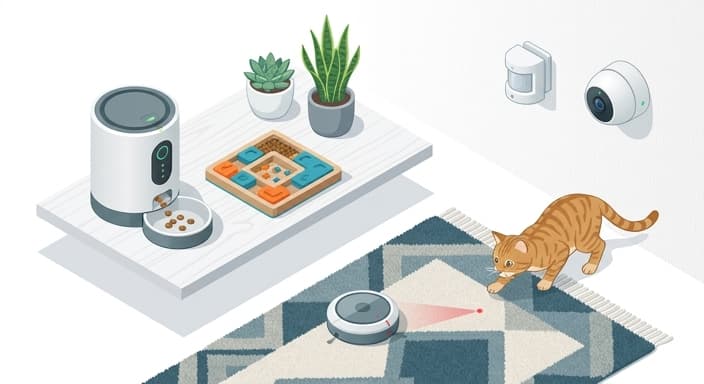
When we integrate automated laser systems, app-controlled treat dispensers, and intelligent movement sensors, we are introducing a level of environmental complexity that forces the cat to problem-solve. This cognitive load is crucial. Veterinarians often see "boredom-induced stress," where cats begin over-grooming or acting out because they lack an outlet for their hunting instincts. Smart tech allows us to simulate the "stalk-chase-pounce" sequence throughout the day, ensuring that even when you are physically absent, your cat is mentally present and engaged.
Modern Solutions for the Instinctual Hunter
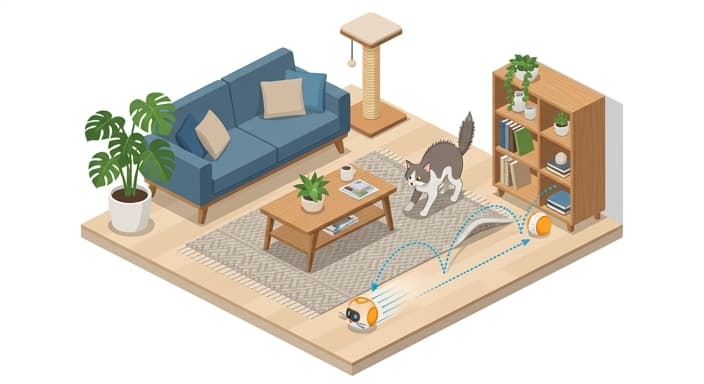
The transition from traditional toys to smart enrichment tools should be viewed as an upgrade to your cat’s quality of life. The most effective smart devices are those that offer variable movement patterns. A stationary toy loses its novelty within minutes, but a smart robot or electronic "prey" simulator that changes speed and direction mimics the erratic movement of small rodents or insects. This is vital for the feline brain, which is wired to detect motion as a primary trigger for activity.
When selecting smart toys, prioritize devices that allow for scheduling. By setting up "play sessions" that occur at random intervals throughout the day, you prevent your cat from habituating to the toy. If a device runs at the exact same time every day, your cat will eventually ignore it. However, if the device activates unpredictably, it keeps the feline senses sharp and alert. Additionally, look for "hiding" features where the toy can dart behind furniture or under rugs, forcing the cat to navigate the three-dimensional space of your home, which is essential for maintaining physical agility as they age.
Integrating Food Puzzles into the Digital Age
One of the greatest advancements in feline wellness is the move toward "work-to-eat" feeding models. In the wild, cats spend a significant portion of their waking hours hunting for their meals. In our homes, we have accidentally stripped them of this necessity by providing free-access food bowls. This creates a caloric imbalance and a lack of purpose. Smart feeders and interactive, app-enabled treat dispensers bridge this gap perfectly.
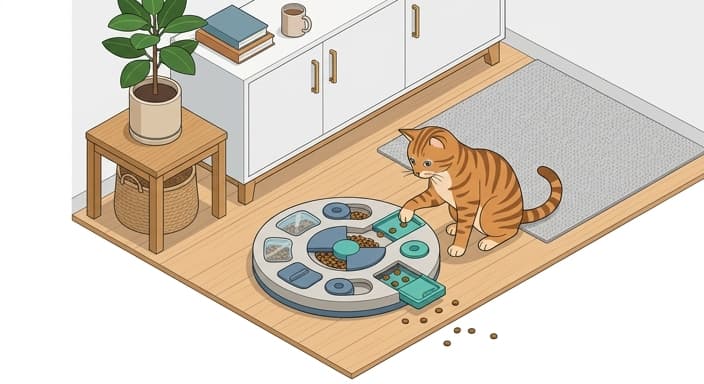
By utilizing a device that requires the cat to perform a specific action—such as tapping a button, solving a sliding puzzle, or chasing a ball that releases kibble—you transform mealtime into a rewarding hunt. These devices are particularly useful for the "midnight zoomies." By scheduling a small portion of a meal to be dispensed via a smart puzzle toy in the late evening, you can tire your cat out mentally right before bedtime, often leading to a much more peaceful night for the human household. From a veterinary standpoint, this is a win-win: it manages weight through portion control and satisfies the psychological need for foraging.
Monitoring Health Through Behavioral Data
Beyond play, the most profound impact of smart tech is the ability to track long-term behavior. Modern smart litter boxes and activity trackers provide us with data that was previously impossible to collect. As a veterinarian, I often struggle to get an accurate history from owners regarding subtle changes in their cat’s habits. "Is she eating less? Is she going to the bathroom more frequently?" These are questions that are often answered with uncertainty.
Smart litter boxes that track weight, frequency of use, and duration of visits act as an early-warning system for common feline health issues like urinary tract infections, diabetes, or kidney disease. When you have access to a dashboard that shows a downward trend in activity or a sudden change in litter box habits, you can seek veterinary intervention long before a condition becomes an emergency. This proactive, data-driven approach is the future of preventative medicine. It allows us to treat the cat as an individual with unique patterns, rather than relying on generalized observations that might miss the early symptoms of illness.
Creating a Balanced Tech-Enhanced Sanctuary
While the benefits of smart technology are significant, it is important to remember that tech should complement, not replace, human interaction. The most successful enrichment plans are those that blend high-tech solutions with high-touch companionship. Your cat still needs the scent, voice, and physical presence of their human family. Think of smart tech as the "background enrichment" that keeps the home dynamic during the hours you are working or away, and your playtime together as the "premium engagement."
When introducing new smart devices, do so gradually. Some cats are naturally more cautious than others. Place the device in an open area, leave it powered off for a day or two so the cat can investigate the "new object" on their own terms, and then introduce the movement or sound features slowly. If your cat seems intimidated, scale back. The goal is to provide a challenge, not a stressor. Furthermore, always ensure that any smart device is placed in a way that prevents cords from becoming a chewing hazard or a tripping risk. Security and safety must remain the foundation of any tech-enhanced environment.
The Future of Feline Wellness
As we look toward the future of pet care, it is clear that the integration of technology into our homes is not just a trend—it is a necessary evolution. By embracing these tools, we are acknowledging that our cats are not mere decorations, but complex, intelligent animals that deserve a life of stimulation and purpose. Whether it is an erratic laser toy that mimics a moth in flight, a puzzle feeder that rewards a successful hunt, or a smart litter box that keeps a watchful eye on their metabolic health, these devices provide us with a clearer window into our pets' lives than ever before. As pet parents, our responsibility is to provide an environment that supports their instincts, protects their health, and honors their wild heritage. When we combine the best of modern innovation with the timeless bond we share with our feline companions, we create not just a house, but a true, thriving sanctuary.
Common Questions
🤔
Frequently Asked Questions
What makes smart tech better than traditional cat toys?▼
Smart enrichment reframes play as an active cognitive challenge rather than a passive distraction. Automated devices adapt to a cat’s pace, respond to movement, and offer problem-solving opportunities that mirror hunting sequences. This approach reduces boredom-related stress, promotes physical activity, and provides data that lets you tailor enrichment to your cat’s needs.
How should I schedule play sessions to prevent habituation?▼
Set up play sessions to occur at random intervals rather than at the same time every day. Use devices with scheduling features or move toys to new locations to keep things fresh. The goal is to keep the cat surprised and engaged, so their hunting instincts stay activated even when you’re not home.
Why is unpredictability important in smart enrichment?▼
Unpredictable movement and outcomes mimic the variability of real prey, triggering a cat’s natural chase response. This unpredictability maintains alertness and prevents the feline brain from becoming bored. It also helps sustain physical and mental exercise throughout the day.
How do food puzzles fit into enrichment and wellness?▼
Food puzzles turn feeding into a purposeful activity that satisfies hunting drives while addressing caloric balance. Interactive feeders and app-enabled dispensers reward problem solving with a treat, making meals a cognitive workout rather than a habit. This approach supports weight management and keeps cats engaged during meals.