Blog4/16/2026
Smart Pet Tech for Indoor Enrichment: Cognitive Play
5 mins Read
The Briefing
Quick takeaways for the curious
Indoor enrichment is evolving from a basket of squeaky toys to dynamic, data-driven experiences that adapt to a pet’s presence and needs.
Smart pet tech centers on choice and control, offering unpredictable, varied challenges that mimic the natural world rather than simply keeping a pet busy.
Foraging tech, such as app-controlled puzzle feeders and robotic treat dispensers, turns meals into cognitive workouts and can reduce boredom and mild separation anxiety.
AI-powered robotic toys promote active movement and prey-like play, with customizable patterns to prevent habituation and support physical and mental health.
A holistic approach to enrichment combines foraging, movement, scent-based stimuli, and sensory cues to create a richer indoor environment.
There is a persistent, outdated myth in the modern pet care community that indoor enrichment is satisfied by a basket of squeaky toys or a singular, stationary scratching post tucked away in the corner of a room. As a veterinarian consultant, I frequently speak with devoted pet parents who believe that "enrichment" is a static activity—something we provide once and then walk away from—failing to realize that our pets are cognitively complex individuals who require dynamic, evolving challenges to thrive in an indoor environment. We are finally moving toward a more sophisticated, proactive standard of home enrichment that leverages smart technology not as a digital babysitter, but as an essential cognitive tool, effectively closing the gap between a bored, sedentary animal and one whose natural instincts are consistently engaged through data-driven, interactive play.
The Philosophy of Cognitive Engagement
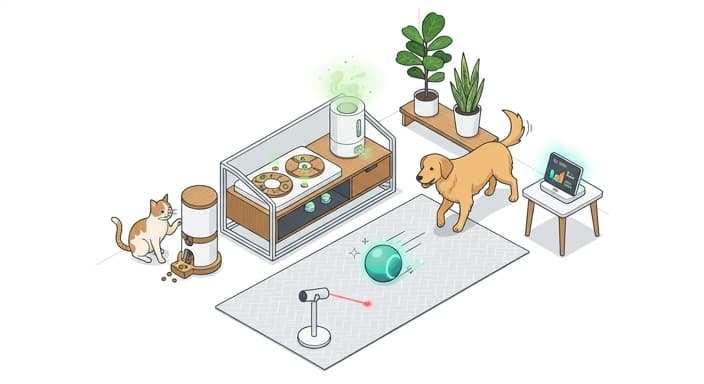
To understand why smart pet tech is a paradigm shift for indoor enrichment, we must move past the idea that "tech" is just a way to entertain a dog while we are at the office. At its core, the intelligent home is about creating an environment that responds to your pet’s presence, curiosity, and drive, mimicking the unpredictability of the natural world. For the average dog or cat, the modern home can quickly become a monotonous landscape where every sound and smell is accounted for. Enrichment is not just about keeping a pet busy; it is about providing "choice" and "control"—two psychological pillars that are often missing in indoor life. When we integrate smart feeders that require problem-solving, laser toys that move with randomized AI patterns, or scent-based enrichment dispensers, we are honoring the animal’s evolutionary need to hunt, forage, and explore.

Bridging the Gap: Smart Feeders and Foraging Tech
In the wild, a predator’s life is defined by the "hunt." They spend hours tracking, stalking, and eventually consuming their calories. In our homes, we have replaced this lifelong quest with a ceramic bowl filled to the brim twice a day. This sudden influx of food is not just a recipe for obesity; it is a recipe for boredom and the development of maladaptive behaviors like tail-chasing or excessive grooming. Smart foraging technology, such as app-controlled puzzle feeders and robotic treat dispensers, serves as a bridge between the bowl and the hunt. By requiring the pet to interact with a device—whether through a sensor-activated lid, a pattern-matching touch screen, or a chase-based release mechanism—we turn the act of eating into a cognitive workout. As a veterinarian, I advocate for these tools because they force the animal to pause, think, and solve, which releases dopamine and stabilizes their emotional baseline, particularly for pets that suffer from mild separation anxiety.
Gamifying Movement: Robotic Companions and AI Play
We have all seen the viral videos of dogs chasing robotic balls, but the utility of these devices goes far beyond the "cute factor." Many indoor pets suffer from a lack of physical stamina because they have no reason to move once their owner leaves for the day. AI-driven robotic toys are revolutionizing this by offering "active companionship." Unlike a static toy that sits on the floor, these devices can detect a pet's orientation and respond with movement that mimics prey. This is crucial for feline enrichment, as cats are crepuscular hunters who are often most active when their humans are sleeping or absent. By scheduling play sessions that incorporate varied speeds and erratic movements, these robots keep the animal’s joints supple, their cardiovascular system active, and their predatory instincts sharp. The key is variety; smart platforms that allow you to customize these play patterns ensure that the pet does not "solve" the toy and lose interest after a week.
Creating an Auditory and Visual Sanctuary
Enrichment is not solely about physical motion; it is about the sensory environment. Many pets living in urban apartments suffer from "sensory deprivation" or, conversely, "sensory overload" from the cacophony of city traffic outside their windows. Smart home technology allows us to curate an environment that promotes calmness through controlled sensory input. There are now smart speakers and dedicated pet-television platforms that play high-fidelity, species-specific soundscapes designed to mask the stressful sounds of mail carriers or neighboring pets. Furthermore, smart lighting systems can be synced to simulate a natural circadian rhythm, which is vital for animals that spend their lives indoors. By transitioning light from cool, stimulating tones in the morning to warm, amber hues in the evening, we help regulate our pets' hormonal cycles and sleep-wake patterns, which directly impacts their cognitive health and overall temperament.

The Intersection of Data and Intuition
As we integrate these technologies, it is important to remember that no gadget can replace the bond between a human and their pet. The data generated by these smart devices—such as how long your pet interacted with a toy or how often they visited a puzzle feeder—is a wealth of information that can inform your veterinary visits. For example, if your cat suddenly stops interacting with their smart laser toy, it might not be boredom; it could be the early onset of arthritis or a vision issue. I always advise my clients to look at the "engagement metrics" provided by these apps as a health diagnostic tool. If you notice a downward trend in activity or interaction, it is a cue to reach out to your veterinarian. This proactive approach turns your home into a living, breathing laboratory of your pet’s well-being, allowing us to catch potential issues long before they become clinical emergencies.
Building a Sustainable Enrichment Ecosystem
Ultimately, the goal of smart pet technology is to move away from the "set it and forget it" mentality. The most successful pet parents are those who treat their smart home tools as a supplement to, not a replacement for, social interaction. Rotate your smart toys, update your soundscapes, and monitor the engagement data regularly to ensure the environment remains stimulating. By creating a home that challenges the mind and supports the body, you are doing more than just keeping your pet occupied; you are extending their healthy years and deepening the intuitive connection you share. As the landscape of pet technology continues to evolve, our responsibility remains clear: to use these tools to foster a life that is as rich, complex, and fulfilling as the one they were designed to live in the wild.
Common Questions
🤔
Frequently Asked Questions
What is smart foraging technology and how does it benefit indoor pets?▼
Smart foraging technology uses puzzle feeders, sensor-activated lids, and robotic dispensers that require the pet to solve a task to access food. These devices transform mealtime into a cognitive workout by turning eating into a problem-solving challenge. They help slow down fast eaters, reduce boredom, and can mitigate mild separation anxiety by providing ongoing engagement. As a veterinarian, I often recommend these tools to promote mental stimulation and emotional stability.
How do AI-driven robotic toys enhance feline and canine enrichment?▼
AI-driven robotic toys detect a pet’s orientation and respond with movement, creating an interactive experience rather than a static distraction. They offer varied speeds and erratic patterns to mimic prey, encouraging natural hunting and chasing behaviors. This supports physical activity, cardiovascular health, and joint mobility while keeping the pet mentally engaged. Variety in play patterns helps prevent the toy from becoming boring after a short period.
How should pet parents balance smart tech with traditional enrichment?▼
Tech should complement, not replace, human interaction and real-world play. Schedule diverse activities, rotate devices, and ensure safe usage to avoid overstimulation or frustration. Monitor your pet’s responses and adjust intensity, duration, and choices to fit their needs. Aim for a holistic program that blends scent, food puzzles, movement, and social interaction.
What factors should I consider when selecting smart enrichment devices for indoor pets?▼
Consider safety, durability, pet size, and temperament to ensure the device suits your animal. Look for reputable brands with safety certifications, easy cleaning, and reliable app controls. Check battery life, noise level, and the ability to customize play patterns to fit your home. Also review data privacy, compatibility with other devices, and the availability of customer support.