Blog3/30/2026
Smart Pet Tech for Exotic Animals: Monitor Health & Habitat
5 mins Read
The Briefing
Quick takeaways for the curious
Smart pet tech enables continuous biometric, environmental, and behavioral monitoring of exotic animals, bridging the knowledge gap between owners and veterinary care.
For reptiles, precision environmental control with real-time sensors keeps basking temps, humidity, and UV exposure within species-specific setpoints, reducing disease risk.
Small mammals and birds benefit from miniaturized, Wi-Fi-enabled scales and cameras that reveal weight changes and activity patterns that often precede clinical illness.
Access to owner and veterinarian dashboards and data logs allows faster identification of thermal drift, husbandry issues, and other non-medical triggers.
This data-driven approach shifts care from reactive crisis management to proactive, longevity-focused husbandry for non-traditional pets.
There is a persistent, outdated myth in the veterinary world that "smart tech" is exclusively the domain of dogs and cats, leaving many owners of exotic animals—from parrots and reptiles to small mammals—to assume that their companions are unsuited for the digital monitoring revolution. As a veterinarian consultant, I frequently consult with devoted exotic pet parents who are surprised to learn that the same biometric, environmental, and behavioral tracking tools that have revolutionized canine care can be adapted to provide a far more sophisticated standard of husbandry, effectively closing the "knowledge gap" that often makes exotic animal medicine so challenging. We are finally moving toward a more proactive standard of exotic animal care that prioritizes real-time environmental precision and physiological monitoring as the true pillars of longevity for non-traditional species.
The Silent Struggle of Exotic Physiology
To understand why a tech-forward approach to exotic animal care is so critical, we must look at the biological reality of these unique companions. Unlike dogs or cats, many exotic species—particularly reptiles and birds—are masters of masking illness, a survival mechanism evolved to avoid predation in the wild. By the time an owner notices a change in behavior, such as a drop in appetite or lethargy, the animal is often already in a state of advanced physiological distress.
In the clinical setting, we struggle with the "snapshot effect": we can only assess the animal’s health during the brief window of a physical exam. Smart technology allows us to move beyond this snapshot, providing a continuous stream of data regarding ambient temperature, humidity, UV output, and even activity levels. When we rely solely on manual, inconsistent monitoring, we are often managing a medical crisis rather than preventing one. Integrating sensors and automated systems into the enclosures of our exotic friends allows us to create a controlled, data-driven environment that aligns perfectly with their highly specific biological needs.

Precision Environmental Control for Reptiles
For reptiles, the margin for error in environmental parameters is razor-thin. A difference of five degrees in a basking zone or a slight fluctuation in relative humidity can be the difference between a thriving animal and one suffering from metabolic bone disease or chronic respiratory infections. Traditional analog gauges and manual timers are notoriously unreliable, often failing to account for ambient room temperature shifts throughout the day and night.
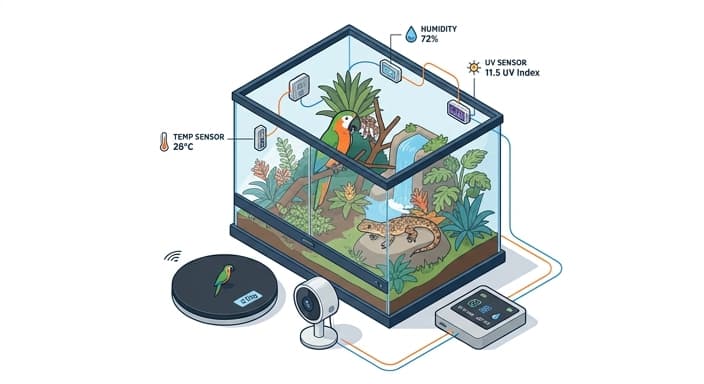
Smart thermostats and automated environmental controllers have changed the game. These devices use precision-grade probes to monitor micro-climates in real-time, adjusting heat emitters and misting systems automatically to maintain a steady, species-specific setpoint. More importantly, these systems provide data logs that allow us to detect "thermal drift" before it impacts the animal's health. By tracking these metrics, we can identify patterns of stress or discomfort long before the animal shows clinical symptoms. As a veterinarian, having access to an owner’s digital environmental log is invaluable—it allows me to rule out husbandry-related triggers instantly and focus on deeper medical diagnostics if a problem persists.
Biometric Monitoring in Small Mammals and Birds
Small mammals like chinchillas, hedgehogs, and rabbits, as well as avian companions, benefit immensely from the recent miniaturization of activity tracking and weight monitoring technology. For many of these species, weight is the single most important indicator of health. Small fluctuations in weight, often invisible to the naked eye until they become severe, are usually the first sign of dental disease in rabbits or metabolic issues in parrots.
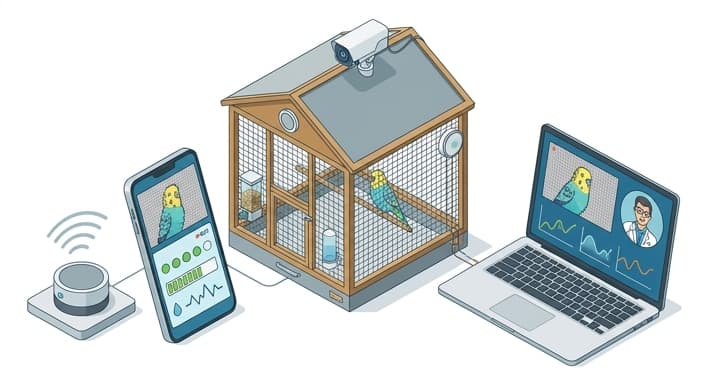
Smart, Wi-Fi-enabled scales that integrate with mobile apps allow for effortless daily weight tracking. When this data is paired with "smart" cameras equipped with artificial intelligence, owners can monitor behavioral changes without the stress of constant human interference. These cameras can detect reduced activity levels, changes in nocturnal movement, or even signs of respiratory distress in birds—such as tail bobbing—that might be missed by a casual observer. This digital "eyes-on" approach ensures that we are responding to the earliest signs of illness, allowing for early intervention that is often the difference between a quick recovery and a prolonged, difficult course of treatment.
The Role of Smart Connectivity in Long-Distance Care
One of the greatest challenges in exotic animal medicine is the scarcity of specialized veterinary expertise. Many exotic owners live hours away from a qualified avian or reptilian specialist. Smart pet tech acts as a bridge, facilitating a "telemedicine-ready" environment. If a parrot begins exhibiting abnormal feather-picking or a gecko stops eating, the diagnostic process often requires a detailed history of the animal's environment.
When you utilize smart sensors, you are not just providing a better home for your pet; you are building a repository of clinical data. High-definition video clips of normal vs. abnormal behaviors, combined with automated logs of temperature, humidity, and light cycles, provide a veterinarian with a comprehensive diagnostic picture that would be impossible to reconstruct through memory alone. This data-driven approach fosters a collaborative relationship between the pet parent and the clinician, turning the owner into a proactive partner in the animal’s healthcare journey.
Choosing the Right Tech for Your Exotic Companion
Integrating technology into an exotic enclosure requires a thoughtful, species-specific approach. It is not about turning an enclosure into a server room, but rather about enhancing the animal's quality of life through invisible, reliable support. When selecting smart devices, prioritize systems that offer encrypted, reliable connectivity and "fail-safe" modes—if the internet goes down, the equipment must continue to function based on its last saved settings.
Start by identifying the most critical variables for your specific species. For a desert reptile, prioritize high-accuracy humidity and thermal monitoring. For a social bird, prioritize audio-visual monitoring that allows you to observe their vocalizations and movements while you are away. Avoid "gimmicky" devices that prioritize aesthetics over scientific accuracy. Always look for sensors that can be calibrated, as environmental sensors can drift over time. Remember, the goal of smart tech is to reduce the burden of maintenance while increasing the quality of observation, allowing you to spend more time enjoying the company of your exotic companion and less time worrying about the variables of their habitat.
By embracing these technological advancements, we are moving past the era of "guessing" when it comes to exotic animal wellness. We are entering an era of precision care where the unique needs of these fascinating creatures are met with the same level of digital sophistication and scientific rigor as our own. Through proactive monitoring, environmental stability, and a data-driven mindset, we can significantly improve the longevity and quality of life for our exotic friends, ensuring they thrive for years to come.
Common Questions
🤔
Frequently Asked Questions
Which exotic species stand to benefit most from smart pet tech?▼
Exotic species such as reptiles, parrots, and other birds, as well as small mammals like chinchillas, rabbits, and hedgehogs, can benefit significantly from smart monitoring. These animals often mask illness and have narrow environmental tolerances, so continuous data helps owners catch subtle changes early. While dogs and cats rely on consumer-grade wearables, exotic pets require customized sensors and enclosure-based monitoring to be effective. A data-driven approach supports proactive care across a wide range of non-traditional species.
How does precision environmental control work for reptiles?▼
Precision environmental control uses real-time probes to monitor micro-climates inside the enclosure, measuring basking temperature, ambient temperature, humidity, and UV output. Smart thermostats and automated misting systems adjust heat emitters and humidity to maintain species-specific setpoints. Data logs reveal thermal drift and stress patterns, enabling preemptive adjustments before clinical signs appear. This system helps prevent conditions such as metabolic bone disease and chronic respiratory issues.
What metrics should owners prioritize for small mammals and birds?▼
Weight is often the most important health indicator for small mammals and birds; even small daily weight changes can signal dental disease or metabolic problems. Pairing a Wi-Fi-enabled scale with a mobile app allows daily weight tracking and trend analysis. Activity levels, gait, feeding behavior, and social interaction patterns provide early clues that something is amiss. Integrating enclosure data, such as temperature and humidity, helps distinguish environmental triggers from medical ones.
How can veterinarians use data from smart pet tech to improve care?▼
Veterinarians can review continuous data streams—weight, activity, environmental conditions, and behavioral cues—to identify trends that are invisible during a rare clinic visit. This data helps rule out husbandry-related triggers quickly, narrowing the diagnostic field when problems persist. Shared dashboards give clinicians and owners a common reference, enabling proactive adjustments to care plans and earlier interventions. In short, data-driven monitoring supports a more precise, preventative approach to exotic animal medicine.