Blog4/22/2026
Safe Indoor Exercise for Senior Dogs: Gentle, Low-Impact Moves
6 mins Read
The Briefing
Quick takeaways for the curious
Indoor, low-impact exercise helps counteract aging changes such as muscle loss and joint stiffness.
Gentle movement stimulates synovial fluid and supports tissue pliability, which is why motion is medicine for aging dogs.
Creating a senior-safe fitness zone with non-slip surfaces, bright lighting, and a clear path reduces injury risk and boosts confidence.
Standing-to-sit-to-stand sequences provide functional strengthening for the thighs and hips on a non-slip surface, guided by treats.
Gentle weight-shifting and other low-impact exercises should be introduced gradually and tailored to the dog's abilities with veterinary input when needed.
There is a persistent, outdated myth in the modern pet care community that the senior years are a time for "winding down" into a life of sedentary stillness, where the primary goal of the owner is simply to provide a soft pillow and a quiet corner. As a veterinarian consultant, I frequently speak with devoted pet parents who worry that their aging dog’s decreased mobility or slower pace means they should avoid activity altogether, failing to realize that carefully managed, low-impact indoor exercise is the single most effective way to prevent muscle atrophy and joint stiffening. We are finally moving toward a more sophisticated, compassionate standard of geriatric care that views intentional indoor movement not as a risk to be avoided, but as a therapeutic intervention, effectively closing the gap between a senior dog who drifts into physical decline and one who remains limber, confident, and physically engaged throughout their golden years.
The Physiology of Aging: Why Movement is Medicine
To understand why indoor exercise represents a paradigm shift for our silver-muzzled companions, we must first demystify the biomechanics of the aging canine. As dogs enter their senior years, they experience a natural decrease in muscle mass—a condition known as sarcopenia—and a reduction in the synovial fluid that lubricates their joints. When we allow a senior dog to become completely sedentary, these joints become stiff, and the supportive musculature weakens, creating a vicious cycle: the dog moves less because they are stiff, and they are stiff because they move less.
In my clinical practice, I often emphasize that "motion is lotion." By engaging in low-impact, controlled indoor activities, we stimulate the production of synovial fluid and keep the connective tissues pliable. The goal is not to replicate the high-intensity play of their puppyhood, but to facilitate functional movement that maintains core stability and proprioception—the dog’s awareness of where their limbs are in space. This awareness is critical for preventing slips and falls on hardwood or tile floors, which are common culprits behind geriatric injuries.
Creating a Senior-Safe "Fitness Zone"
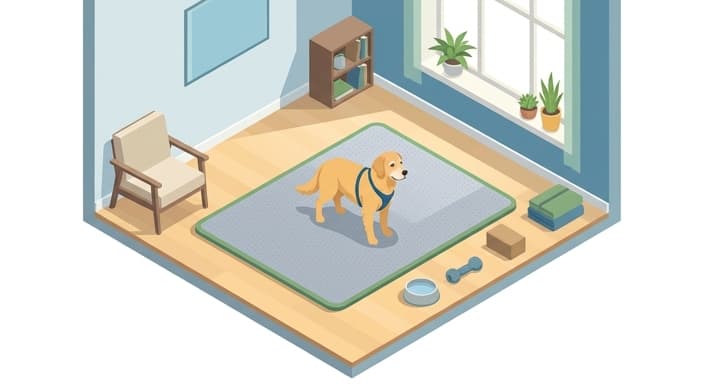
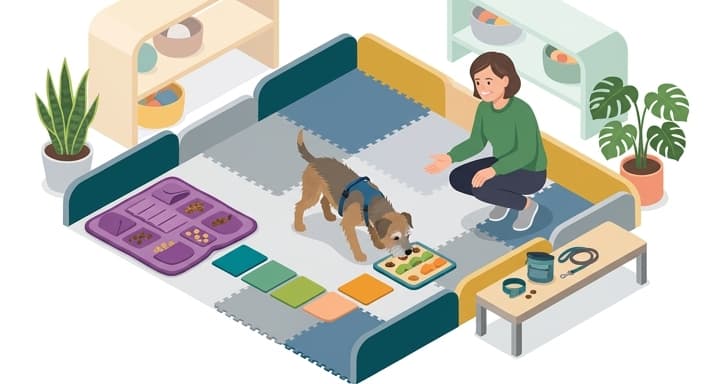
Before initiating any exercise program, we must prepare the indoor environment to be "senior-friendly." Aging dogs often lose the confidence they once had on slick surfaces, which leads to "splayed-leg" syndrome and unnecessary anxiety. The first step in your home gym setup should be the strategic placement of non-slip rugs, yoga mats, or interlocking foam tiles in the areas where you intend to play. Creating a high-traction surface significantly reduces the risk of injury and empowers your dog to move with more freedom.
Furthermore, ensure that the lighting in your exercise space is adequate. Many senior dogs experience a decline in visual acuity, and navigating a dim room can lead to hesitation or tripping. By bright-lighting your activity zone, you allow your dog to focus on the task at hand rather than worrying about their footing. Finally, remove any obstacles—low-lying coffee tables, power cords, or heavy floor vases—that might force your dog to navigate tight, awkward angles. A clear, padded, well-lit space is the foundational requirement for safe indoor engagement.
Low-Impact Exercises for Mobility and Strength
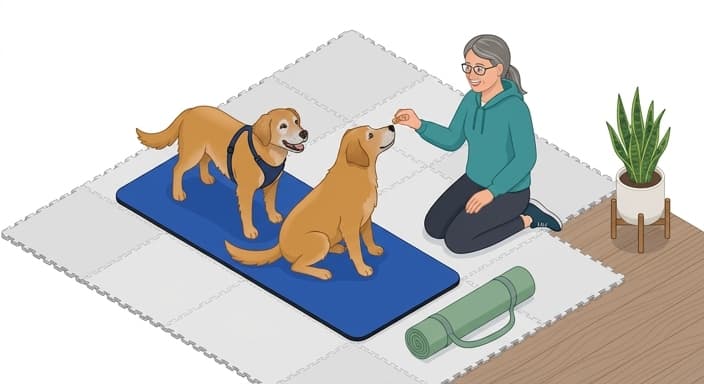
Once the environment is secure, we can introduce specific, low-impact movements designed to support musculoskeletal health. One of the most effective exercises is the "stand-to-sit-to-stand" sequence. By encouraging your dog to sit and then stand on a non-slip surface, you are performing a functional squat that engages the quadriceps and gluteal muscles. You can guide them into these positions using a small, high-value treat held at their nose level, moving it slowly upward and backward to encourage a natural sit.
Another excellent activity is "weight-shifting." With your dog in a standing position, use a treat to gently guide their head to the left and right, encouraging them to shift their weight between their front and back legs. This is a subtle, non-strenuous way to improve balance and core strength. For dogs that are physically capable, short "indoor obstacle courses" can be created using pool noodles or flat floor pillows. These aren't for jumping; they are for stepping over, which encourages your dog to lift their limbs higher and improves their gait pattern. Always remember: if your dog seems reluctant or shows signs of discomfort, stop immediately. The goal is engagement, not exhaustion.
The Power of Proprioception and Sensory Play
Proprioception, or body awareness, is often the first thing to degrade in the aging brain and nervous system. When a dog loses the ability to "feel" where their paws are, they become prone to stumbling. We can combat this through "sensory walking." Use textured surfaces—such as a piece of artificial turf, a rubber mat, or a piece of bubble wrap (covered by a thin cloth)—and encourage your dog to walk slowly across them. The varying sensations under their paws send sensory signals to the brain, which helps "wake up" the nervous system and improve neural connectivity.
Pairing this with light scent work adds a cognitive layer to the physical exercise. Hiding small, low-calorie treats around your designated indoor play space encourages your dog to move their head, neck, and body in different directions as they hunt. By combining physical movement with the natural instinct to "sniff out" a reward, you are providing a holistic workout that challenges the body and the mind simultaneously. This type of play is inherently rewarding for the dog, reducing the stress associated with physical therapy-style exercises.
Recognizing the Limits: When to Pause and Pivot
As a veterinarian, I cannot stress enough the importance of observing your dog’s "signs of fatigue." Unlike a young dog, who might pant or zoom around until they crash, a senior dog’s fatigue is often more subtle. Watch for "the look away"—when your dog stops engaging, turns their head, or begins to lick their lips repeatedly, these are often signs of cognitive or physical overload. Other markers include a change in gait, a reluctance to bear weight on a specific limb, or heavy panting that continues long after the exercise has ended.
It is also vital to coordinate these efforts with your primary veterinarian. If your dog has a known diagnosis, such as osteoarthritis, hip dysplasia, or a heart condition, they may have specific movement restrictions. I always recommend a "less is more" approach: five minutes of gentle, focused movement two or three times a day is far superior to a single, thirty-minute session that leaves your dog stiff and sore the following morning. Keep a simple log of these sessions—noting the activity, the duration, and how your dog’s mobility appears the next day. This data is incredibly valuable for your vet when assessing the long-term management of your dog’s physical health.
Ultimately, providing safe, indoor exercise for your senior dog is a profound act of love. It is a commitment to their quality of life that honors the years they have given you. By modifying the environment, focusing on low-impact functional movements, and listening closely to the cues your dog provides, you can transform their golden years from a period of waiting into a vibrant, active, and deeply connected chapter of their life. Every small step they take in your living room is a victory for their longevity and a testament to the enduring bond you share.
Common Questions
🤔
Frequently Asked Questions
What is the rationale behind indoor exercise for senior dogs?▼
Indoor, low-impact exercise helps counteract aging changes such as muscle loss and joint stiffness. Gentle movement stimulates synovial fluid and supports tissue pliability, which is why motion is medicine for aging dogs. It should be designed to maintain functional strength without high impact, and sessions should be gradual. Always tailor the plan to your dog's condition and monitor for signs of discomfort.
How do I set up a senior-friendly indoor space?▼
Create non-slip surfaces with rugs or mats, ensure bright lighting, and remove obstacles to prevent slips and awkward turns. Keep the space clear of clutter and provide a defined exercise zone. Use appropriate mats and possibly foam tiles to create traction. Check in with your dog for confidence on the setup and adjust as needed.
What are the recommended exercises and how do I do them safely?▼
Two effective exercises are stand-to-sit-to-stand and weight-shifting. For stand-to-sit-to-stand, guide your dog into a sit and then a stand on a non-slip surface using a treat held at nose level, moving it slowly to encourage the movements. For weight-shifting, have your dog stand and gently guide weight from one leg to the other with a treat to build balance and paw stability. Keep sessions short, watch for signs of fatigue, and stop if there is pain or reluctance.
How do I know when to adjust or stop activities?▼
Monitor for signs of pain, fatigue, or hesitation beyond normal stiffness, and adjust intensity accordingly. Start slowly and gradually increase duration or difficulty as your dog tolerates it. Consult a veterinarian if your dog has chronic arthritis, neurological issues, or is losing motor control. Regular check-ins help ensure safety and progress.