Blog4/3/2026
Proactive Joint Support for Senior Pets: A Wellness Guide
6 mins Read

The Briefing
Quick takeaways for the curious
Proactive joint support shifts from reactive treatment for age-related arthritis to a foundational pillar of orthopedic longevity for aging pets.
Many owners mistakenly think joint care is only for seniors, but subtle gait changes can signal long-standing cartilage degradation and hidden inflammation.
Osteoarthritis is a chronic, degenerative disease where cartilage thinning and exposed bone reduce range of motion and cause nagging discomfort, even if a pet masks pain.
A modern approach combines targeted nutrients beyond glucosamine—omega-3s from fish oil, glucosamine and chondroitin, UC-II, and Green-Lipped Mussel—to support both joint structure and inflammatory control.
Internal nutrition must be paired with environment modifications, like traction-friendly homes, to reduce slips and high-impact stress on aging joints.
There is a persistent, outdated myth in the veterinary community that joint support is exclusively a "senior pet" concern, leaving many owners to assume that as long as their companion is still chasing tennis balls or leaping onto the sofa, their skeletal structure is functioning at peak capacity. As a veterinarian consultant, I frequently consult with devoted pet parents who are surprised to learn that by the time a pet exhibits a subtle "hitch" in their gait, a hesitation before jumping, or an unusual stiffness upon waking, the underlying cartilage degradation and synovial inflammation have often been progressing silently for years. We are finally moving toward a more sophisticated, proactive standard of geriatric wellness that leverages evidence-based joint support not as a reactive "fix" for age-related arthritis, but as a foundational pillar of orthopedic longevity, effectively closing the gap between basic mobility maintenance and the complex, lifelong structural needs of our aging companions.
The Biological Reality of Geriatric Joint Wear
To understand why proactive joint support is essential for our aging pets, we must look at the biological reality of the musculoskeletal system. Over a lifetime of running, playing, and navigating hard surfaces, a pet’s joints—the hinges of their body—experience cumulative micro-trauma. In a youthful joint, articular cartilage acts as a frictionless shock absorber, lubricated by a healthy supply of synovial fluid. As pets age, however, the rate of cartilage breakdown begins to outpace the body’s ability to regenerate it.
This process, known as osteoarthritis (OA), is not merely "old age." It is a chronic, degenerative disease. The cartilage thins, the underlying bone becomes exposed, and the joint capsule thickens, leading to decreased range of motion and persistent, nagging discomfort. Because our pets are masters of masking pain—an evolutionary trait designed to prevent them from appearing vulnerable to predators—they often continue to be active despite significant joint degradation. Proactive support aims to preserve the integrity of the synovial lining and cartilage before the inflammatory cascade becomes irreversible.
Beyond Glucosamine: The Core Nutrients for Joint Longevity
When we discuss "joint support," many owners immediately think of basic glucosamine. While essential, the modern veterinary approach is far more comprehensive. To truly support a senior pet, we must look for a synergistic blend of compounds that address both structural integrity and the inflammatory response.
Omega-3 fatty acids, specifically EPA and DHA sourced from high-quality cold-water fish oil, are perhaps the most potent natural anti-inflammatories available. They work by inhibiting the production of enzymes that destroy cartilage. When paired with Glucosamine and Chondroitin—the building blocks of cartilage—these nutrients create a dual-action defense. Additionally, we are seeing incredible clinical results with newer, science-backed ingredients like Undenatured Type II Collagen (UC-II), which helps the immune system tolerate joint tissue, and Green-Lipped Mussel, which provides a rich source of glycosaminoglycans and unique omega-3s. For the aging pet, a "more is better" approach isn't the goal; rather, it is about providing the right biological precursors at therapeutic doses.

Integrating Mobility-Friendly Lifestyle Adjustments
Supplements are only as effective as the environment in which the pet lives. Proactive joint health for senior pets is a two-pronged strategy: internal support via nutrition and external support via environmental modifications. Even the best supplement regimen will struggle to overcome the daily impact of slippery hardwood floors or high-impact jumping.
One of the most practical tips I give my clients is to "audit" their home for traction. Senior pets often lose muscle mass in their hindquarters, making them prone to slipping. Placing non-slip yoga mats or runner rugs in high-traffic areas provides the stability they need to stand and move with confidence. Furthermore, we must reconsider how our pets access elevated spaces. Ramps for cars and pet stairs for sofas or beds are not just "accommodations"—they are preventative orthopedic tools. By reducing the force of gravity on their joints during daily movements, we significantly lower the cumulative wear that leads to pain.
Weight Management as a Structural Necessity
If there is one factor that dictates the success of joint support more than any supplement, it is body condition. In my clinic, I often tell clients that every extra pound a pet carries is effectively four pounds of force on their joints with every step they take. Obesity is the single greatest catalyst for the acceleration of osteoarthritis in senior pets.
A proactive approach to joint health must include a rigorous weight management plan. This doesn't just mean "feeding less." It means working with your veterinarian to determine the ideal lean body mass for your specific pet. Often, switching to a therapeutic mobility diet—which contains higher levels of EPA/DHA and targeted antioxidants—can allow a pet to shed excess weight while simultaneously providing the nutrients needed for joint repair. When a pet reaches their ideal weight, the mechanical stress on their joints drops dramatically, allowing their natural mobility to return and creating a positive feedback loop of increased activity and improved comfort.
The Role of Integrative Therapies and Regular Monitoring
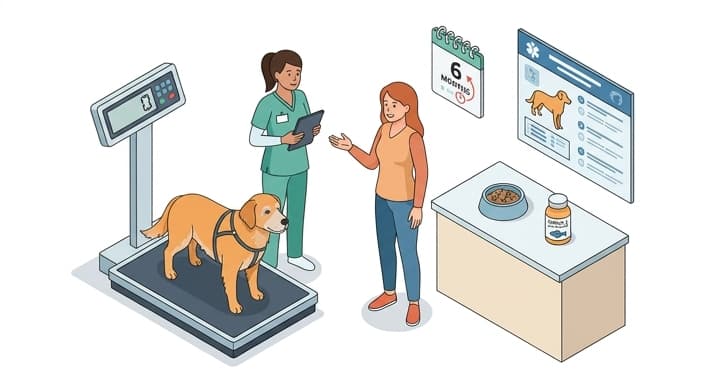
Proactive care in the senior years is not a "set it and forget it" strategy; it is an evolving conversation between the pet owner and the veterinary team. As pets enter their golden years, I encourage owners to schedule "mobility check-ins" every six months, rather than just waiting for the annual wellness exam. During these visits, we can assess muscle atrophy—a common sign that a pet is compensating for joint pain—and adjust supplement dosages or pain management strategies accordingly.
Beyond supplements and lifestyle, we should embrace integrative therapies. Modalities like laser therapy, acupuncture, and controlled physical rehabilitation exercises can do wonders for maintaining joint fluid viscosity and muscle strength. Underwater treadmills, for instance, allow senior pets to build the stabilizing muscles around their joints without the concussive force of walking on solid ground. By viewing joint health through an integrative lens, we move away from treating a pet as a collection of symptoms and start viewing them as a whole, aging organism that deserves to live their final chapters with dignity, comfort, and the ability to move freely through their world.
A New Standard for Aging with Grace
The goal of proactive joint support is simple: to ensure that our pets remain active, engaged, and pain-free for as long as possible. We are no longer limited to watching our companions slow down with resignation. Through a combination of high-quality, evidence-based supplementation, intentional environmental modifications, strict weight management, and regular professional monitoring, we have the tools to significantly extend their "mobility lifespan." By taking action before the first limp appears, we aren't just managing a condition—we are investing in the quality of their daily life, ensuring that the years ahead are defined by movement and joy rather than stiffness and limitation. Remember, the best time to start supporting your pet's joints was yesterday; the second best time is today.
Common Questions
🤔
Frequently Asked Questions
What is proactive joint support, and why does it matter for aging pets?▼
Proactive joint support is a strategy to preserve the health of a pet's joints before noticeable arthritis arises. It aims to maintain cartilage integrity and synovial protection to slow or prevent the inflammatory cascade that accompanies aging. By addressing joints early, owners can help sustain mobility and comfort over the long term, rather than waiting for painful symptoms to appear. Work with a veterinarian to tailor a plan based on the pet's risk and activity level.
Which nutrients deliver the most impact beyond glucosamine?▼
Beyond glucosamine, omega-3 fatty acids EPA and DHA from high-quality fish oil provide potent anti-inflammatory effects and support cartilage health. Glucosamine and chondroitin remain foundational building blocks, while Undenatured Type II Collagen (UC-II) and Green-Lipped Mussel offer additional immune tolerance and joint-supporting compounds. The key is a synergistic blend given at therapeutic, veterinarian-approved doses, not simply a larger dose of any single ingredient.
How can owners modify their home to support a senior pet’s joints?▼
Create a traction-friendly environment by minimizing slippery surfaces and using non-slip rugs or traction mats in common areas. Consider ramps or low-rise steps to reduce jumping onto furniture, and place resting spots on stable, easy-to-access surfaces. Regular, moderate activity and gentle hand-guided exercise help maintain muscle support without overloading aging joints. Small environmental adjustments can significantly reduce the risk of slips and injuries.
When should I start discussing joint health with my veterinarian?▼
Start proactive joint health discussions before arthritis becomes obvious. Even subtle changes like a slight hitch in gait or hesitation can indicate ongoing joint wear that benefits from early management. Your veterinarian can help you choose an evidence-based combination of nutrition and environmental strategies tailored to your pet’s age, breed, and activity level. Ongoing monitoring allows adjustments to the plan as your pet ages.