Blog4/12/2026
Proactive Joint Support for Senior Dogs: Wellness Guide
6 mins Read
The Briefing
Quick takeaways for the curious
Proactive joint care reframes stiffness in senior dogs as a medical condition that can be managed, not an inevitable consequence of aging, and is essential to preserving quality of life.
Understanding joint biology shows aging reduces cartilage maintenance and synovial fluid, increasing friction and risk of osteoarthritis, which is why prevention matters.
The Triple-Threat Protocol—weight management, targeted supplements, and environmental tweaks—provides a comprehensive, proactive path to healthier mobility.
Weight control remains the most effective 'joint supplement,' as excess pounds dramatically increase joint load and pain risk for senior dogs.
Managing inflammation goes beyond NSAIDs; a proactive program combines nutrition, anti-inflammatory nutrients like omega-3s, and supportive environments to slow degeneration and pain.
There is a persistent, outdated myth in the modern pet care community that a senior dog’s slowing pace, hesitation on the stairs, or reluctance to rise in the morning are simply "inevitable signs of getting old" or an unavoidable byproduct of a life well-lived. As a veterinarian consultant, I frequently speak with resigned pet parents who view their dog’s stiffness as a permanent, untreatable "senior tax," failing to realize that chronic joint discomfort is not merely a sign of aging, but a medical condition that, if left unmanaged, erodes a dog’s quality of life and spirit. We are finally moving toward a more sophisticated, proactive standard of geriatric care that treats joint health not as a reactive measure to be addressed only when a dog stops walking, but as a foundational pillar of senior wellness, effectively closing the gap between a dog who exists in a state of chronic, low-grade pain and one who continues to enjoy active, fluid, and joyful golden years.
The Biology of Wear: Understanding Articular Degradation
To understand why proactive joint support is a game-changer for our senior companions, we must first look at the "mechanical landscape" of the canine joint. A healthy joint is a marvel of engineering, lined with smooth, shock-absorbing articular cartilage and lubricated by a viscous fluid called synovial fluid. Throughout a dog’s life, this system undergoes constant microscopic wear and repair. In a younger dog, the body’s metabolic rate and regenerative capacity keep this system in a state of homeostasis. However, as dogs age, the production of chondrocytes—the cells responsible for maintaining the cartilage matrix—begins to decline.
Simultaneously, the quality of synovial fluid begins to thin, losing its viscosity and its ability to cushion the bone ends effectively. This leads to the "bone-on-bone" friction that characterizes osteoarthritis. When we talk about proactive support, we aren't just talking about "pain relief." We are talking about nutritional and mechanical interventions that nourish the cartilage, stimulate the production of synovial fluid, and mitigate the inflammatory cascade that causes long-term structural damage.
The Triple-Threat Protocol: Nutrition, Supplements, and Environment
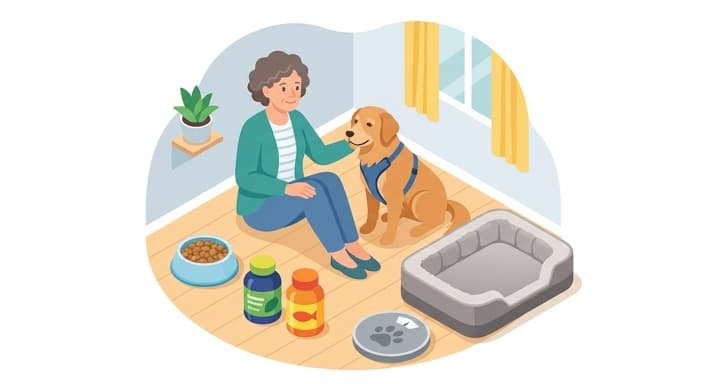
Managing joint health is rarely about finding a "magic pill." Instead, it requires a comprehensive, multi-modal approach. As a veterinarian, I recommend what I call the "Triple-Threat Protocol," which addresses the biological, nutritional, and environmental aspects of mobility.
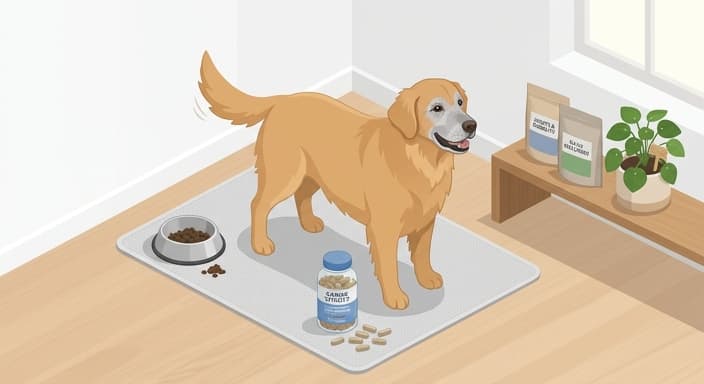
First, weight management is the single most effective "joint supplement" available. Even a few pounds of excess weight significantly increases the mechanical load on the joints. If your senior dog is carrying extra weight, the best proactive step you can take is a calorie-controlled, nutrient-dense diet designed for weight loss.
Second, supplementation should be started long before you see a limp. Look for high-quality, clinical-grade supplements containing Glucosamine, Chondroitin, and MSM. These work by providing the raw materials the body needs to maintain cartilage integrity. Omega-3 fatty acids, specifically EPA and DHA sourced from fish oil, are also essential; they act as natural, systemic anti-inflammatories that help "cool down" the inflammatory fire that aging joints often sustain.
Third, consider the environment. Hardwood and tile floors are treacherous for a senior dog with reduced proprioception (the body’s ability to sense its position in space). Adding non-slip rugs or yoga mats to high-traffic areas can be the difference between a confident walk and a painful slip that causes a soft-tissue injury.
Managing Inflammation: Beyond the NSAID Paradigm
For many years, the veterinary gold standard for arthritis pain was the immediate prescription of Non-Steroidal Anti-Inflammatory Drugs (NSAIDs). While these medications are highly effective and often necessary for acute flare-ups, they are not the only, nor always the best, solution for long-term, chronic management. Over-reliance on NSAIDs can sometimes mask the early warning signs of joint distress, leading owners to believe their dog is "fine" when they are actually still in pain.
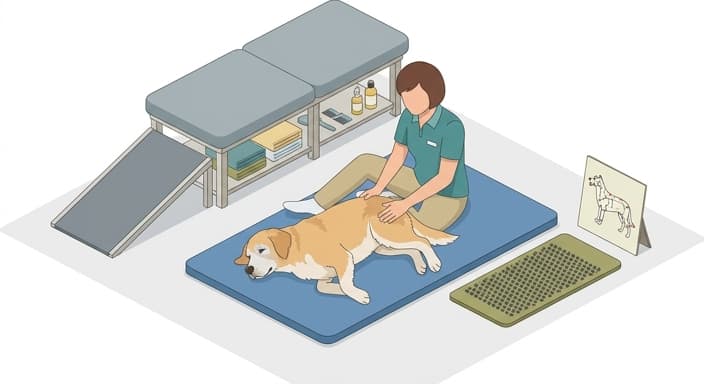
Proactive management focuses on preventing the inflammation before it necessitates a heavy pharmaceutical intervention. This includes exploring modalities like laser therapy (photobiomodulation), which uses specific wavelengths of light to penetrate deep into the tissues, stimulating cellular repair and increasing blood flow to the joint capsule. Acupuncture and therapeutic massage are also invaluable; they help release tension in the compensatory muscles—the muscles that take over when a dog begins to favor one leg or shift their weight to accommodate a sore hip. When we manage the inflammation through these integrative channels, we preserve the dog’s internal organ health while keeping them comfortable.
Exercise Modification: The "Consistent, Not Intense" Rule
One of the most dangerous myths in senior pet care is that a dog should stop moving if they have joint pain. In reality, "motion is lotion." When a joint remains immobile, the synovial fluid thickens and the muscles surrounding the joint begin to atrophy. This muscle loss is catastrophic, as the muscles act as the "shock absorbers" for the skeleton. If the muscles wither, the joints take 100% of the impact, which only accelerates the degradation process.
The key is to replace high-impact, burst-energy activities—like chasing a ball or jumping for a frisbee—with low-impact, consistent movement. Short, frequent walks on flat, soft surfaces like grass or dirt are far superior to one long weekend hike. Swimming or underwater treadmill therapy is the "gold standard" for senior dogs because it provides a full range of motion without the burden of gravity. If your dog is a senior, rethink their exercise routine: focus on "sniff-walks" where they can move at their own pace, and stop the activity the moment you notice them losing their gait or rhythm.
Monitoring for Subtle Signals of Discomfort
Dogs are stoic creatures. They are evolutionarily hardwired to hide weakness, as showing pain in the wild would make them vulnerable. By the time a dog is audibly whimpering, limping, or refusing to eat, they have likely been in significant pain for weeks or even months. As proactive pet parents, we must learn to read the "silent language" of joint pain.
Watch for subtle changes: Does your dog take longer to stand up after a nap? Are they licking their wrists or hips more than usual? Do they hesitate before jumping into the car, or have they stopped wanting to be petted on their lower back? Are they lagging behind on walks, or do they seem "cranky" when they are handled? These are often the first, quiet cries for help. Keep a simple "mobility log" on your phone. If you notice a trend toward increased stiffness or decreased activity over a two-week period, it is time to schedule a consultation with your veterinarian to adjust your protocol.
Proactive joint support is not about fighting the clock; it is about honoring the life your dog has lived by giving them the comfort they deserve in their later years. By combining weight management, high-quality nutrition, gentle physical conditioning, and a vigilant eye for the subtle signs of discomfort, we can transform the aging process from a period of decline into a season of sustained, comfortable, and dignified companionship. Your dog has spent their life supporting you—now, it is our turn to support their every step.
Common Questions
🤔
Frequently Asked Questions
What is the Triple-Threat Protocol and why is it central to proactive senior dog joint care?▼
The Triple-Threat Protocol is a multi-modal approach that treats joint health as foundational to senior wellness. It combines weight management, targeted supplements, and environmental modifications to support cartilage, lubricating fluid, and overall mobility. Implementing all three elements together helps slow degeneration, reduce pain, and maintain activity levels rather than waiting for a limp to appear.
How does aging biologically affect a dog’s joints, and what should proactive care aim to do?▼
Aging joints experience declining cartilage maintenance due to fewer chondrocytes and thinning synovial fluid, which increases bone-on-bone friction and the risk of osteoarthritis. Proactive care aims to nourish cartilage, stimulate synovial fluid production, and blunt the inflammatory cascade that drives long-term damage. This is why early, multi-modal support is more effective than reactive treatment after pain becomes obvious.
What should owners look for in supplements for senior dogs’ joints, and when should they start?▼
Look for high-quality, clinical-grade formulations that include glucosamine, chondroitin, and MSM, along with omega-3 fatty acids (EPA and DHA). These ingredients provide raw materials for cartilage, help maintain lubricating fluid, and reduce systemic inflammation. Supplements should ideally be started before noticeable limping, under veterinary guidance, as part of a broader proactive plan.
What is the role of NSAIDs in a proactive joint care plan, and what alternatives exist?▼
NSAIDs are effective for acute flare-ups but are not a standalone, long-term solution for chronic joint health. A proactive plan prioritizes weight management, nutrition, supplements, and environmental changes to slow degeneration and support mobility, with NSAIDs used judiciously under a veterinarian’s supervision for short-term relief when needed.