Blog4/3/2026
Proactive Joint Health Care for Senior Pets: Longevity Tips
6 mins Read
The Briefing
Quick takeaways for the curious
There is a persistent myth in the veterinary community that joint support is exclusively a senior-pet concern, which delays proactive care for many pets.
Proactive joint care shifts from reactive treatment to a foundational pillar of orthopedic longevity, aiming to preserve mobility before cartilage damage becomes irreversible.
The biology of aging joints shows cartilage thinning and a dry, less viscous synovial fluid that quietly degrades joint function long before obvious lameness.
A modern nutraceutical approach combines glucosamine and chondroitin with omega-3 fatty acids, green-lipped mussel, and undenatured Type II collagen to support cartilage repair and modulate inflammation.
Simple environmental changes, especially improving traction and reducing slippery surfaces, can dramatically improve mobility and comfort for senior pets.
There is a persistent, outdated myth in the veterinary community that joint support is exclusively a "senior pet" concern, leaving many owners to assume that as long as their companion is still chasing tennis balls or leaping onto the sofa, their skeletal structure is functioning at peak capacity. As a veterinarian consultant, I frequently consult with devoted pet parents who are surprised to learn that by the time a pet exhibits a subtle "hitch" in their gait, a hesitation before jumping, or an unusual stiffness upon waking, the underlying cartilage degradation and synovial inflammation have often been progressing silently for years. We are finally moving toward a more sophisticated, proactive standard of geriatric wellness that leverages evidence-based joint support not as a reactive "fix" for age-related arthritis, but as a foundational pillar of orthopedic longevity, effectively closing the gap between basic mobility maintenance and the complex, lifelong structural needs of our aging companions.
The Biological Reality of Geriatric Joint Wear
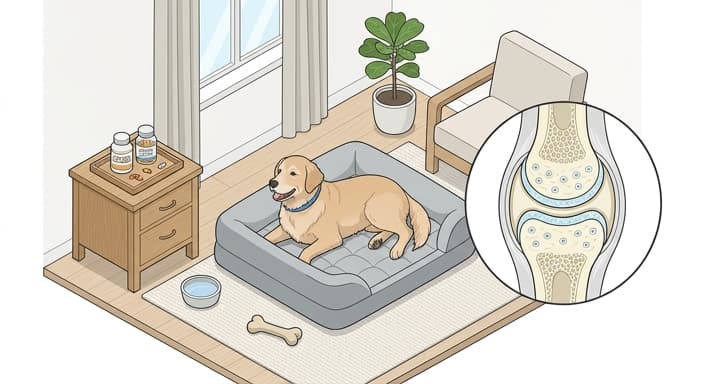
To understand why proactive joint support is essential for our aging pets, we must look at the biological reality of the musculoskeletal system. Over a lifetime of running, playing, and navigating hard surfaces, a pet’s joints—the hinges of their body—experience cumulative micro-trauma. In a youthful joint, articular cartilage acts as a frictionless shock absorber, lubricated by a healthy supply of synovial fluid. As pets age, however, the metabolic processes that maintain this cartilage begin to slow down.
The chondrocytes (cartilage cells) become less efficient at repairing the extracellular matrix, while the viscosity of the synovial fluid—the joint’s natural lubricant—begins to thin. This creates a "dry hinge" effect. When we wait for visible lameness, we are often witnessing the result of chronic inflammation that has already thinned the protective cartilage layer down to the bone. By shifting our focus to proactive management, we aren't just treating a symptom; we are actively supporting the chondrocytes, reducing low-grade oxidative stress, and maintaining the structural integrity of the joint capsule before the damage becomes irreversible.
The Pillars of Proactive Joint Nutrition
Nutritional intervention is the cornerstone of proactive orthopedic care. Modern veterinary science has moved well beyond basic vitamins, focusing instead on "nutraceuticals"—compounds that have pharmacological effects on joint health. Glucosamine and chondroitin remain the gold standard for their ability to provide the raw materials necessary for cartilage repair and to inhibit the enzymes that degrade it. However, the most significant advancement in recent years has been the integration of Omega-3 fatty acids, specifically EPA and DHA sourced from cold-water fish oil.
Omega-3s act as powerful natural anti-inflammatories by inhibiting the production of prostaglandins and leukotrienes, which are key drivers of joint pain. Beyond these, I often recommend adding green-lipped mussel or undenatured Type II collagen to a senior pet’s routine. These ingredients don't just "mask" discomfort; they modulate the immune response within the joint, slowing the progression of osteoarthritis. When selecting supplements, always look for products that are third-party tested and have a Certificate of Analysis (COA) to ensure the potency of the active ingredients, as the pet supplement industry can vary significantly in quality.
Environmental Modifications for Orthopedic Longevity
If we view the joint as a machine, then the environment is the terrain it must traverse. For a senior pet, the home environment can either be a partner in their longevity or an obstacle to their comfort. Many pet parents are surprised at the dramatic improvement in mobility once they make simple, low-cost modifications to their living space. The most critical intervention is addressing the "traction factor." Hardwood, tile, and laminate floors are treacherous for senior pets with compromised proprioception (the body's ability to sense its position in space).
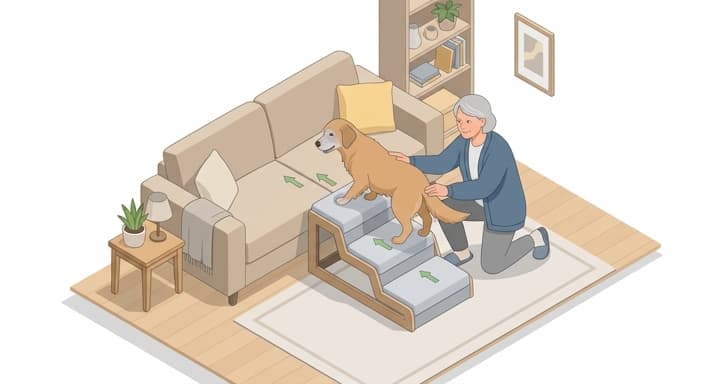
Adding non-slip runners, yoga mats, or area rugs in high-traffic zones allows your pet to maintain a stable gait without the subconscious fear of slipping, which often leads to muscle bracing and secondary tension. Furthermore, consider the height of their daily activities. If your senior dog still insists on joining you on the bed or sofa, invest in pet-specific stairs or ramps. Jumping down from a height exerts a force on the carpal and elbow joints that is equivalent to many times the pet's body weight. By eliminating these high-impact vertical movements, you significantly extend the "mileage" of their joints.
Maintaining Muscle Mass: The "Use It or Lose It" Rule
There is a common, well-intentioned mistake among pet owners of senior animals: the "rest-more, move-less" approach. While it is true that we should avoid high-impact activities like frisbee jumping or long-distance sprinting, complete inactivity is the enemy of the aging joint. Joints are nourished by movement; the compression and release of cartilage during a walk helps circulate synovial fluid, which acts as a sponge delivering nutrients to the cartilage.
Furthermore, muscle mass is the primary support system for the skeleton. If a pet loses muscle mass (sarcopenia), the joints bear 100% of the load. If the pet maintains strong core and limb musculature, that muscle acts as an external shock absorber, offloading the joints. Low-impact exercises such as controlled, slow-paced leashed walks, underwater treadmill therapy, or even simple "sit-to-stand" exercises at home can preserve muscle tone. As your veterinarian consultant, I always recommend a "little and often" approach—multiple ten-minute walks are far more beneficial for a senior than one grueling hour-long trek that leaves them stiff the following day.
Integrating Integrative Therapies
When we talk about proactive joint care, we must look beyond the food bowl. Integrative therapies like veterinary acupuncture, therapeutic laser (photobiomodulation), and massage have moved from "fringe" to mainstream for a reason: they work by targeting different aspects of the pain pathway. Therapeutic laser, for instance, uses specific wavelengths of light to stimulate cellular metabolism and increase circulation to the joint tissues, which can reduce inflammation without the systemic side effects of some pharmacological painkillers.
Massage, when performed by a professional or taught to owners, helps manage the compensatory muscle tension that develops when a pet is favoring one leg. When one joint hurts, the pet shifts their weight, causing the opposite side or the back muscles to overwork. Addressing these secondary muscle spasms is just as vital as treating the primary joint pain. By integrating these modalities early, you can often keep a senior pet comfortable on lower doses of traditional medications, preserving their organ health while maintaining a high quality of life.
The Holistic Mindset of Senior Care
Ultimately, caring for a senior pet is about fine-tuning our observations. As their guardian, you are the most sensitive diagnostic tool in the room. You know that slight pause before they step into the car or the way they choose to sleep in a different room because the floor is too cold. Proactive care is not about preventing the clock from ticking; it is about ensuring that every tick of the clock is comfortable, joyful, and full of vitality. By combining targeted nutrition, environmental mindfulness, and consistent, low-impact activity, we can ensure that our senior companions spend their golden years as active participants in the family, rather than observers from the sidelines. Your commitment to these small, daily adjustments is the greatest gift you can give them, honoring their years of loyalty with a lifetime of comfort and support.
Common Questions
🤔
Frequently Asked Questions
What is the role of nutraceuticals in proactive joint care for seniors?▼
Nutraceuticals provide the raw materials and immune-modulating effects that support cartilage integrity and reduce joint inflammation. Core components like glucosamine and chondroitin help supply building blocks for repair, while omega-3 fatty acids, green-lipped mussel, and undenatured Type II collagen modulate the inflammatory process. When selecting products, owners should choose options that are third-party tested with a Certificate of Analysis to verify potency and quality, and use them under veterinary guidance.
Why start joint support before obvious symptoms appear?▼
Joint wear progresses quietly through micro-trauma and inflammatory changes long before lameness is evident. Starting proactive care helps support chondrocyte function, maintains cartilage integrity, and reduces oxidative stress that accelerates degeneration. This approach aims to maintain mobility as a foundational aspect of lifelong orthopedic health rather than waiting for irreversible damage.
What environmental changes can help an aging pet's joints?▼
Environment is the terrain your pet's joints traverse, so non-slip surfaces and better traction are key. Simple changes like adding rugs or mats, using ramps or step-stools, and providing soft bedding can dramatically reduce pain during movement. Keeping the home accessible and minimizing slippery transitions supports comfort, reduces fatigue, and helps maintain activity levels.
How can owners ensure the supplements they choose are safe and effective?▼
Choose products backed by third-party testing and COAs to confirm ingredient potency and purity. Avoid vague labels and proprietary blends without disclosed amounts, and stick to products appropriate for aging pets. Regular veterinary guidance helps tailor dosing, monitor outcomes, and adjust the regimen as mobility and health evolve.