Blog5/1/2026
Mental Enrichment Games for Indoor Dogs: Stimulate Minds
6 mins Read
The Briefing
Quick takeaways for the curious
Mental enrichment is essential for indoor dogs to prevent boredom and related behavioral issues by providing sustained cognitive stimulation.
Olfactory enrichment, including nose-first activities and scent-work games, is especially potent for dogs and can be implemented indoors with simple sniffing tasks.
Transforming mealtime into a mental challenge with slow-feeders and puzzle toys turns daily nutrition into a foraging-like activity that builds problem-solving skills.
Progressive difficulty helps dogs stay engaged, starting with easy puzzles to build confidence and advancing to multi-step tasks that require planning and persistence.
A holistic approach to indoor wellness recognizes enrichment as a therapeutic tool rather than a gimmick and supports long-term welfare.
There is a persistent, outdated myth in the modern pet care community that an indoor dog’s primary requirements are limited to a daily walk, a comfortable bed, and a predictable feeding schedule. As a veterinarian consultant, I frequently speak with well-meaning pet parents who are surprised to learn that behavioral issues like excessive vocalization, destructive chewing, and obsessive pacing are often symptoms of "boredom syndrome"—a genuine lack of cognitive stimulation that leaves a naturally intelligent scavenger with nothing to do. We are finally moving toward a more sophisticated, holistic standard of pet wellness that views mental enrichment not as a luxury or a "pet store gimmick," but as a vital therapeutic intervention, effectively closing the gap between a dog prone to behavioral frustration and one who possesses the neurological stimulation necessary to thrive in an indoor environment.
The Cognitive Blueprint: Why Boredom Is a Health Risk
To understand why mental enrichment represents a paradigm shift for our domestic companions, we must first demystify their evolutionary blueprint. Whether you share your home with a high-energy Border Collie or a stoic French Bulldog, these animals are descendants of species that spent their waking hours scanning the environment, solving spatial puzzles, and engaging in complex decision-making to survive. In the wild, a dog’s day is consumed by the "scavenge-track-solve-eat" cycle. Their brains are hardwired to process olfactory information, calculate movement, and solve problems to secure resources.
When we transition these animals to an indoor lifestyle, we often inadvertently strip away the necessity for problem-solving. We provide the calories, but we remove the "work." When a dog’s brain is chronically under-stimulated, the result is rarely a relaxed pet; it is a frustrated one. Without a constructive outlet for their natural drives, dogs often turn to "self-employment"—which manifests as shredding your favorite shoes, barking at neighborhood squirrels, or developing repetitive, stress-induced behaviors. Enrichment is the antidote; it provides the cognitive load that satisfies their evolutionary need to work for their rewards.
The Power of Olfactory Enrichment: A Nose-First Approach
The most potent tool in your enrichment arsenal is not a high-tech toy, but your dog’s nose. A dog’s olfactory bulb is roughly forty times larger than ours, relative to brain size, and they possess up to 300 million olfactory receptors compared to our measly six million. For a dog, "seeing" the world through scent is as essential as vision is for us.
"Sniffari" walks are excellent, but you can bring this sensory stimulation indoors through scent-work games. Try the "Hide and Seek" treat game: hide high-value, aromatic treats throughout a room while your dog waits in a "stay" position. When you give the release command, they must use their nose to map the environment and locate the hidden rewards. This is not just a game; it is an intensive neurological workout that burns more energy than a fast-paced run around the block. For dogs that are naturally anxious or prone to over-excitement, the act of sniffing acts as a biological "reset button," lowering their heart rate and inducing a state of calm focus.
Puzzle Toys and the "Work-for-Food" Philosophy
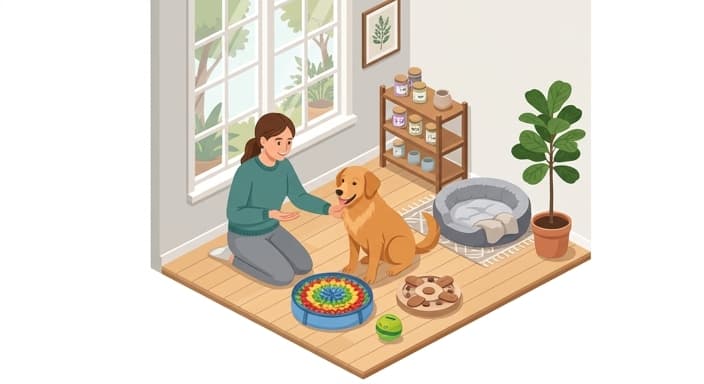
If you are currently feeding your dog solely out of a plastic bowl, you are missing a golden opportunity to facilitate daily mental growth. In nature, dogs spend a significant portion of their day foraging. By utilizing slow-feeders, puzzle toys, or snuffle mats, you can transform mealtime from a two-minute blur into a twenty-minute cognitive challenge.
Start with entry-level puzzles that reveal treats easily, allowing your dog to build confidence in their problem-solving abilities. As they become more adept, transition to complex puzzles that require multiple steps—such as sliding a lever, flipping a lid, and then rotating a disc—to access their food. This "work-for-food" philosophy is essential for indoor dogs. It mimics the natural foraging process and provides a sense of accomplishment that is often missing from the modern, sedentary indoor lifestyle. Remember: a dog that has had to think to secure their meal is a dog that will be more content, less destructive, and significantly more relaxed once the task is complete.

Strategic Training as Mental Stimulation
Many pet parents view training as a means of obedience, but at its core, training is one of the highest forms of mental enrichment. When you teach a dog a new trick—or refine an existing command—you are forcing their brain to create new neural pathways. The process of "shaping" a behavior, where you reward small steps toward a desired action, requires the dog to think critically about what they need to do to earn the reinforcement.
Focus on "trick training" rather than just basic compliance. Teaching your dog to "spin," "weave," or "tidy up" their toys by placing them back in a bin provides a structured, positive interaction that deepens your social bond while simultaneously burning mental energy. Even just ten minutes of focused, positive-reinforcement training per day can drastically change the temperament of an indoor dog. The key is to keep these sessions short, fun, and high-reward. If your dog starts to lose interest, you have gone on too long. Always end on a successful note to ensure that the next training session is something they look forward to with anticipation.
Building a Customized Enrichment Routine
The most effective enrichment plan is one that is consistent and varied. Just like humans, dogs can become bored with the same puzzle toy or the same training routine. I recommend creating a "rotation" schedule. Keep a selection of enrichment items—snuffle mats, frozen stuffed Kongs, treat-dispensing balls, and scent-work supplies—and rotate them weekly. This "newness" keeps the environment stimulating and prevents the cognitive habituation that leads to boredom.
Furthermore, observe your dog’s specific interests. Some dogs are visual problem solvers; they thrive with puzzles that require paw manipulation. Others are purely scent-driven; they will be happiest with games that involve tracking or hunting for hidden items. Tailor your activities to your dog’s natural predispositions. If you have a terrier, focus on games that involve digging or "finding" hidden items. If you have a herding breed, focus on puzzles that involve movement and spatial awareness. By aligning your enrichment strategy with their breed-specific drives, you are not just providing a distraction; you are honoring the biological essence of your pet.
Conclusion: Investing in Your Dog’s Future
Mental enrichment is the foundation of a long, healthy, and happy life for your indoor dog. By viewing their cognitive needs as just as vital as their physical health, you are proactively preventing the behavioral frustrations that lead to so many surrendered pets. Whether it is through scent-work, complex puzzle solving, or short, engaging training sessions, you have the power to transform your home into an environment that truly supports their evolutionary needs. As you begin to implement these strategies, you will likely notice more than just a reduction in destructive behavior; you will see a deeper, more nuanced bond between you and your companion—a relationship built on mutual engagement, respect, and the quiet satisfaction of a life well-lived.
Common Questions
🤔
Frequently Asked Questions
What is boredom syndrome and why is cognitive stimulation important for indoor dogs?▼
Boredom syndrome refers to a lack of cognitive engagement that can lead to behaviors like excessive vocalization, destructive chewing, or pacing. Providing mental enrichment helps satisfy dogs' instinct to problem-solve and work for rewards, reducing frustration and stress. Regular cognitive challenges support a calmer, more focused indoor companion and align with a holistic view of pet wellness.
How can I implement olfactory enrichment indoors for my dog?▼
Olfactory enrichment leverages a dog’s powerful sense of smell to provide mental stimulation. Indoor options include scent-work games such as hiding high-value treats around a room and letting the dog search after a stay command. Sniffing activities can calm anxious dogs by triggering a reset in arousal and promoting focused behavior. Regularly rotating scents keeps the activity engaging.
What are effective puzzle toys and how should I use work-for-food strategies?▼
Puzzle toys and slow-feeder setups turn mealtime into a cognitive challenge rather than a quick snack. Start with easy puzzles that reveal treats quickly to build confidence, then increase difficulty with multi-step tasks like unlocking levers or moving lids. This ongoing problem-solving strengthens learning, patience, and frustration tolerance while providing meaningful daily activity.
How do I scale enrichment for different dogs' temperaments and energy levels?▼
Assess your dog's energy, learning speed, and sensitivity to new activities, then tailor activities accordingly. Begin with short, low-intensity sessions and gradually extend duration as confidence grows. Always end on a success to reinforce motivation and reduce stress, and vary activities to prevent boredom and maintain engagement.