Blog4/21/2026
Mental Enrichment Games for Indoor Dogs: Smart Play at Home
6 mins Read
The Briefing
Quick takeaways for the curious
Mental enrichment is a foundational pillar of indoor dog wellness, not a luxury, because a bored brain can drive unwanted behaviors.
Short bursts of cognitive work, like scent games or puzzle solving, can exhaust dogs as effectively as longer physical walks.
Olfactory enrichment taps into the canine superpower, turning the home into an engaging playground and quieting stress.
Puzzle toys should be matched to the dog's skill level to prevent frustration and encourage ongoing problem solving.
A consistent enrichment routine reduces separation anxiety and improves overall quality of life for indoor dogs.
There is a persistent, outdated myth in the modern pet care community that an indoor dog’s life is inherently complete as long as they are provided with a soft bed, a full bowl, and a daily walk around the block. As a veterinarian consultant, I frequently speak with devoted pet parents who find themselves dealing with "naughty" behaviors like destructive chewing, incessant barking, or pacing, failing to realize that these are rarely signs of a "bad dog," but rather the outward expression of a bored, under-stimulated mind trapped in a sedentary environment. We are finally moving toward a more sophisticated, enrichment-focused standard of canine care that treats mental stimulation not as a luxury or a "bonus" activity, but as a foundational pillar of health, effectively closing the gap between a dog who merely survives their indoor existence and one who truly thrives with cognitive purpose.
The Neurobiology of Boredom: Why Cognitive Work is Essential
To understand why mental enrichment represents a paradigm shift for indoor canine wellness, we must first demystify the canine brain. Dogs are evolutionary descendants of apex scavengers and hunters; their brains are wired to solve problems, navigate complex environments, and dedicate significant neurological energy to olfactory processing. When we place a dog in an indoor environment without outlets for these instincts, we essentially force them into a state of chronic under-stimulation.
In a clinical setting, I often explain that mental exercise is just as exhausting—if not more so—than physical exercise. Fifteen minutes of intense scent work or puzzle solving can burn as much energy as a thirty-minute walk. When a dog is denied these opportunities, the brain begins to seek its own stimulation, often through behaviors we find inconvenient, such as digging at the carpet, shredding furniture, or obsessive self-grooming. By incorporating structured mental enrichment, we are not just "keeping them busy"; we are providing the necessary neurotransmitter release that promotes calmness, prevents the development of separation anxiety, and significantly improves their quality of life.
The Olfactory Advantage: Tapping into the Canine Superpower
The most accessible and potent form of enrichment for any indoor dog is the utilization of their nose. A dog’s sense of smell is their primary interface with the world; while we navigate our environment visually, they navigate through a complex, layered tapestry of scent molecules. When we engage a dog’s nose, we are essentially turning on the most powerful part of their brain.
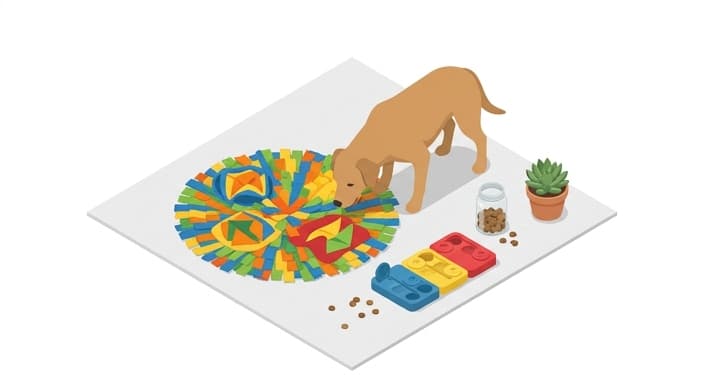
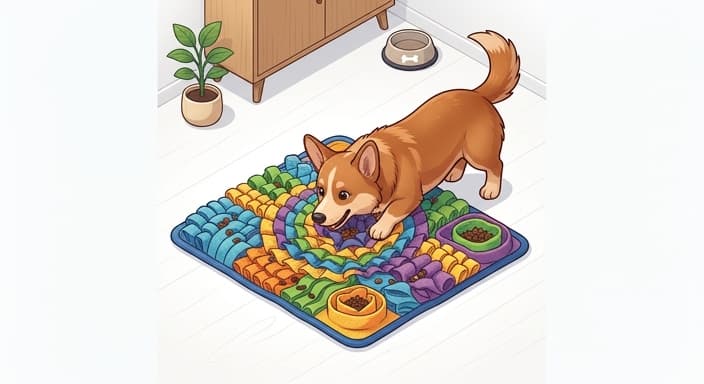
You can easily transform your living room into an olfactory playground with a few simple techniques. "Scent games" are highly effective and require almost no equipment. Try hiding high-value, aromatic treats around the living room while your dog is in a "stay" position, then release them with a cue like "find it." This forces the dog to scan, track, and problem-solve, shifting their focus from potential household stressors to a rewarding, goal-oriented task. For dogs that struggle with focus, simple "snuffle mats"—fabric mats with deep folds that allow you to hide dry kibble—act as a natural foraging tool. By forcing the dog to forage for their meal rather than inhaling it from a bowl, you tap into their innate desire to work for their food, which is a massive confidence booster for anxious or insecure dogs.
Puzzle Toys and the Engineering of Intelligence
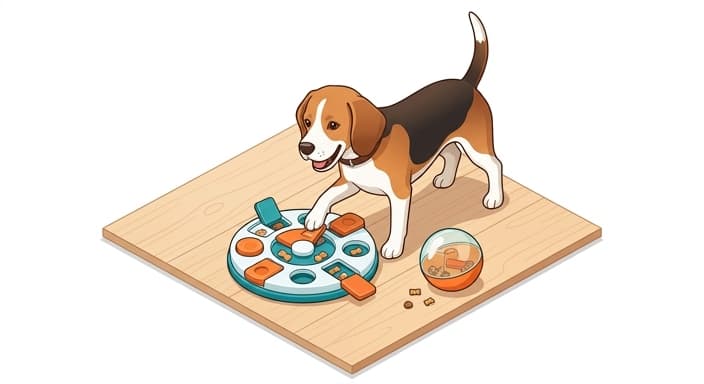
Beyond scent work, we must consider the mechanical aspect of canine enrichment. Puzzle toys and interactive feeders are the gold standard for indoor mental fatigue. These devices are designed to challenge a dog's cognitive flexibility, forcing them to manipulate objects with their paws, noses, or teeth to reach a reward.
However, not all puzzle toys are created equal. As a veterinarian, I often see owners buy toys that are either too difficult—leading to frustration and eventual abandonment of the toy—or too easy, which provides only seconds of stimulation. The key is to start with "Level 1" puzzles that allow for immediate, quick wins to build the dog's confidence. Once they understand the concept of "if I move this lever, I get a treat," you can gradually increase the complexity.
I strongly advocate for a rotation system. If you leave the same puzzle toy out 24/7, it quickly loses its novelty and becomes "part of the furniture." Instead, treat these toys as high-value resources. Rotate them every few days, keeping them tucked away when not in use. This maintains the "newness" of the challenge, ensuring that your dog approaches the task with the same level of curiosity and excitement each time. It transforms a mundane feeding routine into an engaging, daily mental workout.
Structured Training as Cognitive Play
Many pet parents view training as a means to an end—a way to ensure the dog sits or stays when asked. In reality, training should be viewed as the ultimate form of cooperative, cognitive play. Learning a new trick or refining a command requires a high degree of focus, memory, and impulse control, all of which are excellent for tiring out a high-energy dog.
The beauty of indoor training is that it can be broken down into "micro-sessions." Five-minute sessions, three times a day, are often more effective than a single thirty-minute block, as they keep the dog’s attention sharp and prevent them from becoming mentally fatigued or frustrated. Focus on tricks that require body awareness, such as "spin," "paw," or "back up." These movements require the dog to consciously think about their limbs, which builds proprioception—the brain’s awareness of the body in space. When you pair these training sessions with positive reinforcement—using small, low-calorie, high-value treats or verbal praise—you are not just teaching a behavior; you are strengthening your bond and providing the mental heavy lifting your dog craves.
The Importance of "Decompression" Time
While enrichment is critical, it is equally important to recognize when the brain has had enough. Just as humans can suffer from cognitive overload, dogs can become overstimulated by constant engagement. A vital component of a healthy indoor enrichment routine is teaching your dog how to "switch off."
This is where the concept of "settle training" or "place training" comes into play. After a session of intense puzzle work or scent games, encourage your dog to settle on a designated mat or bed. This teaches them that the completion of an enrichment task is followed by a period of calm. You can facilitate this by offering a long-lasting chew, such as a frozen stuffed rubber toy or a natural, veterinarian-approved chew, which has a naturally soothing, rhythmic effect on the canine nervous system. This transition from high-intensity work to low-intensity relaxation is the secret to a well-adjusted, calm indoor dog. It prevents the hyper-arousal that often leads to those dreaded "zoomies" in the evening and ensures that your dog learns to regulate their own energy levels.
A New Standard of Indoor Living
Mental enrichment is not merely a way to pass the time; it is a clinical necessity for the modern indoor dog. By shifting our perspective from viewing our pets as passive companions to viewing them as active, intelligent problem-solvers, we open the door to a much deeper level of connection and wellness. Whether you are hiding treats for a nose-work game, introducing a complex puzzle, or mastering a new trick, you are providing the essential stimulation that allows your dog to live a full, satisfied life. Remember, the goal is not to keep them constantly entertained, but to provide them with the tools they need to be independent, confident, and mentally fulfilled. As you begin to integrate these practices into your daily routine, you will likely find that your dog is not just better behaved, but noticeably happier—a testament to the incredible power of a stimulated mind.
Common Questions
🤔
Frequently Asked Questions
Why is cognitive enrichment important for indoor dogs?▼
Indoor environments can suppress dogs' natural problem-solving instincts, leading to boredom and behaviors like chewing or pacing. Mental enrichment provides the neurochemical rewards and neural engagement that keep dogs calm and focused. Regular cognitive work can reduce separation anxiety and improve overall wellbeing.
What are simple at-home scent games I can start today?▼
Begin with a stay cue and hide a few high-value treats around a familiar room, then release your dog to find them with the cue 'find it.' Gradually increase hiding spots and use a snuffle mat or folded towels to create easy-foraging areas. Keep sessions short, positive, and end on a success to build confidence and focus.
How do I choose and use puzzle toys without causing frustration?▼
Pick puzzles that match your dog's current skill level and start with the easiest option. Supervise initial attempts, then gradually increase difficulty or lengthen attempts as problem-solving improves. Rotate different toys to maintain novelty, and ensure the dog can access rewards without getting stuck or injured.
How long should enrichment sessions last and how often should they occur?▼
Aim for multiple short sessions totaling about 15–30 minutes of mental activity per day, spread across morning and evening if possible. Pair cognitive work with calm, consistent routines and ongoing physical exercise to balance energy. Watch your dog for signs of fatigue or frustration and end sessions on a positive note.