Blog4/11/2026
Managing Chronic Separation Anxiety in Senior Dogs Practical Care
7 mins Read
The Briefing
Quick takeaways for the curious
Separation anxiety in senior dogs is often driven by age-related cognitive decline, sensory loss, and chronic pain, not stubbornness or poor training.
Canine Cognitive Dysfunction disrupts memory and spatial awareness, making the home feel unreliable and the owner's absence a source of profound confusion and fear.
Chronic pain lowers a senior dog's stress threshold; addressing pain through appropriate medications, supplements, and environmental comfort can significantly reduce anxiety.
Management combines medical assessment with environmental design to create a sanctuary that minimizes disorientation and reliance on the owner for reassurance.
A compassionate geriatric approach treats separation anxiety as a manageable condition that, with care and routine, can improve a senior dog's security, peace, and quality of life.
There is a persistent, outdated myth in the modern pet care community that separation anxiety is exclusively a "puppy problem" or a behavioral quirk born of poor training, leading many owners to believe that an older dog’s sudden distress is merely a sign of stubbornness or a lost cause. As a veterinarian consultant, I frequently speak with heartbroken pet parents who view their senior dog’s pacing, panting, and destruction as a behavioral failure, failing to realize that for an aging animal, the inability to cope with solitude is often a symptom of underlying cognitive decline, sensory loss, or physical discomfort. We are finally moving toward a more sophisticated, compassionate standard of geriatric care that treats separation anxiety not as a training defect to be "corrected," but as a complex medical and emotional condition to be managed, effectively closing the gap between a senior dog who lives in a state of constant, silent panic and one who finds security, peace, and comfort in their golden years.
The Neurological Connection: Why Aging Triggers Anxiety
To understand why separation anxiety often manifests or worsens in a dog’s twilight years, we must first look at the "cognitive erosion" that occurs as a result of Canine Cognitive Dysfunction (CCD), or canine dementia. Just as humans experience changes in memory and spatial awareness, senior dogs grapple with a decline in neuro-pathway efficiency, which directly impacts their ability to process their environment. When a dog who has been independent for a decade suddenly becomes clingy or frantic the moment a owner leaves, it is often because their "internal map" of the home has become unreliable. The absence of a familiar human acts as a trigger for profound confusion; the dog is no longer just "missing" their person, they are struggling to maintain a sense of order in a world that has become increasingly unpredictable and frightening.
When we observe these behaviors—the frantic door-scratching, the vocalization, and the house-soiling—we must stop viewing them through the lens of disobedience and start viewing them through the lens of neurological vulnerability. A senior dog with sensory deficits, such as fading vision or hearing, is even more susceptible to this distress, as they rely heavily on the presence of their primary caregiver to act as their "anchor" in a world that is becoming progressively dimmer and quieter.
Assessing the Physical Foundation: Pain as a Catalyst
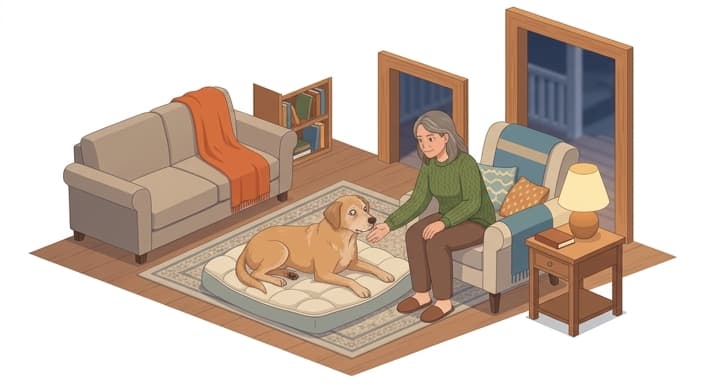
Beyond the neurological aspects, we cannot overlook the role of chronic pain in the development of separation-related distress. Many senior dogs suffer from silent, long-standing conditions like osteoarthritis, dental disease, or chronic gastrointestinal discomfort. When a dog is in pain, their threshold for stress is significantly lowered; they are operating in a state of high physiological arousal even before their owner walks out the door. If a dog associates your absence with the inability to reach a comfortable spot, or if they feel physically vulnerable because their mobility is compromised, the anxiety becomes a coping mechanism for their physical insecurity.
As a veterinarian, I often recommend a "pain audit" for any senior patient displaying new-onset anxiety. By managing chronic inflammation with appropriate analgesics, joint supplements, or environmental modifications like orthopedic bedding, we can often see a significant reduction in the dog’s reactivity. If we can soothe the physical body, the mind often follows suit, allowing the dog to rest more soundly even when they are left alone for short periods.
The Architecture of Security: Environmental Modifications
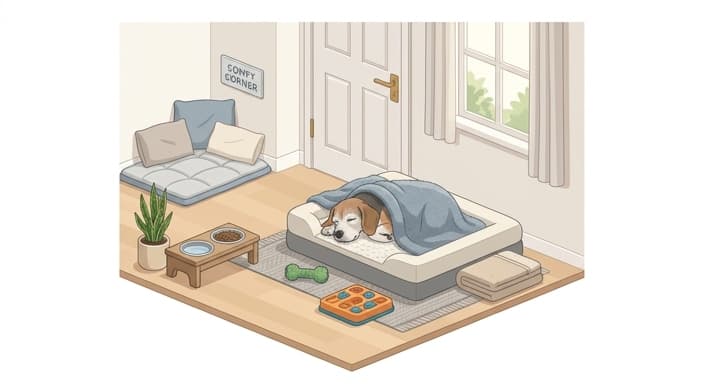
When managing a senior dog with separation anxiety, the goal is to create a "sanctuary space" that minimizes the need for the dog to navigate complex environments while you are away. This is not about confining them to a crate—in fact, for many seniors, traditional crating can increase panic and risk injury. Instead, we look toward "den-like" modifications. This might involve a quiet, low-traffic room equipped with non-slip flooring to assist with their aging joints, a pheromone diffuser (such as those containing Dog Appeasing Pheromone, or DAP) to provide a calming olfactory signal, and sound-dampening measures like white noise machines to mask the jarring sounds of the outside world.
Practical environmental management also includes simplifying the dog's domain. If your senior is experiencing vision loss, keep the furniture layout consistent. Remove obstacles that could cause them to trip or become trapped, which would naturally escalate their panic. By creating a predictable, stable environment, you provide the dog with a sense of "environmental confidence," reducing the reliance on your physical presence to navigate their daily existence.
Reassessing Routine: The Power of Predictable Transitions
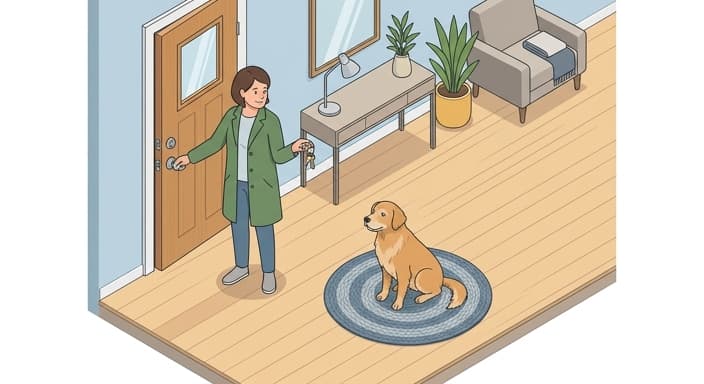
For a senior dog, the "departure routine" is often the most anxiety-inducing part of the day. Many owners inadvertently heighten this stress by engaging in long, emotional goodbyes or by displaying their own anxiety before leaving. For a dog whose cognitive functions are declining, these cues become "alarm bells." To manage this, we must shift toward a policy of "neutrality." Keep your departures and arrivals low-key and matter-of-fact. Avoid long, dramatic farewells; instead, focus on providing a high-value, long-lasting puzzle toy or a lick mat filled with a soothing, healthy treat just before you leave.
The goal is to change the association: from "my human is leaving, and the world is falling apart" to "my human is leaving, and this is a time for a special, quiet activity." Because senior dogs may have a lower appetite or different dietary needs, ensure these treats are easy on the stomach and appropriate for their age. Furthermore, consider the use of "graduated absences." Even if your dog has been fine alone for years, a senior dog may need a "refresher course" in being alone. Start with five-minute intervals, gradually increasing the time only as the dog shows signs of comfort. This is not training in the traditional sense; it is a gentle, supportive process of rebuilding their confidence.
The Role of Medication and Supplementation
In some instances, behavioral modifications and environmental changes are not enough to bridge the gap between a senior dog’s current state of distress and a life of calm. In these cases, we must be open to the role of pharmacotherapy. Modern veterinary medicine offers a variety of safe, effective options, ranging from natural, nutriceutical-based supplements (like L-theanine, tryptophan, and omega-3 fatty acids) to prescription anxiety medications that can help regulate neurotransmitter levels in the brain.
It is a common misconception that anti-anxiety medication will "dope" your dog or change their personality. In reality, the right medication, used at the right dosage, simply removes the "edge" of the panic, allowing the dog to remain in their "thinking brain" rather than their "reactive brain." This allows them to utilize the coping strategies you have implemented. If your senior dog is suffering, there is no badge of honor in "toughing it out." A consultation with your veterinarian about potential pharmaceutical support is a proactive, loving step toward restoring their quality of life.
Supporting Longevity Through Empathy
Managing separation anxiety in a senior dog requires us to shift our perspective from the expectation of the "perfectly behaved dog" to the reality of the "aging individual." We are looking for progress, not perfection. There will be days of setbacks, and that is a natural part of the aging process. What matters most is that we continue to approach their behavior with curiosity rather than frustration and with medical support rather than behavioral judgment.
By addressing the cognitive, physical, and environmental factors simultaneously, we provide our senior companions with the dignity they deserve. We owe it to these faithful friends—who have spent their lives adapting to our schedules and our needs—to provide them with the security and peace they so desperately require as they navigate the complexities of their golden years. Through patience, precision, and an unwavering commitment to their comfort, we can ensure that our senior dogs remain the calm, contented companions we have loved for so long.
Common Questions
🤔
Frequently Asked Questions
What are the key signs of separation anxiety in a senior dog?▼
Senior dogs may pace, pant, vocalize, or attempt to escape when the owner leaves. They can also engage in destructive behaviors, vocal outbursts, or house-soiling during absence. These signs reflect heightened distress tied to aging-related cognitive or physical changes rather than simple disobedience.
How does Canine Cognitive Dysfunction contribute to separation anxiety?▼
CCD gradually erodes memory and spatial awareness, making the dog's internal map unreliable. The absence of a familiar person can trigger confusion and fear, turning departures into frightening events. Recognizing CCD reframes management from punishment to supportive care.
What is a pain audit, and why is it important for managing anxiety?▼
A pain audit identifies chronic sources of pain such as arthritis, dental disease, or GI discomfort that heighten stress responses. Treating pain can lower baseline arousal, helping the dog cope better with being alone. Veterinary guidance is essential to select appropriate treatments and monitor effectiveness.
What environmental modifications support a senior dog with separation anxiety?▼
Create a sanctuary space that minimizes the need to navigate complex environments when you’re away, avoiding traditional crate confinement if it increases panic. Use a stable routine, orthopedic bedding, easy access to water, and familiar comforting objects. Consider calming enrichment and maintain a predictable, soothing atmosphere to reduce anxiety during departures.