Blog4/19/2026
Hands-Free Crossbody Leash: Benefits for Dogs and Owners
6 mins Read
The Briefing
Quick takeaways for the curious
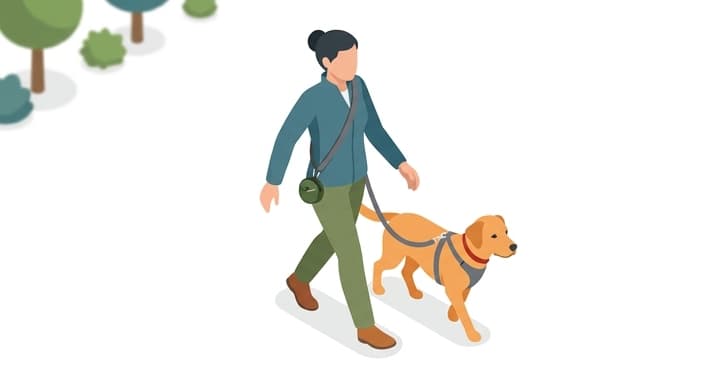
Hands-free crossbody leashes shift load from the wrist to the core, reducing jerky corrections and improving safety for both dog and handler.
Free hands allow natural arm swing and better posture, enhancing spinal alignment and stability during walks.
The setup improves communication through body language and helps handlers notice subtle canine cues, aiding training, especially with reactive dogs.
The crossbody design distributes force across the torso, providing shock absorption and potentially reducing neck, shoulder, and airway strain for dogs.
Ergonomic walks promote a calmer internal state, which translates to looser leash walking and a stronger human-dog bond.
There is a persistent, outdated myth in the modern pet care community that walking a dog must be a static, tethered experience defined by the rigid constraints of a handheld leash. As a veterinarian consultant, I frequently speak with active, well-meaning pet parents who feel physically tethered—both literally and figuratively—by the limitations of traditional leash walking, often ignoring how the constant tension and lack of ergonomic mobility can negatively impact their own posture and, consequently, their dog’s walking experience. We are finally moving toward a more sophisticated, ergonomic standard of pet movement that leverages hands-free crossbody leashes not as a "fitness trend," but as a biomechanical tool, effectively closing the gap between a strained, reactive walk and a synchronized, fluid journey that strengthens the human-animal bond.
The Biomechanics of the Walk: Why Your Hands Should Be Free
To understand why the transition to a hands-free crossbody leash represents a paradigm shift for canine wellness, we must first examine the physics of the traditional leash. When you hold a leash in your hand, you create a direct, unyielding line of tension that transmits every flicker of your anxiety, frustration, or physical discomfort straight down to your dog’s neck or harness. From a veterinary perspective, this is problematic. Our pets are incredibly sensitive to our body language; when our arms are locked, our shoulders hunched, or our gait restricted by the need to manage a leash, our dogs perceive this as "tightness," which can trigger leash reactivity, anxiety, or simple confusion.
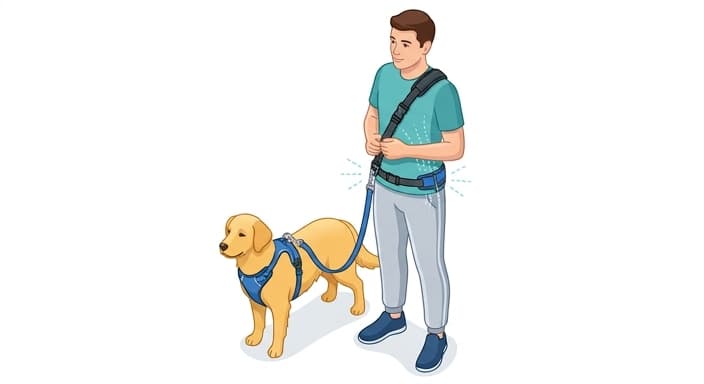
A hands-free crossbody leash shifts the point of contact from your wrist to your center of gravity—your core. When the leash is worn across your body, your hands are freed to maintain natural arm swing, which is essential for your own spinal alignment and balance. More importantly, it creates a "shock-absorption" effect. Because your body weight is distributed across your torso rather than a single joint, sudden lunges or stops are absorbed by your core muscles rather than your shoulder or elbow tendons. For the dog, this translates to a smoother, more predictable tug, preventing the "jerky" corrections that can exacerbate neck or tracheal issues in smaller breeds or those with sensitive airways.
Enhancing Communication Through Body Language
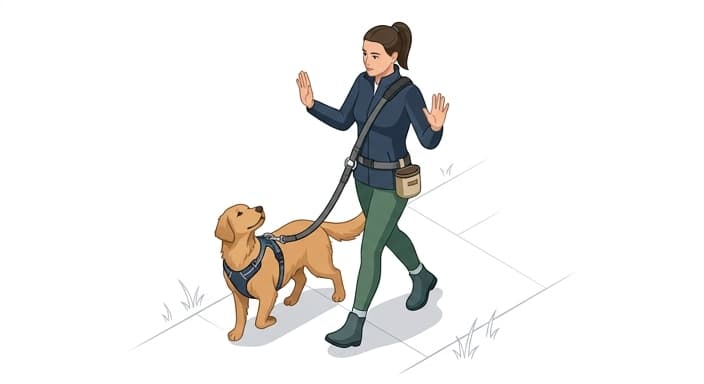
One of the most significant advantages of a hands-free setup is the liberation of your posture. When your hands are free, you can engage more naturally with your environment. You can use hand signals, carry a treat pouch with ease, or simply maintain a more relaxed, open body posture that signals safety and confidence to your dog. In clinical behavioral consultations, I often emphasize that "loose-leash walking" is not just about the length of the lead; it is about the internal state of the handler.
When you aren't focused on the mechanical grip of a leash, you become more present. This subtle shift in focus allows you to notice your dog’s micro-cues—a slight head turn, a change in sniffing intensity, or a shift in weight before they decide to pull. By using your torso to guide the walk, you essentially become "one unit" with your dog. This is particularly beneficial for reactive dogs or those in training; it allows the handler to remain calm and neutral, preventing the "leash tension feedback loop" where the dog senses the owner’s tension and reacts by pulling or barking. By removing the physical barrier of a handheld leash, you remove the most common source of communication static between you and your companion.
Safety, Stability, and the Ergonomic Advantage
As a veterinarian, I treat far too many pet parents for "leash-related injuries"—everything from rotator cuff strain to repetitive stress injuries in the wrist and elbow. Conversely, I also see dogs with cervical (neck) strain from years of being jerked back by handheld leashes. The crossbody leash serves as a protective mechanism for both parties.
When choosing a hands-free leash, it is vital to prioritize equipment with a built-in "bungee" or shock-absorption segment. This feature is not just about comfort; it is a critical safety component. It acts as a buffer, preventing the jarring impact of a sudden stop or a squirrel-chasing lunge. This reduces the risk of tracheal collapse, particularly in breeds prone to respiratory issues, and protects the handler's lower back and hips from sudden, acute torque.
Furthermore, the hands-free design is a game-changer for safety in urban environments. Whether you are navigating a crowded sidewalk, grabbing a waste bag, or checking your phone for navigation, the crossbody leash ensures your dog stays securely attached to your center of mass. There is no risk of the leash slipping from your hand if you are startled, and the leash cannot be accidentally dropped. It provides a level of security that is essential for owners who may have limited grip strength or those who walk multiple dogs simultaneously.
Implementing the Transition: A Clinical Approach
While the benefits are clear, the transition to a hands-free system requires a brief period of adjustment. You cannot simply strap on a new leash and expect perfect heel behavior overnight. I recommend starting in a low-distraction environment, such as a quiet hallway or a fenced backyard, to allow both you and your dog to get used to the new "center of gravity" dynamic.
Start by practicing simple turns. Because the leash is attached to your core, a slight rotation of your torso will naturally signal your dog to change direction. You will likely find that your dog begins to track your movement more closely, naturally falling into a rhythm that matches your stride. If your dog is a puller, do not immediately rely on the crossbody leash to "fix" the behavior. Instead, use the hands-free setup as a tool to facilitate better engagement. Reward your dog frequently for checking in with you while they are in the "sweet spot" at your side.
It is also important to ensure your dog is wearing a properly fitted, well-padded front-clip harness. Using a crossbody leash with a collar is generally discouraged, as the added leverage of the human body can place too much pressure on the delicate structures of the neck. A front-clip harness, when used in conjunction with a crossbody leash, creates an ideal training environment that gently discourages pulling while protecting the dog’s physical health.
The Wellness Partnership: Beyond the Walk
Ultimately, the goal of any pet care tool should be to enhance the quality of life for both the human and the animal. The hands-free crossbody leash is more than just a convenience; it is a commitment to a more harmonious, physically sound, and mentally engaging way of exploring the world together. By prioritizing ergonomics and clear communication, we move away from the adversarial nature of "controlling" a dog and toward a collaborative, shared experience.
When we remove the physical strain of the walk, we lower the stress hormones for both ourselves and our pets. We create an environment where the walk is no longer a chore to be completed, but a therapeutic, shared activity that benefits cardiovascular health, mental well-being, and the emotional bond that defines our relationship with our pets. Whether you are a marathon runner, a casual stroll enthusiast, or someone managing mobility challenges, the move to a hands-free system is one of the most proactive, compassionate steps you can take for your dog’s long-term health and your own.
Common Questions
🤔
Frequently Asked Questions
What are the primary safety and comfort benefits of a hands-free crossbody leash for my dog?▼
A hands-free crossbody leash reduces abrupt jerks by distributing force through your core rather than a single wrist joint, which makes unexpected lunges feel smoother for your dog. This can lessen neck and airway strain in smaller breeds and minimize the chance of tracheal irritation. By keeping your hands free, you can respond with calm body language and smoother corrections, supporting a safer walking experience for both of you.
How do I wear and adjust a hands-free crossbody leash for best results?▼
Start by choosing a belt or strap that fits snugly around your hips and a crossbody portion that sits comfortably across your torso. Attach the leash to a well-fitted harness rather than a collar to distribute pressure more evenly. Adjust the strap length so there is a slight slack in the leash when your dog is at your side, then practice loose-leash walking in a low-distraction environment. Over time, your natural gait and postural alignment will improve as you become accustomed to the hands-free setup.
Are there dogs or situations where a hands-free leash isn’t ideal?▼
For dogs with extreme pull or high reactivity, there may be a steeper learning curve, and specialized training should accompany any equipment change. Individuals with back or core instability should consult a professional to ensure proper use and to prevent injury. In some cases, starting with a conventional setup and gradually transitioning to hands-free as confidence and cue-reading improve is a safer approach.
What features should I look for when selecting a hands-free crossbody leash?▼
Choose a design with an adjustable hip strap, a durable crossbody strap, and a leash connection that rotates to prevent twisting. Look for comfortable, non-slip materials, reinforced stitching, and a connector that distributes force evenly to a harness rather than a collar. Consider additional features like reflective material for nighttime safety and optional padding, grip options, or a built-in treat pouch for training sessions. This ensures comfort, safety, and practicality on daily walks.