Blog4/9/2026
Hands-Free Crossbody Dog Leads: Safer, Easier Walks
7 mins Read
The Briefing
Quick takeaways for the curious
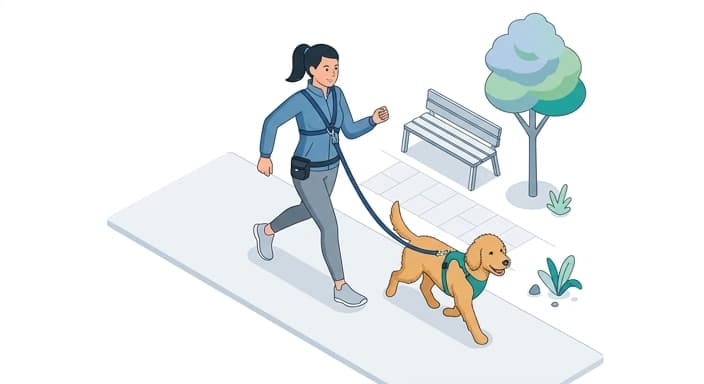
The hands-free crossbody leash shifts the anchor from the wrist to the torso, reducing shoulder strain and wrist fatigue for the handler.
Anchoring at the center of gravity distributes the dog's pull across the handler's body, promoting a more unified gait and fewer jerky movements.
With hands free, handlers can use treats, clickers, or gentle praise during walks, enhancing communication and positive reinforcement.
The design improves safety in emergencies and on uneven terrain by keeping you connected to your dog without fumbling for a leash.
When paired with a front-clip harness, the system can reduce leash-pulling by aligning the dog's leverage with the handler's core, supporting safer exercise and training.
There is a persistent, outdated myth in the modern dog-walking community that the traditional handheld leash is the gold standard of safety and control, leading many owners to believe that a rigid, tethered connection is the only way to maintain a relationship with their pet on the move. As a veterinarian consultant, I frequently speak with active pet parents who view their chronic shoulder strain, wrist fatigue, or the constant, awkward "leash-juggling" dance as an unavoidable tax on the joys of dog ownership, failing to realize that these physical stressors are often the result of outdated equipment that ignores the biomechanical needs of both human and hound. We are finally moving toward a more sophisticated, ergonomic standard of canine management that treats the hands-free crossbody leash not as a niche hiking accessory, but as a foundational pillar of human-animal connection, effectively closing the gap between a strained, distracted handler and a synchronized, confident walking team.
The Biomechanics of the "Unified Gait"
To understand why a hands-free crossbody leash is a transformative tool, we must first look at the biomechanics of the human-canine walking relationship. When a handler grips a traditional leash, they are tethered at the wrist or hand, creating a direct lever that amplifies every sudden movement the dog makes. If a dog lunges at a squirrel or pulls toward a scent, the force is transmitted directly to the handler’s wrist, elbow, and shoulder, often leading to repetitive strain injuries or rotator cuff irritation over time.
By shifting the anchor point to the center of gravity—the torso—a crossbody leash utilizes the body’s natural core strength to absorb tension. When the leash is worn across the chest or around the waist, the weight of the dog is distributed across the entire upper body rather than a single joint. This allows for a more "unified gait," where the human’s natural arm swing is preserved, and the dog is encouraged to align with the handler’s pace rather than pulling ahead. From a veterinary perspective, this isn't just about human comfort; it’s about reducing the "jerk-and-stop" cycle that can cause cervical (neck) strain in dogs who are prone to sudden movements. By creating a more stable, centered anchor, you are effectively providing a safer, more predictable environment for your dog to navigate the world.
Safety and the "Engagement Advantage"
One of the most profound benefits of the hands-free crossbody design is the "Engagement Advantage"—the ability to use your hands for more than just holding a lead. In my clinic, I often discuss the importance of active communication during walks. When your hands are free, you can utilize positive reinforcement techniques like treat delivery, clicker use, or tactile praise (gentle touches or petting) exactly at the moment your dog displays desired behavior.
Furthermore, safety is significantly enhanced in emergency situations. Whether you need to quickly pick up your dog, manage a gate, or simply have your hands available to balance yourself on uneven terrain, the crossbody leash ensures that you remain connected to your pet without needing to fumble with a coiled rope. For owners of reactive dogs, this is a game-changer; you can easily manage a treat pouch or a calming spray while maintaining a secure hold on your dog via your core. It turns the walk from a chore of management into an opportunity for active training, fostering a deeper bond rooted in constant, positive engagement.
Managing the "Leash-Pulling" Reflex
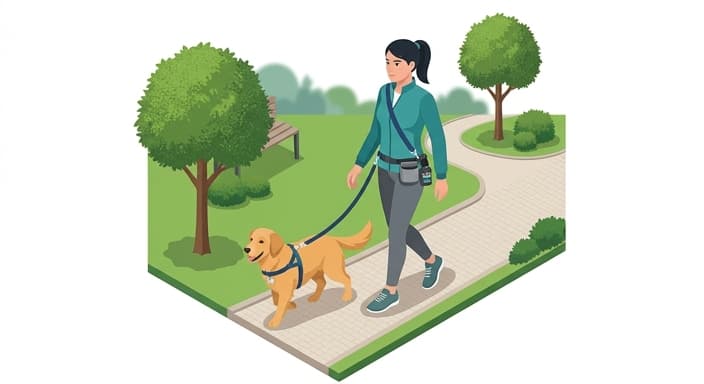
Many pet parents ask me if a hands-free leash will cause their dog to pull more. The reality is that it often does the exact opposite. Traditional leashes often encourage a "tug-of-war" dynamic; the dog pulls, the owner pulls back, and the dog learns that resistance is part of the walking experience. A crossbody system, especially when paired with a front-clip harness, leverages the dog's own body weight and redirection. Because the leash is attached to your center of gravity, you can use subtle shifts in your body weight to guide your dog’s direction, rather than aggressive yanking on a leash.
This system is particularly effective for dogs that are easily distracted. Because the leash is connected to your torso, you are less likely to inadvertently "reward" pulling by giving in or adjusting your arm. Instead, the dog feels a consistent, gentle pressure that shifts their orientation toward you. I always recommend that owners introduce this during short, low-distraction training sessions in the backyard or a quiet driveway. Practice stopping when the dog pulls, waiting for the "check-in" (where the dog looks back at you), and rewarding that connection. With the leash hands-free, you are perfectly positioned to reward that check-in immediately, reinforcing the idea that walking with you is more rewarding than pulling away from you.
Versatility for Every Lifestyle
Whether you are an avid hiker, a city commuter, or someone managing a busy household, the crossbody leash adapts to the environment. In urban settings, where you might be juggling a coffee, a phone, and a dog, the hands-free design prevents the common "leash-wrap" scenario around your legs or surrounding objects. In the wilderness, it allows for a more natural hiking pace, keeping your hands free to use trekking poles or navigate steep inclines, which is a major safety benefit for both parties.
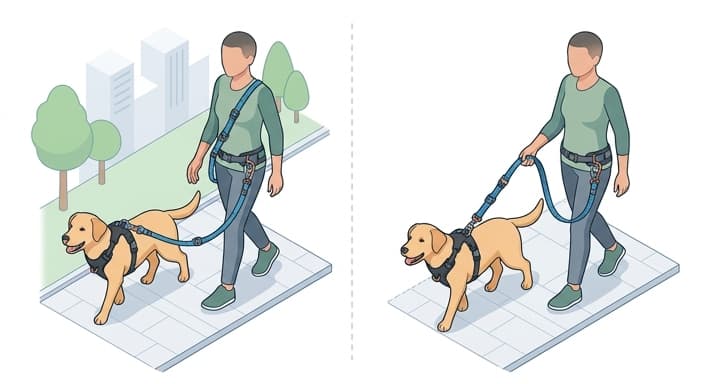
I often advise my clients to look for specific features when choosing their first hands-free leash. Seek out bungee-style sections that act as a shock absorber; this is vital for protecting both your spine and your dog’s neck if they happen to reach the end of the leash suddenly. Additionally, look for adjustable lengths and multiple attachment points. A high-quality leash should allow you to switch between crossbody mode and a traditional handheld mode in seconds. This modularity is key—there will be times, perhaps in a crowded vet lobby or a dense city street, where you need the short-term precision of a handheld grip, but the rest of the time, the freedom of the crossbody style will revolutionize your daily routine.
The Psychological Shift: From "Duty" to "Bonding"
Perhaps the most overlooked benefit of transitioning to a hands-free leash is the psychological shift in the owner. When the walk becomes physically exhausting or frustrating due to leash management, we tend to shorten the duration or intensity of the exercise, which can lead to behavioral issues in dogs due to pent-up energy. By removing the physical friction of the walk, you likely find yourself walking further, exploring more diverse environments, and spending more quality time with your companion.
When you aren't focused on the mechanics of holding the leash, you become more present. You notice your dog’s body language, their sniffing patterns, and their subtle cues of stress or excitement. You stop being a "handler" and start being a "partner." This shift is palpable to the dog as well; dogs are experts at reading human tension. When you are relaxed, hands-free, and moving with a fluid, confident gait, your dog is significantly more likely to mirror that calm, composed energy.
Transitioning Successfully: A Veterinarian’s Checklist
If you are ready to make the switch, keep these final tips in mind for a smooth transition:
- Start with the Right Harness: A hands-free leash should ideally be used with a harness that has a front-clip option. This helps with steering and prevents the dog from using their full body weight to pull against your waist.
- Prioritize Quality Hardware: Ensure the clips are locking or heavy-duty carabiners. You want complete peace of mind that a sudden squirrel-chase won't result in a detached leash.
- Gradual Exposure: Don’t start a hands-free leash during your most stressful, high-traffic walk. Start in a familiar, low-stimulation environment to ensure both you and your dog are comfortable with the new dynamic.
- Mind the Bungee: If you have a very small dog, ensure the bungee isn't too stiff. If you have a large, powerful dog, ensure the bungee is robust enough to provide genuine shock absorption without feeling "mushy."
Ultimately, the hands-free crossbody leash represents a move toward more intentional, ergonomic, and harmonious pet ownership. By aligning our equipment with our body’s natural movement and our dog’s behavioral needs, we do more than just make the walk easier—we transform it into the most rewarding part of our day. So, free your hands, find your rhythm, and enjoy the profound difference that a truly connected walk can make for your best friend.
Common Questions
🤔
Frequently Asked Questions
What is a hands-free crossbody leash and how does it work?▼
A hands-free crossbody leash anchors across the chest or around the waist, letting the leash pull on the handler’s core rather than the wrist. This design shifts leverage away from a single joint and uses your center of gravity to absorb tension from the dog’s movements. The result is a more stable, centered walking dynamic that can reduce neck and shoulder strain for the handler. For many dogs, this setup also encourages a more natural pace and better alignment with the handler.
What are the safety benefits of a hands-free crossbody leash?▼
A hands-free design keeps your hands available for quick actions, such as treating a distraction, giving a cue, or balancing on uneven terrain. Because force is distributed through the torso rather than a single joint, you maintain steadier control during sudden dog movements. This setup also reduces the yank and jerk that can injure both dog and person in an abrupt pull. In emergencies, you can respond calmly without fumbling with a leash.
Can a hands-free crossbody leash help with leash-pulling or reactive dogs?▼
Yes, often it helps by distributing leverage and encouraging you to orient your body with your dog, which can discourage pulling. Pairing the crossbody leash with a front-clip harness redirects forward momentum rather than pulling you ahead. The result is improved control and more opportunities for on-the-spot training cues. It's also easier to deliver treats or use a calming cue at the right moment.
How should I start using a hands-free crossbody leash and what should I look for when choosing one?▼
Start with a well-made crossbody leash that fits your torso snugly and offers adjustable length. Practice indoors or in a quiet area to learn the balance and how your dog responds to the new setup. Look for durable hardware, comfortable materials, and compatibility with your dog’s harness system. Ensure the fit distributes force evenly and minimizes chafing or rubbing during longer walks.