Blog5/2/2026
Effective Indoor Enrichment Games for Happy, Stimulated Dogs
6 mins Read
The Briefing
Quick takeaways for the curious
Mental enrichment is essential for indoor dogs and should be treated as a core component of wellness, not a luxury.
Boredom syndrome, driven by a lack of cognitive challenges, often leads to destructive behaviors, excessive barking, and pacing.
Providing structured enrichment taps into dogs' evolutionary instincts to problem-solve and helps stabilize mood and sleep through neurochemical regulation.
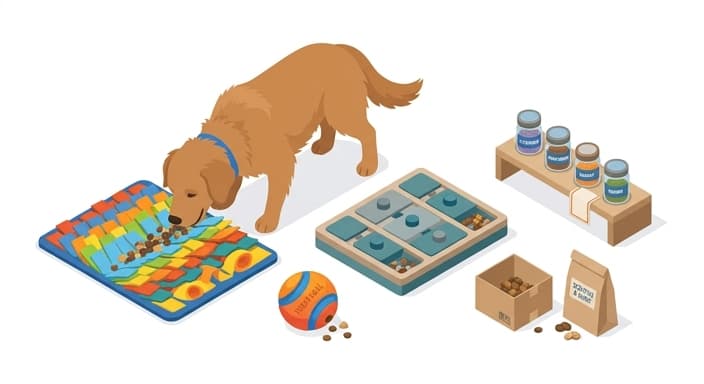
Foraging-based feeding, using snuffle mats or puzzle feeders, turns meals into engaging brain workouts that can take 15-20 minutes twice daily.
Indoor scent work leverages a dog's powerful nose and can be introduced through simple nose games, treat hiding, and scent trails.
There is a persistent, outdated myth in the modern pet care community that an indoor dog’s primary requirements are limited to a daily walk, a comfortable bed, and a predictable feeding schedule. As a veterinarian consultant, I frequently speak with well-meaning pet parents who are surprised to learn that behavioral issues like excessive vocalization, destructive chewing, and obsessive pacing are often symptoms of "boredom syndrome"—a genuine lack of cognitive stimulation that leaves a naturally intelligent scavenger with nothing to do. We are finally moving toward a more sophisticated, holistic standard of pet wellness that views mental enrichment not as a luxury or a "pet store gimmick," but as a vital therapeutic intervention, effectively closing the gap between a dog prone to behavioral frustration and one who possesses the neurological stimulation necessary to thrive in an indoor environment.
The Cognitive Blueprint: Why Boredom Is a Health Risk
To understand why mental enrichment represents a paradigm shift for our domestic companions, we must first demystify their evolutionary blueprint. Whether you share your home with a high-energy Border Collie or a stoic French Bulldog, these animals are descendants of species that spent their waking hours scanning the environment, solving spatial puzzles, and engaging in complex decision-making to survive. In the wild, a dog’s day is consumed by the "scavenge-track-solve-eat" cycle. Their brains are hardwired to process olfactory data, navigate terrain, and manipulate objects to access rewards.
When we bring these complex biological machines into a modern, predictable indoor home, we often inadvertently strip away every opportunity for cognitive engagement. Without a "job" to do, their neurological energy—which is significant—must go somewhere. It manifests as a frantic need to shred upholstery, bark at passing shadows, or pace the perimeter of the living room. By implementing structured enrichment, we aren't just "keeping them busy"; we are fulfilling an evolutionary mandate. When a dog engages their problem-solving centers, their body releases neurochemicals like dopamine and serotonin, which stabilize mood and promote deep, restorative sleep.
The Art of Foraging: Transforming Mealtime Into a Quest
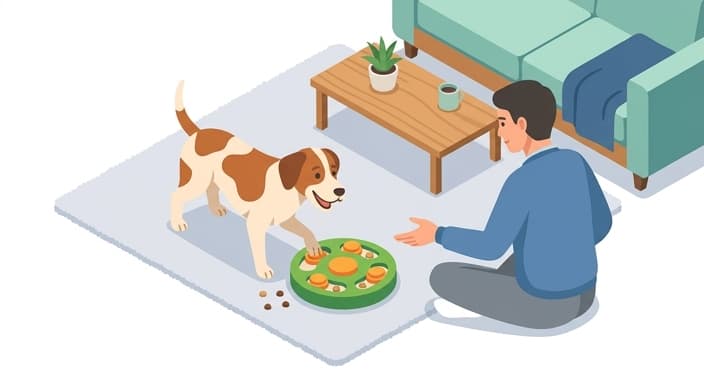
The most efficient way to introduce enrichment is to change how your dog eats. In nature, dogs do not receive their calories from a gravity-fed bowl. They work for them. When you feed your dog from a standard bowl, you miss a golden opportunity to engage their brain for 15 to 20 minutes twice a day. By transitioning to "foraging-based" feeding, you convert a sedentary ritual into an active, rewarding challenge that taps into their natural tracking instincts.
For beginners, I recommend starting with "snuffle mats"—fabric mats with long strips of felt where you can hide dry kibble. This forces the dog to use their nose, which is their primary sensory organ. For more advanced dogs, consider puzzle feeders that require sliding panels, flipping lids, or rotating chambers to release food. If you are on a budget, you can create a "DIY scavenger hunt" by hiding small portions of their dinner in different rooms, behind furniture, or tucked inside crumpled paper bags. The key is to make the process gradual enough that they stay motivated but difficult enough that they have to "think" their way to the reward. This mental exertion is often more tiring than a 30-minute walk, providing a profound sense of satisfaction that a bowl of food simply cannot replicate.
Scent Work: The Neurological Power of the Nose
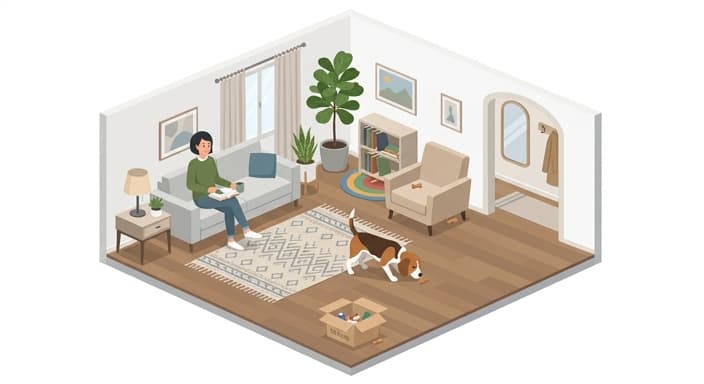
If you want to see a dog truly "light up," look to their nose. A dog’s olfactory bulb is roughly 40 times larger than a human’s relative to brain size, and they possess up to 300 million olfactory receptors compared to our meager six million. Engaging this sense is the most potent form of enrichment available. A simple, highly effective game to play indoors is the "Find It" game.
To start, have your dog sit and stay. Take a high-value, aromatic treat and place it in a corner of the room while they watch. Give them a release cue like "Find it!" and celebrate when they reach the treat. As they master this, increase the difficulty by placing the treat behind a chair, under a rug, or inside a box while they are in another room. Eventually, you can hide the treat entirely out of sight, forcing them to map the environment using scent rather than vision. This game builds confidence, improves impulse control, and provides a quiet, focused outlet for energy that can be played even in small apartments or during rainy weather.
Strategic Play and Impulse Control Games
Enrichment isn't just about food; it’s about the quality of interaction between you and your pet. Many indoor dogs struggle with impulse control—the ability to pause, wait, and regulate their excitement. Games like "Tug-and-Drop" are excellent for teaching this. Contrary to old-school myths, playing tug does not make a dog aggressive; it is a fantastic way to burn physical energy while teaching them to listen to your voice even when they are in a state of high arousal.
The secret to success here is the "drop" command. During a game of tug, stop moving the toy and go "dead" (still). When your dog stops pulling, wait for a natural pause or offer a trade for a treat to encourage them to let go. Once they release, they must wait for your permission to re-engage. This back-and-forth flow is a high-level brain game that requires the dog to switch between "go" and "stop" modes. Similarly, the "Wait at the Door" or "Leave It" games—where you place a treat on the floor and prevent them from eating it until you give a signal—build the neurological maturity necessary to handle the frustrations of indoor life. These exercises teach your dog that they are a partner in the household, not just a passive resident.
Creating a Sustainable Enrichment Routine
Implementing these games is only half the battle; consistency is the other. Many pet parents start with enthusiasm but lose momentum because they treat enrichment as an "event" rather than a lifestyle. To maintain progress, I advise creating an "Enrichment Menu." Choose one food-based game for the morning, one scent-based game for the afternoon, and one impulse-control session before bed. This structure provides a predictable rhythm to their day, which is inherently calming for an anxious or high-energy dog.
Rotate your toys and puzzles so your dog doesn't become bored with the same patterns. If you have five different puzzle toys, rotate them so they only see one or two per week. This keeps the challenges novel. Remember, the goal is not to exhaust your dog to the point of collapse, but to provide the mental "heavy lifting" that allows them to self-soothe. By investing just 20 minutes a day into these structured activities, you are doing more than just preventing furniture destruction; you are nurturing a resilient, cognitively sharp, and deeply fulfilled companion.
The transition from a bored, reactive dog to one that is mentally stimulated is one of the most rewarding journeys a pet parent can take. By honoring their evolutionary need for problem-solving and sensory engagement, you aren't just improving their behavior—you are profoundly enhancing their quality of life. Start with one snuffle mat or one game of "Find It" today, and you will likely find that a tired, satisfied brain is the secret to a much happier, quieter, and more harmonious home.
Common Questions
🤔
Frequently Asked Questions
What is boredom syndrome and why does it matter for indoor dogs?▼
Boredom syndrome refers to a chronic lack of cognitive stimulation that indoor dogs experience when their environments do not provide enough mental challenges. It can show up as destructive chewing, excessive barking, or pacing as the dog tries to expend pent-up energy. Enrichment programs give dogs a purposeful job, which helps release dopamine and serotonin, supporting mood and better sleep. Understanding this shift helps caregivers move from punishment to engagement.
How can I start foraging-based feeding at home?▼
To start foraging-based feeding, replace part of your dog's meals with brain-work sessions. Begin with a simple snuffle mat or treat-dispensing toy and hide small portions of kibble in its strips or compartments. As your dog progresses, add puzzle feeders with sliding panels or rotating chambers to increase difficulty, and try DIY scavenger hunts around the house. Keep sessions short and gradually extend them toward 15-20 minutes, twice daily.
What are practical indoor scent-work activities I can begin today?▼
Indoor scent-work activities can be started today with simple nose games. Hide small treats around one room at first, then gradually increase to multiple rooms, under cups, or inside folded towels. Use scent trails by placing treats at the end of a line of paper scraps or fabric strips. Always supervise and end on a positive note to maintain motivation.
How can I tailor enrichment to different dog personalities and energy levels?▼
Enrichment must be tailored to your dog's personality and energy level. High-energy breeds may need longer, more challenging tasks and faster progressions, while calmer dogs benefit from shorter, more frequent sessions. Observe your dog for signs of fatigue or frustration and adjust difficulty accordingly. Track progress and vary enrichment types to prevent boredom.