Blog5/2/2026
Effective Canine Enrichment Games for Beginners: Starter Guide
7 mins Read
The Briefing
Quick takeaways for the curious
Enrichment is a vital therapeutic intervention, not a luxury, that helps dogs thrive by providing the cognitive work they evolved to perform.
Boredom syndrome—caused by insufficient cognitive stimulation—manifests as excessive barking, destructive chewing, and pacing.
Dogs are hardwired for scavenging and problem-solving, so enriching their environment lowers cortisol and strengthens the bond between owner and pet.
The nose is a particularly powerful enrichment tool, and sniffari-style walks or nose-work games are highly effective for beginners.
Interactive feeding through puzzle feeders and slow feeders turns meals into cognitive challenges that mimic natural foraging and hunting.
There is a persistent, outdated myth in the modern pet care community that a canine’s primary requirements are limited to a daily walk, a comfortable bed, and a predictable feeding schedule. As a veterinarian consultant, I frequently speak with well-meaning pet parents who are surprised to learn that behavioral issues like excessive vocalization, destructive chewing, and obsessive pacing are often symptoms of "boredom syndrome"—a genuine lack of cognitive stimulation that leaves a naturally intelligent scavenger with nothing to do. We are finally moving toward a more sophisticated, holistic standard of pet wellness that views mental enrichment not as a luxury or a "pet store gimmick," but as a vital therapeutic intervention, effectively closing the gap between a dog prone to behavioral frustration and one who possesses the neurological stimulation necessary to thrive in a domestic environment.
The Cognitive Blueprint: Why Boredom Is a Health Risk
To understand why mental enrichment represents a paradigm shift for our domestic companions, we must first demystify their evolutionary blueprint. Whether you share your home with a high-energy Border Collie or a stoic French Bulldog, these animals are descendants of species that spent their waking hours scanning the environment, solving spatial puzzles, and engaging in complex decision-making to survive. In the wild, a dog’s day is consumed by the "scavenge-track-solve-eat" cycle. Their brains are hardwired to process olfactory data, coordinate physical movement, and analyze terrain.
When we transition them into our homes, we provide them with safety and caloric security, but we often inadvertently strip away their ability to exercise their problem-solving "muscles." A dog that does not have an outlet for these primal drives will often invent their own—usually in the form of shredding your favorite couch cushions or barking at the mail carrier for the tenth time that morning. Enrichment is not about "spoiling" your pet; it is about providing a surrogate for the cognitive labor they were biologically designed to perform. By introducing simple, structured games, we can lower cortisol levels, improve focus, and strengthen the bond between owner and pet.
The "Sniffari" Approach: Harnessing Olfactory Power
The most effective enrichment is often the most overlooked: the nose. A dog’s sense of smell is their primary interface with the world; their olfactory bulb is forty times larger than ours, relative to brain size. Engaging a dog’s nose is perhaps the most efficient way to tire them out, as processing scent requires massive amounts of neurological energy. For beginners, the simplest way to tap into this is through "sniffari" walks and nose-work games.
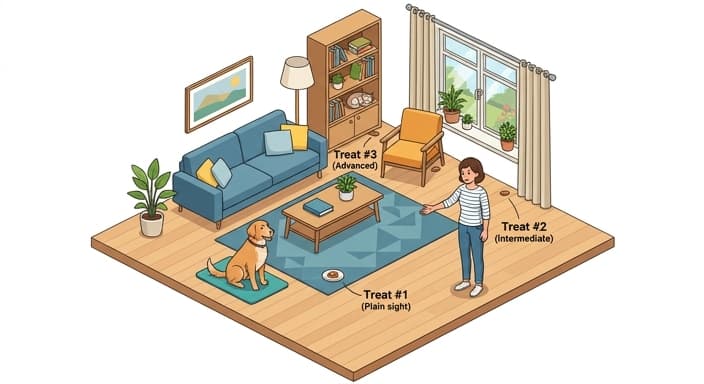
Instead of focusing on the distance or speed of your daily walk, shift your goal to "maximum sniff density." Allow your dog to lead the way and linger at a tree trunk or a patch of grass for as long as they need. In addition to outdoor scent work, you can bring the game inside. Try a simple "Find It" game: place your dog in a "stay" position, hide a few high-value treats around the room, and then give the release command. Start by placing treats in plain sight and gradually move to more challenging spots—under the corner of a rug or behind a chair leg. This encourages them to slow down, engage their brain, and use their senses to solve a problem rather than relying on impulsive energy.
Interactive Feeding: The End of the Boring Bowl
If you are still feeding your dog exclusively out of a stainless-steel bowl, you are missing the single greatest opportunity for daily enrichment. In the wild, dogs work for their meals; by providing a bowl of kibble, we turn a natural, labor-intensive process into a thirty-second event. Interactive feeding—or "foraging"—mimics the natural search-and-solve behavior that keeps a canine mind sharp.
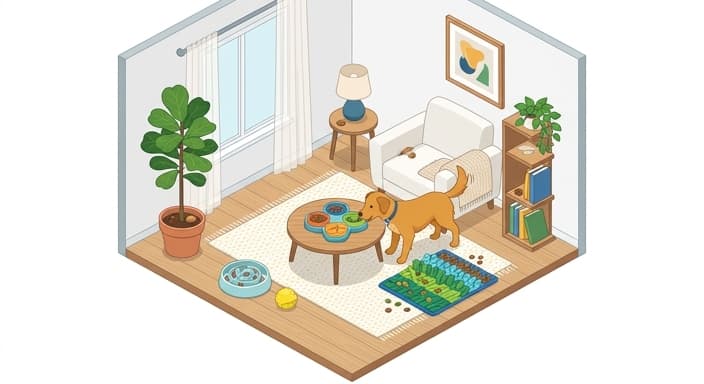
For beginners, the easiest transition is the use of puzzle feeders or slow-feeder bowls. These devices require the dog to slide, nudge, or flip components to access their food. If you’re on a budget, you can create your own enrichment tools. A "towel roll" is a fantastic entry-level game: scatter your dog’s dry kibble over a clean towel, roll the towel up, and watch them use their nose and paws to unravel it. Alternatively, use a cardboard box filled with crumpled paper or empty toilet paper rolls, and hide treats inside. This keeps the dog occupied for fifteen to twenty minutes, turns mealtime into a mental challenge, and results in a much calmer, more satisfied pet once the "hunt" is over.
Mastering the Art of Physical-Cognitive Play
Many pet parents confuse physical exercise with mental enrichment. While a game of fetch is wonderful for cardiovascular health, it is a repetitive, high-arousal activity that often leaves the dog physically tired but mentally "wired." To truly tire out an intelligent dog, you need to combine physical movement with mental decision-making.
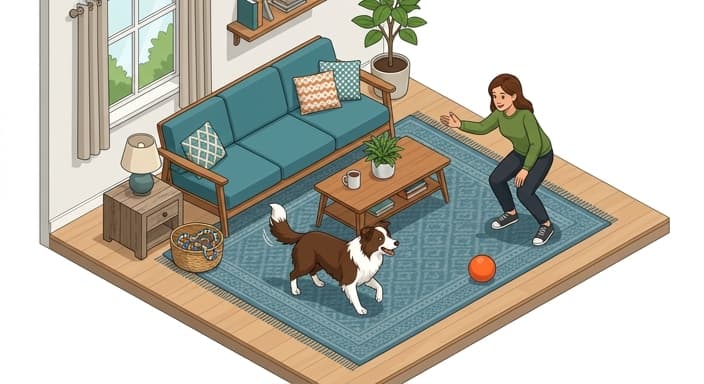
One of my favorite beginner games is "Hide and Seek" with a toy. Teach your dog to "sit" and "stay," then hide yourself in another room or behind a piece of furniture. Use a high-pitched, encouraging tone to call their name. When they find you, reward them with a jackpot of praise and a short play session with their favorite toy. This game serves two purposes: it reinforces the "recall" command in a fun, low-pressure environment and forces the dog to scan their surroundings to locate you. You can level this up by teaching them the names of their toys. Keep it simple—start with just two distinct toys, like a "ball" and a "rope." Ask them to "find the ball," and reward them when they make the correct choice. It is a slow process, but it is one of the most rewarding ways to build communication and cognitive depth with your canine companion.
Structuring Your Enrichment Routine
The biggest mistake beginners make is trying to implement everything at once, leading to both owner and dog burnout. Enrichment should be integrated into the rhythm of your day, not treated as an additional, exhausting chore. As a veterinarian, I recommend the "10-Minute Rule": aim for ten minutes of structured mental stimulation twice a day. This is far more effective than one hour of intense, sporadic play once a week.
Consistency is the secret sauce. If you feed your dog via a puzzle toy in the morning and engage in a ten-minute "sniffari" walk in the evening, you will notice a significant reduction in unwanted behaviors within two weeks. Remember to observe your dog’s body language. Are they tail-wagging and engaged? Good. Are they panting excessively, hiding, or showing signs of frustration? If so, the task may be too difficult. Always err on the side of making the game easier initially so your dog feels a sense of accomplishment. The goal is to build their confidence, not to test their limits to the point of distress.
Safety First: A Veterinarian’s Checklist
While enrichment is beneficial, safety remains the priority. When starting out, always supervise your dog, especially if you are using DIY toys involving paper, cardboard, or fabric. If you have a "power chewer" who tends to ingest non-food items, steer clear of fabric-based puzzles and stick to durable, rubber-based treat-dispensing toys that are too large to be a choking hazard.
Furthermore, keep a close eye on their caloric intake. If you are using treats for nose-work or puzzle games, deduct that amount from their main meal portions to prevent unwanted weight gain. Enrichment is a tool for health, and that includes maintaining an ideal body condition score. By choosing appropriate, durable toys and keeping a watchful eye on your dog’s progress, you are creating a safe, stimulating, and enriched life that honors their intelligence and strengthens your partnership for years to come.
Incorporating these simple, effective enrichment games into your daily routine is more than just a way to pass the time; it is a fundamental pillar of modern veterinary wellness. By acknowledging our dogs as intelligent, sensory-driven beings and providing them with the puzzles and challenges they crave, we can mitigate the stressors of indoor life and foster a much deeper, more harmonious relationship. Start small, remain consistent, and enjoy the process of discovering the unique way your dog’s mind works—you may find that the most rewarding part of the experience is the quiet, contented bond you build in the process.
Common Questions
🤔
Frequently Asked Questions
What is boredom syndrome and why is enrichment important?▼
Boredom syndrome refers to insufficient cognitive stimulation that can drive behavioral issues in dogs. When a dog's natural drives to explore, solve problems, and forage are unmet, they may vocalize, chew, or pace as outlets for energy. Enrichment provides structured mental work, which can lower stress hormones, improve focus, and strengthen the bond between dog and owner. Implementing simple nose-work and feeding challenges is a practical starting point.
How do I start with sniffari and nose-work for a beginner?▼
Begin with low-pressure, scent-focused activities that let your dog lead. On walks, prioritize maximum sniff density, allowing pauses at interesting scents rather than rushing distance or speed. Indoor nose-work can follow a stay, hiding treats around the room and gradually increasing difficulty. The key is patience and rewarding problem-solving rather than chasing immediate results.
How can beginners implement interactive feeding?▼
Replace a plain bowl with puzzle feeders or slow-feeder toys to turn meals into a brain workout. Start with simple puzzles and high-value treats, then progressively increase difficulty as your dog gains confidence. This mimics wild foraging, making mealtime engaging and satisfying. Always supervise and ensure the toy is appropriate for your dog's size and chewing strength.
What are some beginner-friendly enrichment games and how do I progress them?▼
Begin with easy games like Find It, scent-target toys, or treat-dispensing toys to engage the nose and problem-solving muscles. Move to challenge-based activities such as hiding treats in more complex locations or using covered puzzles. Increase difficulty gradually, keeping sessions short and ending on a success to maintain motivation. Pair enrichment with praise and consistent routines to build positive associations.