Blog3/20/2026
Effective Daily Enrichment for Indoor Cats: Boost Mental Health
5 mins Read
The Briefing
Quick takeaways for the curious
Enrichment is essential for indoor cats and helps prevent chronic stress and obesity by engaging their minds and bodies.
Even though cats are domesticated, they retain hunter instincts that benefit from daily activities like stalking, pursuit, and problem-solving.
Eliminating free-fed bowls in favor of food puzzles and hunting-style mealtime extends engagement, slows eating, and supports metabolic health.
Vertical enrichment—perches, shelves, and high vantage points—gives cats control, reduces anxiety, and promotes emotional well-being.
A successful enrichment plan combines interactive human play with stimulating toys and environment tweaks to keep cats mentally and physically satisfied.
There is a pervasive misconception that indoor cats are content to spend their days lounging in sunbeams, viewing the world exclusively through the glass of a window. As a veterinarian, I see the physical and psychological toll of this sedentary lifestyle daily: the "boredom weight gain," the obsessive grooming, and the behavioral outbursts that owners often misinterpret as "just being a cat." Enrichment is not a luxury or a hobby; it is a fundamental pillar of feline medicine, essential for preventing the chronic stress and obesity that shorten our companions' lives.
The Evolutionary Mismatch: Why Indoor Life Needs an Upgrade
To understand why your cat needs enrichment, we must first look at the biology of the house cat. Despite thousands of years of domestication, our feline friends are still physiologically wired as apex predators. In the wild, a cat’s day is dominated by the "hunt-eat-groom-sleep" cycle. Their brains are hardwired for visual tracking, stalking, pouncing, and problem-solving. When we bring them indoors, we provide them with safety and a reliable food bowl, but we inadvertently remove the very activities their brains evolved to perform.
When that natural drive to hunt has no outlet, it doesn’t simply disappear. Instead, it often manifests as destructive behaviors—shredding your curtains, attacking your ankles, or pacing at 3:00 AM. As a clinician, I treat many "behavioral" issues that are actually just symptoms of a bored, under-stimulated predator living in a static environment. By introducing structured daily enrichment, we aren't just "entertaining" our pets; we are providing them with the mental stimulation required for a balanced neuroendocrine system.
Transforming Mealtime: The End of the Free-Fed Bowl
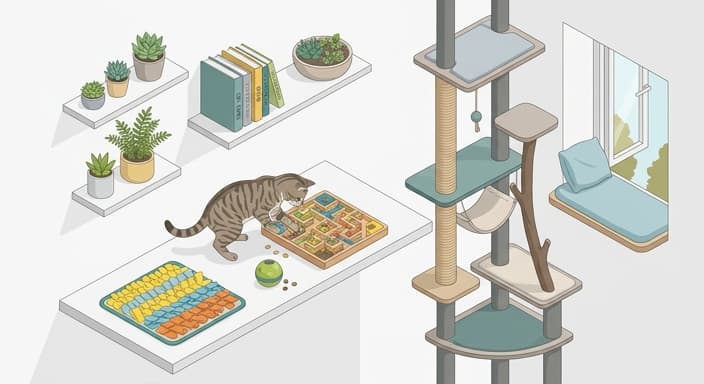
If there is one change I urge every cat owner to make, it is the elimination of the "free-fed" bowl. In the wild, a cat’s food is never handed to them; it must be earned through movement and strategy. When we pour a scoop of kibble into a ceramic dish, we strip the cat of their primary occupation. Instead, I recommend transitioning to food puzzles, snuffle mats, or "hunting" games.
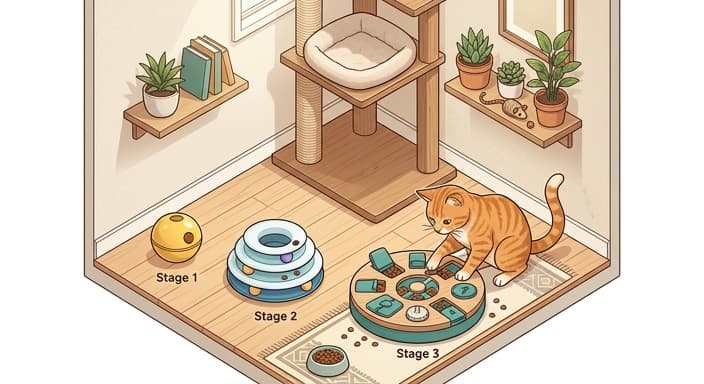
Food puzzles act as a bridge between your cat’s instincts and their domestic environment. By requiring the cat to manipulate a device, bat at a ball, or navigate a maze to access their meal, you are engaging their cognitive faculties and slowing down their eating speed, which is a fantastic preventative measure for feline obesity and regurgitation. Start with simple treat-dispensing balls and gradually increase the difficulty as your cat masters each level. This simple shift turns a three-second meal into twenty minutes of productive, instinct-driven labor.
Creating a Three-Dimensional World: The Vertical Advantage
Cats are not two-dimensional creatures; they are arboreal by nature. Their sense of security is tied directly to their ability to view their environment from a height. If your home only offers floor-level living, your cat is effectively missing a vital layer of their territory. In the veterinary world, we often talk about "resource guarding" and stress-related cystitis, both of which are frequently exacerbated by a lack of vertical space.
Vertical enrichment is about more than just a cat tree—it is about creating a "cat superhighway." Consider wall-mounted shelving, window perches, or clearing off the tops of sturdy bookcases to allow your cat to traverse a room without touching the floor. This provides them with a "safe zone" from which to observe the world, reducing anxiety and giving them the confidence that comes with a high-ground advantage. A cat that can escape to a high, secluded perch is a cat that feels in control of their environment, which is the cornerstone of feline emotional wellness.
The Art of the Interactive Play Session
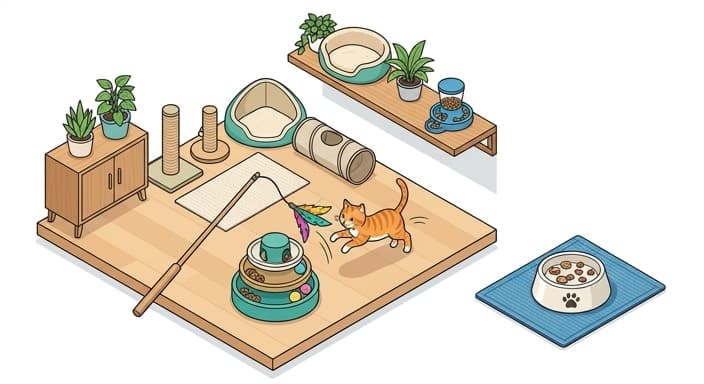
Many owners believe that if they buy enough toys, their cat will play independently. While autonomous toys like battery-operated mice have their place, they cannot replace the value of interactive play with their human. When you use a wand toy to mimic the erratic, flicking movement of a bird or the scurrying of a rodent, you are engaging in a shared predatory ritual that strengthens your bond and provides the cat with high-intensity aerobic exercise.
The goal of these sessions is to mimic the natural hunt cycle: stalk, chase, pounce, and finally, capture. Aim for two 10-minute sessions daily, ideally timed before you leave for work or before your own bedtime to help drain their excess energy. The play should always end with a "capture" and a small snack or meal. This "hunt-eat" sequence satisfies the cat’s internal drive and naturally triggers the post-hunt grooming and sleep cycle, leading to a much more settled and satisfied companion.
Sensory Enrichment: Engaging the Feline Mind
We often focus on the physical, but feline enrichment should also address the senses. A cat’s world is dominated by scent, and the typical indoor environment is often sterile—or worse, overwhelmed by artificial air fresheners and cleaning chemicals. You can bring the outside world in by introducing safe, novel scents. Small amounts of dried silver vine or catnip, or even bringing in a clean, non-toxic branch or a patch of cat-safe grass, can provide a sensory playground for your cat to investigate.
Additionally, consider the visual and auditory landscape. If your cat spends hours staring out a window, that is a clear sign they are craving visual input. A "cat TV" setup—such as a bird feeder placed outside a window that is accessible by a comfortable perch—can provide hours of mental stimulation. The goal is to provide enough novelty that your cat’s environment remains dynamic rather than static. By rotating these sensory experiences, you keep your cat’s brain active, curious, and resilient.
Conclusion: Investing in Long-Term Wellness
Enrichment for indoor cats is the single most effective preventative medicine I can recommend. By acknowledging that your cat is a predator with complex cognitive needs, you move from being a mere provider of food to a partner in their physical and mental health. Whether it is through the introduction of food puzzles, the creation of vertical highways, or dedicated interactive play, every effort you make to stimulate your cat’s natural instincts pays dividends in the form of a leaner, calmer, and more contented pet. Start small, remain consistent, and you will find that the "indoor cat" is not just surviving—they are thriving in a world of your design.
Common Questions
🤔
Frequently Asked Questions
Why is enrichment essential for indoor cats?▼
Indoor cats often lack the natural outlets for hunting and exploration. Without daily stimulation, they can develop stress-related behaviors, pacing, and obesity from a sedentary lifestyle. Enrichment supports a balanced neuroendocrine state and helps prevent medical issues linked to boredom and inactivity. In short, enrichment is a core aspect of feline health, not a luxury.
How do I implement mealtime enrichment without causing frustration?▼
Replace free-feeding with scheduled meals served through puzzles or hunting games. Start with simple treat-dispensing toys and gradually increase difficulty as your cat masters each level. This approach slows eating, provides cognitive challenge, and improves weight control while preserving the satisfaction of a successful hunt-like meal.
What does vertical enrichment look like in a typical home?▼
Vertical enrichment involves safe high perches and accessible routes that let your cat observe and control their environment. Install sturdy cat trees, wall-mounted shelves, and window perches to create a cat 'superhighway' that reduces anxiety and aids territory management. Ensure installations are secure and accessible from multiple rooms for easy navigation.
How should I balance interactive play with autonomous toys?▼
Interactive play sessions with you simulate hunting and improve bonding; aim for daily short sessions that encourage stalking, pouncing, and catching a toy. Use autonomous toys to supplement play but avoid relying on them exclusively, as human-guided play supports attention and motivation. Rotate toys and vary activities to keep your cat engaged, and pair play with feeding puzzles for ongoing enrichment.