Blog6/13/2026
Smart Wearable Tech for Pet Wellness: Continuous Health Insights
6 mins Read

The Briefing
Quick takeaways for the curious
Wearable tech shifts pet care from reactive check-ups to proactive, data-driven wellness management by continuously collecting data on behavior, location, and physiology.
Behavioral analytics establish baselines for scratching, licking, sleeping, and movement, enabling early detection of issues before obvious symptoms appear.
GPS and geofencing enhance safety with real-time tracking, customizable safe zones, and alerts for temperature or environmental risks.
Exportable wearable dashboards provide veterinarians with objective, long-term context that complements exams and supports earlier interventions.
Wearables empower owners to act as primary health advocates while reinforcing the veterinarian's expertise rather than replacing it.
The landscape of modern pet care is shifting from reactive treatment to proactive, data-driven wellness, turning our homes into sophisticated monitoring environments for our furry companions. As a veterinarian consultant, I am witnessing a remarkable transition where the "black box" of animal behavior is being illuminated by wearable technology, providing us with a clinical window into the physiological and emotional lives of our pets that was previously inaccessible.
We are moving away from the outdated notion that pet wellness is defined solely by annual check-ups and visible physical symptoms, and toward a nuanced understanding of "continuous health intelligence." By integrating GPS tracking, biometric sensors, and AI-driven behavioral analytics, we are empowering pet parents to act as primary health advocates. This technology does not replace the expertise of your veterinary team; rather, it provides us with the objective, longitudinal data necessary to make precise, early interventions that can significantly improve the quality and duration of your pet’s life.
The Science of Behavioral Analytics: Beyond Simple Step Counts
Many pet owners initially view wearable devices as glorified pedometers—a fun way to see if their dog hit their "10,000 steps" goal. However, the clinical value of these devices lies far deeper in their ability to monitor behavioral baselines. Animals are masters at masking discomfort; by the time a dog or cat shows a noticeable limp or a decrease in appetite, the underlying condition is often well-advanced.
Wearables utilize sophisticated accelerometers and gyroscopes to map a pet’s daily "rhythm." By establishing a baseline for scratching, licking, sleeping, and active movement, these devices can alert owners to subtle deviations. For instance, a sudden increase in nocturnal restlessness might indicate the onset of arthritis or urinary discomfort, while a slight decrease in daily activity could be an early biomarker for metabolic issues or cardiac distress. This data allows us to transition from "wait-and-see" medicine to "detect-and-prevent" care, catching chronic conditions in their infancy when they are most manageable.

GPS and Geofencing: The Evolution of Safety and Security
While biometric monitoring is the frontier of medical wellness, the safety utility of GPS-enabled wearables remains a cornerstone of responsible pet ownership. We have moved past the era of relying solely on physical microchips, which, while essential for identification, are passive tools that only work after a pet has been found. Modern GPS wearables offer active, real-time protection, allowing owners to set "safe zones" or geofences around their homes or frequent parks.
From a veterinarian’s perspective, the psychological peace of mind these devices provide is just as important as the physical safety. The anxiety associated with a lost pet can lead to rapid decision-making errors, but a wearable providing precise coordinates allows for a calm, controlled recovery. Furthermore, many of these devices now include temperature sensors, which are vital for breeds prone to heat exhaustion. By sending alerts when the ambient temperature around the pet exceeds safe thresholds, these tools prevent heat-related medical emergencies before they happen, proving that safety is as much about environmental awareness as it is about location tracking.
Integrating Data into the Veterinary Consultation
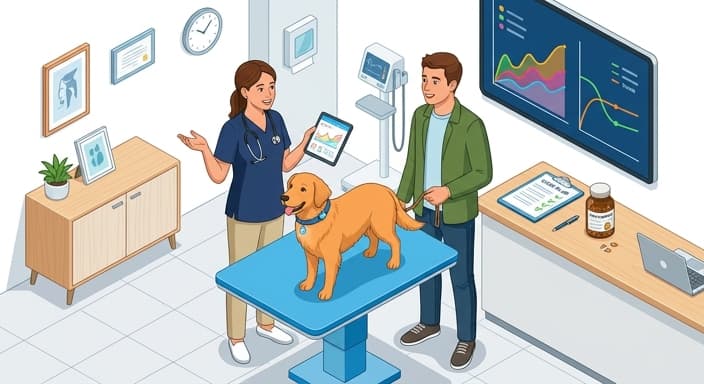
The most common question I receive from clients is: "What do I do with all this information?" The answer lies in data integration. We are entering an era where your pet’s wearable dashboard can be exported as a report for your veterinarian. During a clinical visit, having a three-month graph of your pet’s sleep quality, activity levels, and localized movement provides us with context that a ten-minute examination simply cannot capture.
This objective data removes the ambiguity from "how has he been acting lately?" and allows us to focus on evidence-based treatment plans. If a patient is exhibiting signs of joint pain, we can look at the wearable data to see exactly when the mobility decline began and whether specific supplements or physical therapy interventions are actually resulting in increased activity. This creates a collaborative partnership between the veterinarian and the owner, ensuring that the care plan is tailored to the pet’s specific lifestyle and physiological reality rather than a generic protocol.
Evaluating Wearable Tech: Criteria for the Modern Pet Parent
Not all wearables are created equal, and as the market floods with new gadgets, it is crucial to apply a clinical lens to your selection process. When choosing a device, prioritize those with high-fidelity sensors and a clear, user-friendly interface that focuses on trends rather than just snapshots. A device that tracks heart rate variability (HRV) or respiratory patterns at rest is significantly more valuable than one that only tracks high-intensity activity, as resting vitals are often the most accurate indicators of systemic health.
Durability is another non-negotiable factor. If you have an active, outdoorsy dog, the device must be IP67-rated or higher to withstand water exposure and rugged play. Furthermore, consider the battery life and subscription model; a device that dies every 24 hours is a liability, and a cloud-based service that allows for easy data export to your vet is worth the investment. Always remember that a wearable is an accessory to—not a substitute for—regular professional veterinary care. It is an enhancement to the human-animal bond, a way for us to better understand the silent signals our pets are constantly sending us.
The Future of Preventive Care and Early Detection
As we look toward the future, the integration of artificial intelligence will likely refine these devices even further, moving from simple trend-tracking to predictive diagnostics. We are approaching a time where wearables may be able to detect the subtle, high-frequency vibrations associated with early-stage respiratory issues or the specific cardiac arrhythmias that precede major health events. By collecting thousands of data points daily, these devices will eventually allow us to create a "digital twin" of a pet’s health, enabling us to simulate how certain treatments or lifestyle changes might impact their longevity.
The goal is not to turn our pets into data points, but to use technology to ensure they spend less time in the exam room and more time living their best, most vibrant lives by our side. By embracing this evolution in pet health, we are moving toward a future where our companions are not just surviving, but thriving in an environment where their needs are anticipated and addressed with scientific precision.
In conclusion, the adoption of smart wearable technology represents one of the most significant leaps in veterinary care over the last decade. By providing an objective look at behavioral and physiological patterns, these tools empower us to be more intuitive, proactive, and effective in our care. As you explore these devices, keep in mind that the best wearable is the one that fits seamlessly into your pet’s daily routine, providing you with the insights necessary to advocate for their health throughout every stage of their life. Your pet gives you their best every day; these tools are simply a way to ensure you can return the favor with the same level of dedication and care.
Common Questions
🤔
Frequently Asked Questions
What kinds of data do pet wearables collect and how does it help my pet's health?▼
Most devices track movement with accelerometers and gyroscopes, plus location via GPS, and increasingly environmental data like ambient temperature. This data helps establish each pet's behavioral baseline for activity, sleep, and restlessness, so subtle changes can be detected early. When patterns shift, owners can seek veterinary advice sooner, enabling earlier intervention and potentially better outcomes.
How should I interpret wearable data in daily pet care?▼
Treat wearable data as a contextual supplement to routine care. Look for deviations from your pet's baseline, such as unusual restlessness at night or a drop in activity, and note how long changes persist. Share a three-month or longer trend with your veterinarian so they can correlate it with exams, labs, or imaging when needed.
Can wearables replace visits to the veterinarian or professional diagnoses?▼
No. Wearables provide objective, longitudinal data to inform care, but they do not substitute professional veterinary judgment. They help identify when a visit is warranted and can guide diagnostic questions, treatment choices, and monitoring plans after a veterinarian evaluates the pet.
How can I prepare to discuss wearable data with my vet?▼
Keep your device's export or report accessible, ideally a three-month graph of sleep, activity, and location. Bring any alerts or notable events to your appointment and be ready to describe how data aligns with daily routines, meals, and medications. Your veterinarian can then interpret the data within the context of a clinical examination and medical history.