Blog4/15/2026
Smart Collar Data for Early Health Detection in Dogs
6 mins Read
The Briefing
Quick takeaways for the curious
Traditional views of canine health are shifting as smart collars provide continuous physiological data rather than occasional snapshots.
Modern collars function as high-fidelity biometric monitors that establish a dog's personal baseline for metrics like resting heart rate, respiratory rate, sleep, and activity.
Objective collar data helps overcome human bias and reveals gradual health shifts long before clinical signs appear.
Analyzing activity trends, especially declines in high-energy bursts, can reveal early pain or orthopedic issues even before a limp is visible.
Sleep architecture is a powerful window into systemic health, with changes signaling pain, allergies, metabolic disorders, or endocrine issues that warrant investigation.
There is a persistent, outdated myth in the modern pet care community that a dog’s internal health is an impenetrable black box, revealed only through periodic physical exams or when overt clinical signs of illness—like lethargy, vomiting, or limping—finally manifest. As a veterinarian consultant, I frequently speak with anxious pet parents who feel they are "waiting for the other shoe to drop," failing to realize that our dogs are masters of camouflage, evolutionary programmed to mask discomfort until a condition is far advanced. We are finally moving toward a more sophisticated, proactive standard of canine wellness that leverages smart collar technology not merely as a glorified GPS tracker, but as a diagnostic window into a dog’s physiological baseline, effectively closing the gap between a dog who suffers in silence and one whose subtle health shifts are intercepted long before they become a crisis.
The Digital Pulse: Decoding Canine Biometrics
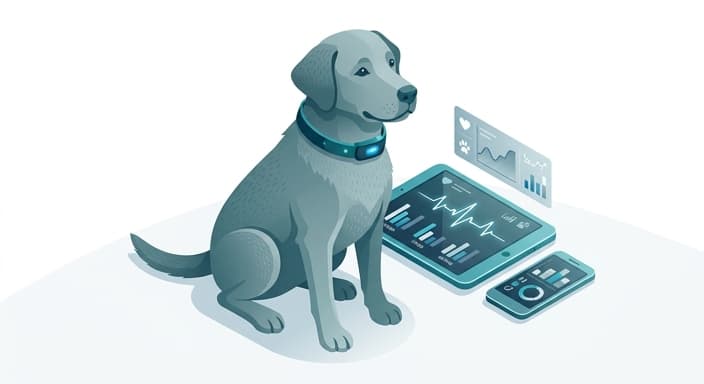
To understand why smart collar data is a paradigm shift for pet health, we must move past the idea of these devices as simple lost-and-found tools. At their core, modern smart collars are high-fidelity biometric monitors, capturing data points that were once only available in a clinical setting: resting heart rate, respiratory rate, sleep architecture, and subtle changes in activity intensity. By measuring these vitals continuously, we establish a "normal" range for your specific dog.
When we rely on intuition alone, we are prone to confirmation bias; we might miss a gradual increase in a dog’s resting respiratory rate because we see them every day. However, a smart collar identifies that the respiratory rate has crept up by three breaths per minute over the last two weeks. This objective, cold data allows me to intervene early. Whether it is identifying the sub-clinical onset of heart disease or detecting the subtle restlessness associated with chronic pain, these devices turn the "silent" language of canine illness into actionable, quantifiable metrics that we can discuss in the exam room.
Activity Trends as a Diagnostic Proxy for Pain
One of the most profound benefits of smart collar data is its ability to highlight changes in mobility that are invisible to the naked eye. Many pet owners assume that "limping" is the primary indicator of orthopedic pain, but in reality, dogs often exhibit much more subtle signs of musculoskeletal distress: a reduction in "high-energy" bursts, a change in how they distribute their weight during a walk, or a reluctance to engage in their usual play routines.
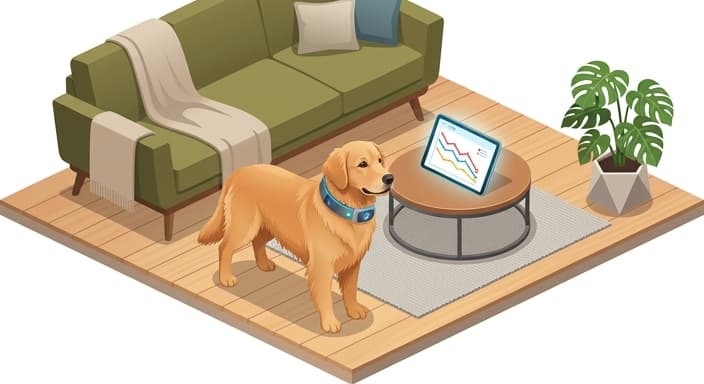
When a collar’s activity dashboard shows a consistent decline in active minutes—specifically those categorized as "running" or "jumping"—it often precedes a visible limp by several weeks. By analyzing these trends, we can differentiate between a dog simply slowing down due to age and a dog suffering from early-onset osteoarthritis or a soft tissue injury. This allows us to implement physical therapy, weight management, or anti-inflammatory support much earlier, preserving the integrity of their joints and significantly improving their long-term quality of life.
Sleep Architecture: The Window into Systemic Health
We often underestimate the diagnostic power of sleep. Just as in humans, the quality and duration of a dog’s sleep are profound indicators of their internal state. A dog with an itchy, allergic skin condition may experience fragmented sleep due to constant scratching; a dog with undiagnosed endocrine issues, such as Cushing’s disease, may show distinct patterns of nocturnal restlessness.
Smart collars track "rest quality" by measuring movement during sleep cycles. If your dog is suddenly tossing, turning, or experiencing shorter bouts of deep sleep, it is a clinical red flag. It tells me that something is disturbing their recovery—be it pain, an environmental allergen, or a metabolic imbalance. Tracking these patterns allows us to correlate sleep disturbances with other symptoms, helping us narrow down a diagnosis much faster than if we were relying on anecdotal reports during a standard consultation.
Integrating Data into the Veterinary Workflow
Integrating smart collar data into your pet’s healthcare plan requires a partnership between you and your veterinarian. The most effective way to utilize this technology is to share the long-term trends rather than just the "live" location. When you visit the clinic, bring your device’s app data or a printed report of your dog’s resting heart rate and activity levels over the past 30 days.
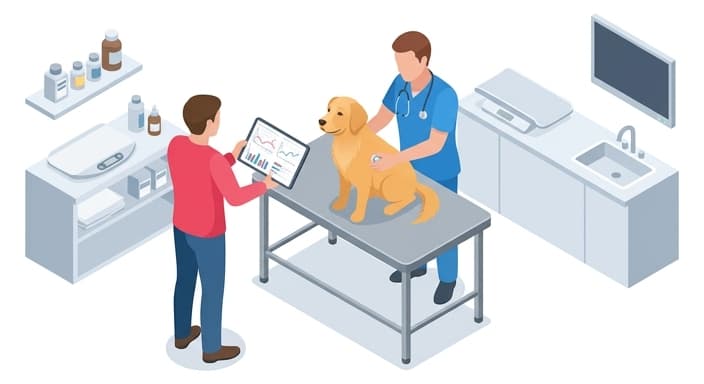
This data provides me with a "clinical narrative" of your dog’s health. If I am worried about a heart murmur, having a log of resting respiratory rates while your dog is asleep at home is infinitely more valuable than a heart rate taken in the high-stress environment of a veterinary office. It allows us to manage chronic conditions with precision—adjusting medication dosages based on real-world data rather than guessing. By treating your dog’s smart collar as a medical tool, you are effectively becoming an active member of your dog’s clinical care team, ensuring that no symptom goes unmonitored.
Navigating the Data: What to Look For
While technology is an incredible asset, it is important to remember that data is only as good as the interpretation. Avoid the "cyberchondria" trap—obsessing over every minor fluctuation. Dogs are living beings with natural variations; a single night of poor sleep or a rainy day with lower activity is rarely cause for alarm.
Instead, focus on the "three-day rule." If you notice a consistent trend—such as a sustained decrease in activity, a gradual increase in resting heart rate, or a persistent change in sleep architecture over three or more consecutive days—that is the moment to reach out to your veterinarian. Use the data as a conversation starter: "I’ve noticed a downward trend in these specific metrics, and I’d like to explore if this correlates with any underlying health issues." This proactive approach shifts the focus from reactive "sick care" to true "wellness management," ensuring that your dog spends less time recovering from illness and more time thriving in the prime of their life.
The transition toward data-driven pet care is not about replacing the physical exam or the intuition of a loving owner; it is about augmenting our ability to protect those who cannot speak for themselves. By embracing smart collar technology, you are providing your veterinarian with the missing pieces of the diagnostic puzzle, allowing us to catch silent illnesses while they are still manageable. As we look toward the future of veterinary medicine, the most successful pet parents will be those who view these devices as an essential wellness tool, bridging the gap between subtle physiological changes and vibrant, long-term health. Your dog’s data is their voice—by paying attention to what it says, you are ensuring they enjoy a life of comfort, mobility, and vitality for years to come.
Common Questions
🤔
Frequently Asked Questions
How do smart collars transform health monitoring from reactive to proactive?▼
They continuously collect biometric data, establishing a baseline for each dog. This allows detection of subtle deviations before symptoms are obvious. Clinicians can quantify changes, prompting earlier investigation and intervention. It shifts care from waiting for signs to monitoring trends.
What metrics do smart collars track and why are they meaningful?▼
Smart collars monitor resting heart rate, respiratory rate, sleep quality and architecture, and overall activity patterns. These metrics reflect autonomic status, pain, sleep disruption, and energy levels, offering objective signals of health shifts. By comparing to the individual baseline, small changes become clinically actionable.
How should owners interpret changes in activity or sleep patterns?▼
A gradual decline in active minutes, especially high-energy bursts, can indicate early pain or orthopedic issues. Sleep fragmentation or shorter deep sleep can signal discomfort, inflammation, or metabolic problems. Owners should track patterns over weeks and discuss persistent changes with their veterinarian.
What practical steps can help integrate smart collar data into routine veterinary care?▼
Choose a collar with reliable sensors and establish your dog's baseline metrics. Review dashboards regularly and set alerts for deviations that persist beyond a few days. Bring the data to vet visits, and work with your clinician to interpret trends and tailor diagnostics or therapies.