Blog6/2/2026
Probiotic Supplements for Pet Gut Health: Microbiome Guide
6 mins Read
The Briefing
Quick takeaways for the curious
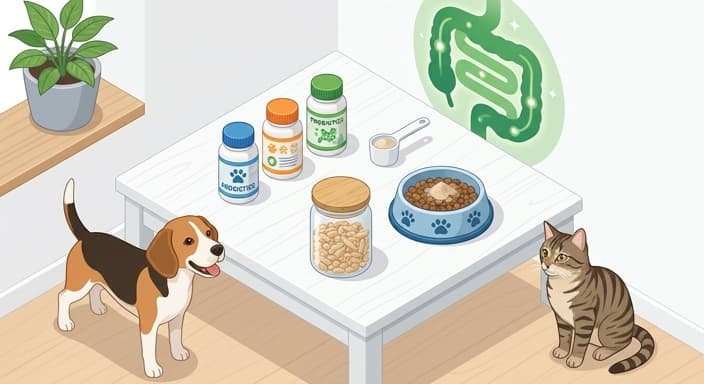
Gut health is more than stool consistency; the GI tract is the primary interface between a pet’s internal physiology and the outside world, and a healthy microbiome supports overall vitality.
Probiotics are not universal solutions; efficacy depends on strain specificity and the ability to survive stomach acid to reach the colon, not just total CFUs.
The gut-immune axis is real: about 70% of the immune system resides in GALT, and dysbiosis can drive inflammatory conditions like skin allergies, ear infections, and even behavioral changes.
Probiotics influence more than digestion by signaling the immune system and promoting SCFA production (e.g., butyrate) to nourish the gut lining and reduce inflammation and leaky gut.
Choosing a probiotic should focus on survivable, strain-specific, clinically backed options; look for named strains with veterinary evidence rather than generic proprietary blends.
There is a pervasive misconception among many pet owners that gut health is merely a matter of stool consistency, often overlooking the biological reality that the gastrointestinal tract acts as the primary interface between a pet’s internal physiology and the outside world. As a veterinarian consultant, I frequently see owners who dismiss chronic gas, intermittent loose stools, or dull coats as "normal" quirks of their pet’s constitution, failing to realize that these clinical manifestations are often the direct result of a disrupted microbiome—an internal ecosystem that has been compromised by the sterile nature of processed diets and the cumulative stress of modern domestic life.
We are moving away from the outdated notion that probiotics are simply "tummy remedies" to be used only during a bout of diarrhea, and toward a comprehensive understanding of "microbiome stewardship," where targeted probiotic supplementation serves as the cornerstone of systemic immune defense and metabolic efficiency. True vitality for a companion animal is not just about the absence of gastrointestinal distress; it is about recognizing that their ancestral physiology is designed to thrive on a complex, diverse population of commensal bacteria, and that actively cultivating this internal environment is one of the most impactful ways to align our care practices with the evolutionary needs of our pets.
The Probiotic Fallacy: Why "More is Better" Isn't Always the Answer
The most dangerous myth in modern pet care is the assumption that any probiotic supplement—or any source of "live cultures"—will produce the same health outcomes. Many owners gravitate toward products with the highest CFU (Colony Forming Unit) count, believing that flooding the gut with billions of bacteria is the fastest route to wellness. However, in my clinical experience, the efficacy of a probiotic is not determined by the total volume of bacteria, but by the specificity of the strains and their ability to survive the harsh, acidic environment of the stomach to reach the colon where they are needed most.
A probiotic supplement is not a generic "additive"; it is a therapeutic tool. If you are administering a generic, multi-strain supplement that lacks clinical backing for the specific species of your pet, you may be missing the mark entirely. Some strains are beneficial for immune modulation, while others are specifically targeted at competitive exclusion—the process of crowding out pathogenic bacteria like Salmonella or E. coli. As an expert, I advise pet parents to look for "strains with a name"—those that have been clinically tested in veterinary literature—rather than products that simply list a "proprietary blend" on the back of the label.
The Microbiome-Immune Axis: The Hidden Connection
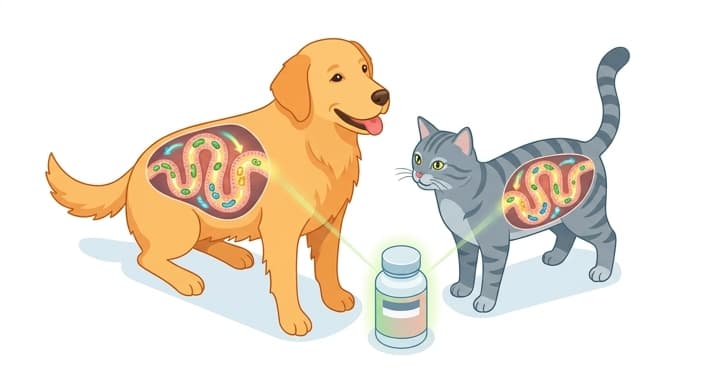
To understand why probiotics matter, we must recognize that roughly 70% of a mammal’s immune system resides within the gut-associated lymphoid tissue (GALT). When the microbiome is in a state of dysbiosis, the immune system is essentially operating in a state of constant, low-grade alert. This is why I often see pets with recurrent skin allergies, chronic ear infections, or even unexplained behavioral anxiety that resolve once we stabilize their gut health.
When we introduce high-quality, shelf-stable, or refrigerated probiotics, we are doing more than just helping digestion; we are sending molecular signals to the immune system to dial down inflammation. By nourishing the beneficial bacteria, we promote the production of short-chain fatty acids (SCFAs) like butyrate, which serve as the primary fuel source for the cells lining the colon. A healthy, well-nourished gut lining acts as a fortress, preventing "leaky gut"—a condition where undigested food proteins and toxins permeate the intestinal wall and trigger systemic inflammatory responses.
Selecting the Right Supplement: Survivability and Strain Specificity
When shopping for a probiotic, the label can be a minefield of marketing jargon. To cut through the noise, focus on three non-negotiable criteria: survivability, strain specificity, and the presence of prebiotics. Survivability refers to the supplement's ability to remain viable through the manufacturing process and the pet's digestive tract. Look for products that utilize micro-encapsulation, a technology that coats the bacteria in a protective layer, ensuring they remain dormant until they reach the alkaline environment of the intestines.
Strain specificity is equally critical. For dogs and cats, certain species like Enterococcus faecium or Bifidobacterium animalis have robust clinical data supporting their use in reducing the duration of acute diarrhea and improving stool quality. Furthermore, a truly effective supplement often includes prebiotics—the "fertilizer" that beneficial bacteria need to thrive. Ingredients such as inulin, fructooligosaccharides (FOS), or psyllium husk act as fuel for the probiotics you are introducing. If you provide the "seed" (the probiotic) without the "soil" (the prebiotic), the likelihood of the colony successfully colonizing your pet’s gut is significantly diminished.
Integrating Probiotics into Your Pet's Daily Routine
Successfully integrating a probiotic into your pet’s life requires consistency. Because the gut environment is constantly shifting due to diet, stress, and medications, a "one-off" dose will rarely yield the transformative results owners are looking for. I recommend treating a probiotic as a daily "health insurance" policy. For most healthy pets, a maintenance dose is sufficient, but for pets with a history of digestive sensitivity, I suggest a loading phase where we titrate the dose up over 7 to 10 days to ensure the digestive system adjusts to the new microbial influx without causing temporary gas or bloating.
It is also vital to consider the timing. In my practice, I prefer administering probiotics alongside a meal. The food bolus acts as a buffer against stomach acid, providing a safer "transit" for the beneficial bacteria. If your pet is currently on a course of antibiotics, the timing becomes even more critical; you must separate the administration of the two by at least two to three hours. If you administer them simultaneously, the antibiotic will effectively kill the very bacteria you are trying to introduce, rendering the supplement useless.

Beyond Digestion: The Future of Microbiome Maintenance
We are approaching an era where we can move beyond generalized supplementation toward a more bespoke approach. As we learn more about the unique microbial fingerprints of our pets, we are beginning to see the rise of personalized microbiome health plans. This includes using microbiome testing kits—which analyze the DNA of your pet’s gut bacteria—to identify specific deficiencies. If a test reveals a lack of Lactobacillus species, we can tailor a specific probiotic protocol to bridge that exact gap, rather than guessing with a broad-spectrum product.
Furthermore, we must address the "silent killers" of the microbiome: ultra-processed pet foods and unnecessary environmental chemicals. While probiotics are a powerful intervention, they are not a substitute for a high-quality, species-appropriate diet. Think of probiotics as a specialized crew of gardeners; they can certainly help restore a neglected garden, but if the soil is consistently being sprayed with herbicides—in the form of low-quality fillers, synthetic additives, and excessive preservatives—their work will be a constant, uphill battle.
Ultimately, the goal of probiotic stewardship is to empower the pet’s own biological defenses to handle the challenges of modern life. By being discerning about the strains we use, consistent in our application, and holistic in our approach to our pet’s environment, we can foster a gut environment that supports longevity, vitality, and true health from the inside out. Remember, the journey to a healthier pet often begins in the gut, and by investing in the microbial health of your companion today, you are laying the foundation for a more vibrant, resilient, and comfortable life for them for years to come.
Common Questions
🤔
Frequently Asked Questions
What makes a probiotic effective for pets?▼
An effective probiotic depends on strain specificity, the ability to survive stomach acidity and reach the colon, and solid veterinary clinical evidence. High CFU counts or vague multi-strain blends do not guarantee results. Look for products with clearly named strains that have demonstrated immune modulation or pathogen exclusion in published veterinary studies.
Why is gut health tied to immune and overall health?▼
About 70% of a mammal’s immune system resides in the gut-associated lymphoid tissue (GALT). When the microbiome is imbalanced, the immune system remains in a state of low-grade alert, which can manifest as allergies, infections, or even behavioral changes. Restoring a balanced gut microbiome can calm inflammatory processes and support systemic health.
How should I choose and use a probiotic for my pet?▼
Choose products that specify the exact strains and have veterinary or peer-reviewed backing, and ensure the product is appropriate for your pet’s species. Check storage requirements, shelf-life, and viability at the time of use. Follow dosing and duration recommendations from your veterinarian and avoid relying on high CFU counts alone.
Do more CFUs mean better outcomes?▼
Not necessarily. The key is strain quality, survivability through the stomach, and clinical validation rather than sheer CFU volume. Avoid relying on labels that only advertise a proprietary blend without identifying the constituent strains or supporting veterinary research.