Blog3/18/2026
How to Socialize a Rescue Dog Quickly: Gentle Steps
8 mins Read
The Briefing
Quick takeaways for the curious
Understanding the 3-3-3 Rule helps set realistic expectations for socializing a rescue dog. In the first three days, dogs experience sensory overload and cortisol spikes as they acclimate to a new home. During this decompression window, socialization should focus on safety and routine rather than exposure to strangers or busy places. By the three-week mark, the dog’s survival mode typically wanes and their true personality starts to emerge. By three months, many dogs have developed a sense of security and a bond of trust with their owner.
To expedite socialization without triggering fear, move slowly and follow the dog’s pace. Synthetic pheromones like Adaptil can help create a chemically safe environment that lowers baseline anxiety. Lower stress makes the dog more receptive to training and social cues. Avoid pushing the dog into situations that cause growling or snapping, because forcing defense resets the socialization clock. Pair low-risk exposure with positive associations and consistent routines.
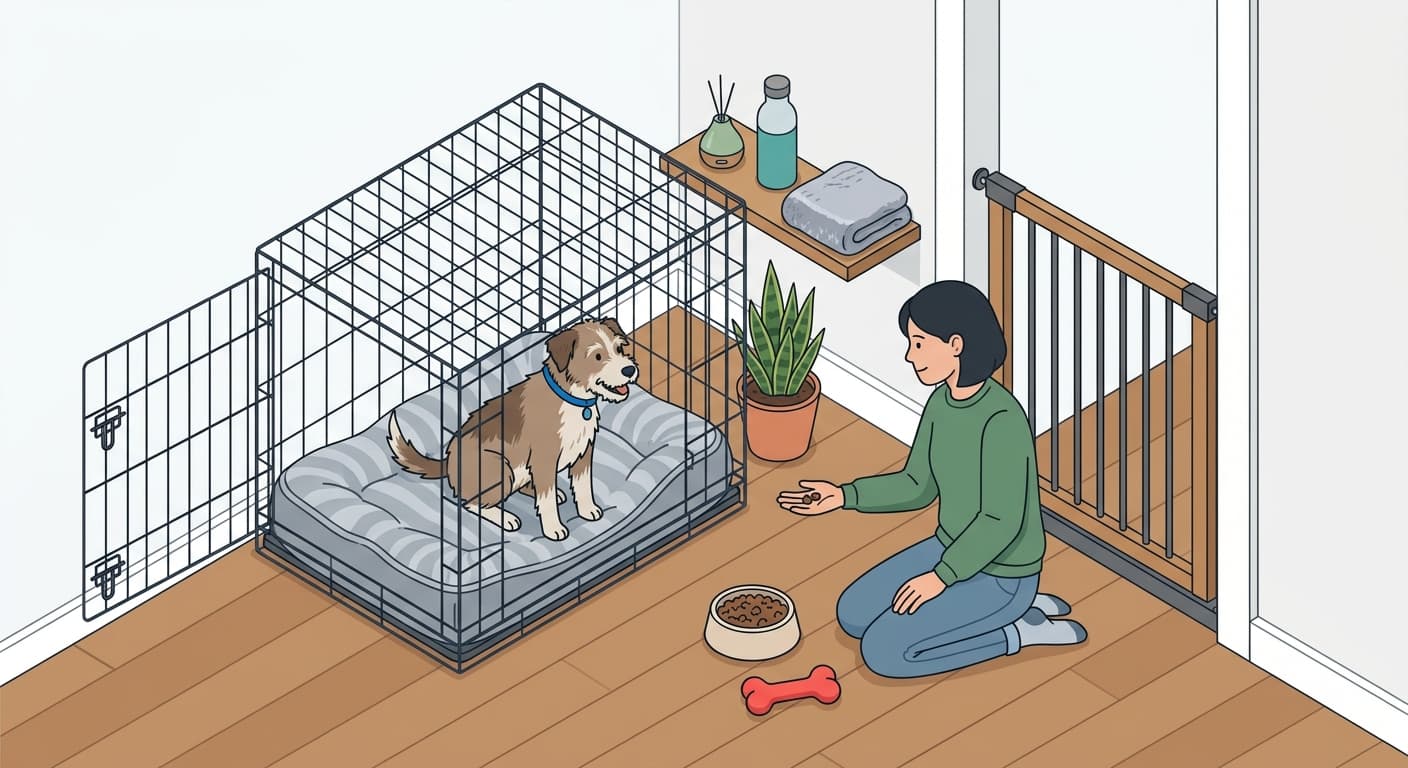
Start by establishing a Safe Zone, such as a crate or a quiet bed, where the dog can retreat. The 'Nothing in Life is Free' concept helps teach calm behavior while reinforcing you as a reliable provider. Use hands-free meals or Hand Feeding to build positive associations between your presence and rewards. The dog should know there is an escape hatch from social pressure, which paradoxically encourages exploration. Over time, this structure reduces anxiety and speeds up bonding.
Your body language communicates safety or threat far more than words. Stay calm, make slow movements, and avoid looming over the dog. Maintain predictable daily routines around meals, walks, and rest to reinforce trust. When the dog approaches, reward calm behavior with food or gentle praise. This predictability becomes the bedrock of socialization. A predictable schedule helps the dog feel secure enough to explore.
A practical toolkit centers on a Safe Zone, such as a crate or corner bed, and Hand Feeding during meals to build bonding with minimal risk. Start with low-traffic spaces and gradually expand exposure as the dog relaxes. Pair every new stimulus with calm, positive reinforcement rather than pressure. Remember that every dog progresses at their own pace and that patience is essential. Always monitor for signs of overwhelm and step back to decompression as needed.
There is a profound, quiet courage in the eyes of a rescue dog—a mixture of flickering hope and deep-seated hesitation that reflects a past we may never fully understand. As a veterinarian, I have sat on many clinic floors with these resilient souls, and I know that while your heart is eager to show them the world, the secret to socializing a rescue dog quickly is actually found in the art of moving slowly. The goal isn't just to "expose" them to new things, but to systematically rewire their nervous system to view the world as a place of safety rather than a series of threats.
Decoding the Decompression Phase: The 3-3-3 Rule
When a rescue dog enters your home, they aren't just "moving in"; they are undergoing a massive neurological recalibration. In the veterinary world, we often discuss the "3-3-3 Rule," a biological and behavioral roadmap that dictates how a dog processes their new environment. For the first three days, your dog is likely in a state of sensory overload, with cortisol levels (the stress hormone) spiking as they navigate unfamiliar scents and sounds. During this window, "socialization" should not involve trips to the pet store or meeting the neighbors; instead, it should focus entirely on "decompression." This means providing a quiet sanctuary, a predictable routine, and plenty of space.
By the three-week mark, the dog’s "survival mode" begins to ebb, and their true personality starts to emerge. This is the critical window where the foundation for socialization is built. You’ll notice them testing boundaries and seeking more interaction. Finally, by the three-month mark, most dogs have developed a sense of security and a "bond of trust" with their owners. Understanding this timeline is essential because trying to "socialize" a dog who is still in the three-day shutdown phase is like trying to teach someone algebra while they are being chased by a bear—the brain simply isn't wired for learning when it’s focused on survival.
To expedite this process, I often recommend the use of synthetic pheromones, such as Adaptil, which mimic the "appeasing pheromones" a mother dog releases to soothe her puppies. By creating a chemically "safe" environment, we can lower the dog’s baseline anxiety, making them more receptive to the training and social cues that follow. Remember, the quickest way to a socialized dog is to never push them so far that they feel the need to growl or snap; every time a dog feels forced to defend themselves, the socialization clock resets.
The Architecture of Trust: Creating a "Safe Harbor"
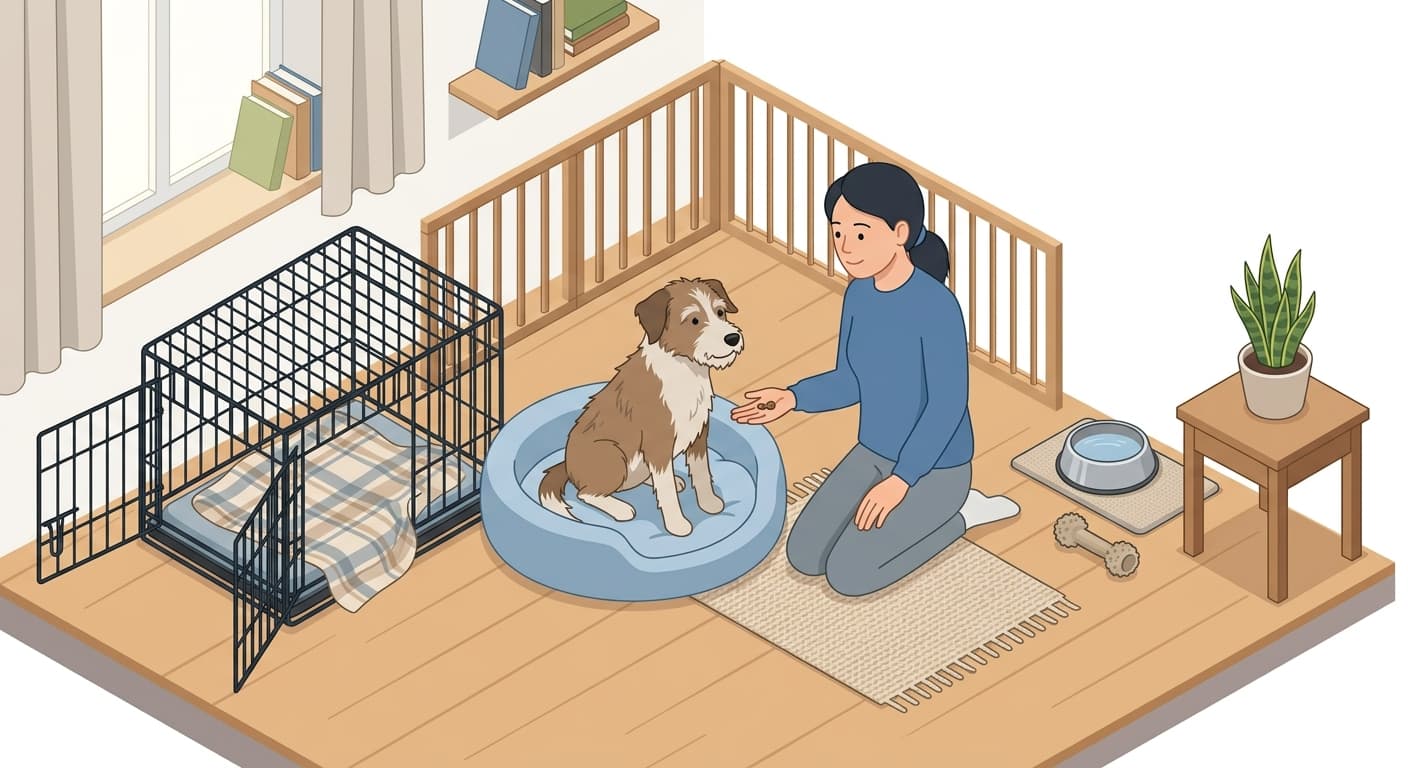
Before you can introduce your rescue to the outside world, you must become their "Safe Harbor." Socialization is built on a foundation of trust, and trust is built through predictability. In my years of consulting, I’ve found that the most successful adopters are those who implement a "Nothing in Life is Free" (NILIF) philosophy, but with a gentle, veterinary-informed twist. This doesn't mean being a drill sergeant; it means providing a structured environment where the dog learns that you are the provider of all good things—food, walks, and affection—in exchange for calm behavior.
Start by establishing a "Safe Zone," usually a crate or a specific bed in a low-traffic corner of the house. This is the dog’s sovereign territory where no one—not even you—bothers them. When the dog knows they have an "escape hatch" from social pressure, they are actually more likely to venture out and explore. During this phase, focus on "Hand Feeding" as a primary socialization tool. Instead of putting a bowl on the floor, use their mealtime as an opportunity for low-stakes bonding. Each piece of kibble becomes a reward for eye contact or simply existing in the same room as you. This builds a powerful "positive association" between your presence and the biological reward of food, effectively "speed-running" the bonding process.
Furthermore, pay close attention to your own body language. As humans, we tend to approach dogs head-on, leaning over them and making direct eye contact—all of which are perceived as confrontational or predatory in the canine world. To socialize a fearful rescue quickly, practice "soft" body language: turn your side to the dog, avoid staring, and let them initiate contact. When the dog realizes you aren't a threat, their amygdala—the brain's fear center—begins to shrink its reactive zone, allowing the prefrontal cortex to take over and begin the work of social learning.
Micro-Exposures: The Science of Desensitization and Counter-Conditioning
Once your dog is comfortable within the four walls of your home, the next step is "Micro-Socialization." This involves two key behavioral techniques: Desensitization (exposing the dog to a stimulus at a low enough intensity that they don't react) and Counter-Conditioning (changing the dog’s emotional response to that stimulus). For a rescue dog, the "stimulus" could be anything from a doorbell ringing to the sight of a person wearing a hat.
The "Open Bar" technique is a favorite of mine for quick results. The rule is simple: when the "scary" thing appears, the "bar" is open (the dog gets a continuous stream of high-value treats like boiled chicken or freeze-dried liver). When the scary thing disappears, the bar is closed. If a neighbor walks by the window, the chicken starts flowing. When the neighbor is gone, the chicken stops. Very quickly, the dog’s brain begins to make a magical connection: "I don't know what that guy in the hat is, but his presence makes chicken fall from the sky. I hope he comes back!"
It is vital to monitor the "Threshold." In behavioral medicine, the threshold is the imaginary line where a dog goes from "noticing" a trigger to "reacting" to it (barking, lunging, or freezing). To socialize quickly, you must keep the dog under threshold. If your dog starts taking treats roughly or refuses them altogether, they are over threshold. You must increase the distance between the dog and the trigger immediately. Socialization is not about "toughing it out"; it is about a series of 100% successful, non-scary interactions that stack up like bricks to build a wall of confidence.
Navigating the Canine Social Circle: Peer-to-Peer Introductions
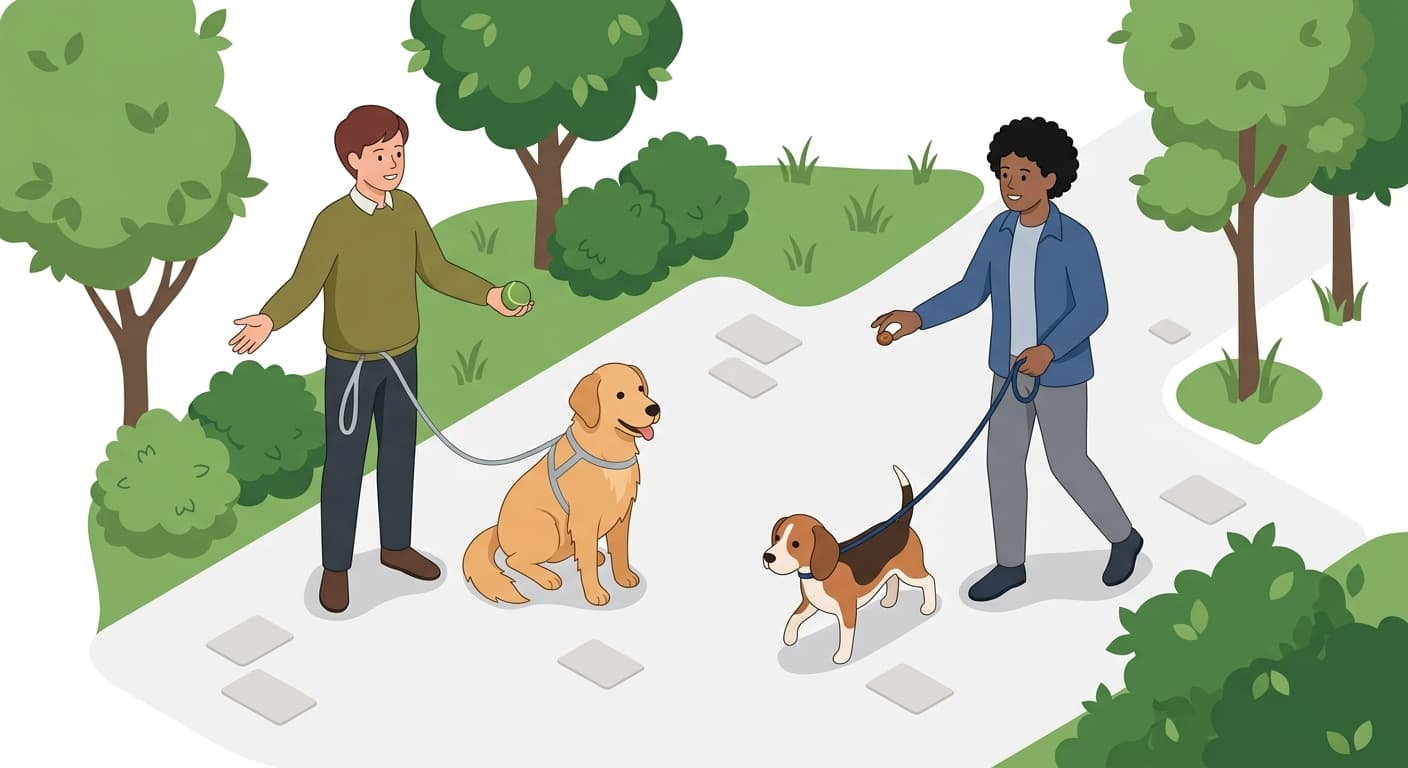
For many rescue owners, the ultimate goal is for their dog to have "friends" or at least be neutral around other dogs. However, the traditional "dog park" approach is often a recipe for disaster with a rescue. These environments are high-arousal, unpredictable, and can easily traumatize a dog who is already on edge. Instead, I recommend "Parallel Walking." This is the gold standard for introducing two dogs in a controlled, low-pressure way.
In a parallel walk, two handlers walk their dogs in the same direction, staying on opposite sides of a quiet street. There is no direct face-to-face contact, which dogs often find threatening. By moving together in a "pack" formation, the dogs get to process each other’s scent and movement without the pressure of a formal greeting. As the dogs relax (look for loose body language, sniffing the ground, or shaking off like they just got out of a bath), you can gradually decrease the distance between them.
When it does come time for a nose-to-butt greeting (the canine version of a handshake), keep it to the "Three-Second Rule." Count to three, then cheerfully call your dog away and reward them. This prevents the tension from escalating and ensures the interaction ends on a high note. Remember, not every dog needs to be a "social butterfly." For many rescues, being a "wallflower" who can calmly exist in the presence of other dogs without fear is a massive victory. Respect your dog's individual personality; some are naturally introverted, and forcing them into "party" situations will only damage the trust you’ve worked so hard to build.
Identifying "Red Flags": When to Pivot and Seek Professional Help
As a veterinarian, I advocate for early intervention when a dog’s fear turns into redirected aggression or profound shut-down behavior. While many socialization hurdles can be cleared with patience and treats, some rescue dogs carry deep psychological scars that require a more clinical approach. If your dog is exhibiting "Whale Eye" (showing the whites of their eyes), intense lip licking, excessive panting when it’s not hot, or "pancaking" (flattening themselves to the floor), they are communicating extreme distress.
One of the most important things an owner can learn is the difference between "learned helplessness" and "calmness." A dog who is frozen and stiff is not "being good"; they are terrified and have simply given up on trying to escape. If you see these signs, it is time to slow down and perhaps consult with a Veterinary Behaviorist or a certified Force-Free trainer. In some cases, short-term anti-anxiety medication can be a "bridge" to learning. These medications aren't meant to sedate the dog, but rather to lower the "noise" of their anxiety so that the socialization and training can actually penetrate their brain.
Finally, remember that socialization is a marathon, not a sprint. There will be days of incredible breakthroughs followed by days of what feels like regression. This is normal. A rescue dog’s journey to confidence is rarely a straight line; it is a series of loops and zig-zags. Your job is to be the steady, calm anchor in their storm. By providing structure, using positive reinforcement, and respecting their boundaries, you are doing more than just "training" a dog—you are healing a soul and giving them the tools to finally enjoy the vibrant, beautiful world they were always meant to explore.
Socializing a rescue dog is one of the most rewarding challenges a pet owner can face, requiring a delicate balance of clinical strategy and raw empathy. By following the 3-3-3 rule, utilizing counter-conditioning, and prioritizing the bond of trust above all else, you can help your new companion shed their fearful past. While the process requires immense patience, the moment your once-terrified rescue finally wagging their tail at a stranger or initiates play with a new friend, you will realize that every slow step was worth the journey toward a lifetime of shared joy.
Common Questions
🤔
Frequently Asked Questions
What is the 3-3-3 Rule and why does it matter for socializing a rescue dog?▼
The 3-3-3 Rule is a practical timeline that guides how a rescue dog processes a new environment. The first three days are a decompression window during which cortisol is high and learning is not the focus. By three weeks, the dog’s survival mode begins to ebb and a foundation for socialization forms. By three months, many dogs have developed a sense of security and a bond of trust with their owner.
How can pheromones help, and should I use Adaptil or similar products?▼
Pheromones like Adaptil can help create a chemically safe environment by mimicking calming maternal signals. They can lower the dog's baseline anxiety and make them more receptive to training. However, they are not a stand-alone solution and work best when paired with slow, positive socialization and a predictable routine. Use them as part of a broader, veterinary-informed plan.
What does NILIF look like in practice for a rescue dog?▼
NILIF stands for Nothing in Life is Free, but the approach should be gentle and veterinary-informed rather than punitive. It means the dog earns basic rewards like food, walks, and affection by calm, polite behavior. Start in a Safe Zone and gradually require calmer responses before offering more interaction. The goal is reliability and predictability that outpaces anxiety.
How do I know when it's time to increase exposure or try new environments?▼
Watch for signs of readiness, such as relaxed body language, interest in people or new stimuli, and consistent calm behavior when exposed to low-risk triggers. If the dog shows avoidance, growling, or freezing, slow down and return to decompression before attempting more exposure. Increase exposure gradually only when the dog demonstrates confidence in controlled settings and after a stable routine is established. Remember that progress varies and patience is essential.