Blog6/1/2026
Collagen for Dog Joints: Benefits for Mobility & Health
7 mins Read
The Briefing
Quick takeaways for the curious
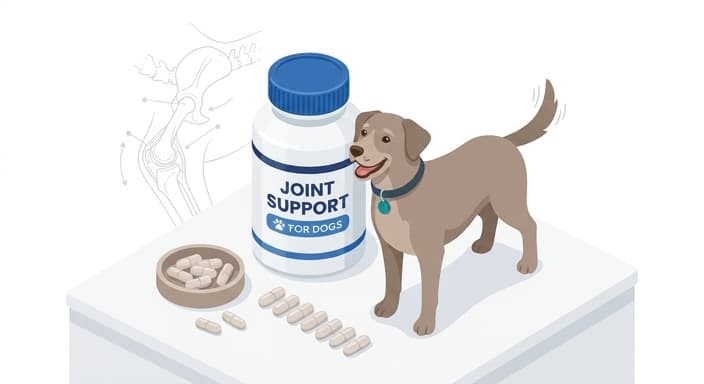
Joint mobility hinges on the structural integrity of connective tissues, and collagen supplementation can be a foundational part of preventive joint care for dogs.
Many modern commercial diets may meet basic survival needs but often lack sufficient glycine, proline, and hydroxyproline, which are essential for tendons, ligaments, and articular cartilage.
Collagen provides the building blocks that support cartilage repair and the extracellular matrix, helping chondrocytes maintain joint health beyond mere lubrication.
Hydrolyzed collagen peptides aid in maintaining ligament elasticity, joint stability, and hydration of the joint capsule, acting as a natural shock absorber for active dogs.
A proactive approach—what the article terms 'connective tissue stewardship'—focuses on long-term joint integrity and whole-body wellness rather than waiting for arthritis to appear.
There is a pervasive misconception among many pet owners that joint stiffness and a slowed pace are simply inevitable "taxes" paid for a long life, often overlooking the biological reality that canine mobility is fundamentally dependent on the structural integrity of connective tissues that require constant, bioavailable nutrient support. As a veterinarian consultant, I frequently see owners who treat their dog’s inability to jump onto the sofa or their hesitation on the stairs as signs of "old age," failing to realize that these clinical manifestations are often the direct result of a breakdown in the collagen matrix—the very scaffolding that holds their musculoskeletal system together.
We are moving away from the outdated notion that joint health is something we only address through pain management once a dog is already limping, and toward a comprehensive understanding of "connective tissue stewardship," where collagen supplementation serves as the cornerstone of preventative, whole-body wellness. True mobility for a companion animal is not just about the absence of acute lameness; it is about recognizing that their ancestral physiology is designed to thrive on a diet rich in amino acids derived from fibrous, whole-prey components, and that supplementing with high-quality collagen is one of the most impactful ways to align our care practices with the evolutionary needs of our pets.
The Collagen Fallacy: Why Modern Diets Leave Joints Undernourished
The most dangerous myth in modern pet nutrition is that a standard, "complete and balanced" commercial kibble provides everything a dog needs for optimal skeletal health throughout its entire lifespan. While these diets may meet the baseline AAFCO requirements for basic survival, they often lack the abundance of specific structural proteins—namely glycine, proline, and hydroxyproline—that are essential for maintaining the health of tendons, ligaments, and articular cartilage.
When a dog consumes a highly processed diet, the natural supply of these foundational amino acids is often denatured or severely limited. Over time, this leads to a "protein deficit" within the joints. Collagen acts as the biological glue of the body, providing tensile strength to connective tissue. Without a consistent supply, the body begins to borrow from its own reserves, leading to the thinning of cartilage and the degradation of synovial fluid. Recognizing that collagen is the most abundant protein in your dog’s body is the first step toward shifting from a reactive approach—waiting for an arthritis diagnosis—to a proactive approach that prioritizes structural integrity.
The Science of Mobility: How Collagen Supports Articular Health
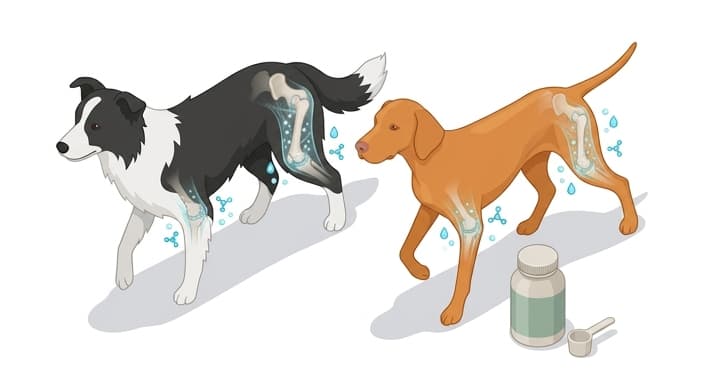
At a cellular level, collagen supplementation works by providing the body with the building blocks necessary to stimulate chondrocytes, the specialized cells responsible for maintaining the extracellular matrix of cartilage. When you provide your dog with hydrolyzed collagen peptides, you are essentially "feeding the joints" the exact precursors they need to repair micro-tears caused by daily activity, fetch sessions, or long walks.
Unlike many synthetic glucosamine or chondroitin supplements which focus primarily on lubrication, collagen works on the structural architecture of the joint itself. It helps maintain the elasticity of ligaments, which prevents the "looseness" that often leads to joint instability and subsequent inflammation. For breeds prone to hip dysplasia or those with high athletic demands, such as Border Collies or Vizslas, the regular inclusion of collagen acts as a shock absorber. It isn't just about reducing pain; it is about preserving the range of motion and ensuring that the joint capsule remains hydrated and resilient.
Identifying the Right Source: Hydrolyzed Peptides vs. Whole Proteins
Not all collagen is created equal. As a veterinarian, I often encounter owners who attempt to boost their pet's health by feeding them leftover scraps, like skin or bone, thinking this will solve their joint issues. While ancestral diets certainly included these elements, modern domestic dogs require a more bioavailable form of these nutrients to see clinical improvement. This is where hydrolyzed collagen peptides come into play.
Hydrolysis is a process that breaks down large protein chains into smaller, easily absorbable peptides. When you choose a supplement, look for collagen derived from high-quality, traceable sources, such as grass-fed bovine or wild-caught marine collagen. These sources are rich in Type I and Type III collagen, which are essential for skin, coat, and structural connective tissue. Avoid products with unnecessary fillers, artificial flavors, or added sugars, which can actually induce systemic inflammation—the very thing you are trying to mitigate by supplementing in the first place. Consistency is the key; because collagen is a foundational nutrient, it is not a "quick fix" drug, but rather a slow-acting, systemic support system that shows the most significant results after six to eight weeks of daily administration.
Integrating Collagen into a Holistic Wellness Regimen
Integrating collagen into your dog’s life should be viewed as part of a synergistic approach to longevity. While collagen provides the structural material, it works best when paired with other "mobility boosters." For instance, pairing collagen with Vitamin C is essential, as the body cannot synthesize collagen effectively without it. Similarly, ensuring your dog has an adequate intake of Omega-3 fatty acids—specifically EPA and DHA from fish oil—creates a dual-action defense: the collagen builds the structure, while the Omega-3s act as a natural anti-inflammatory to soothe existing irritation.

When beginning a collagen regimen, start with a "loading dose" based on your veterinarian’s recommendation for your dog’s weight, then transition to a daily maintenance amount. It is incredibly easy to incorporate: most hydrolyzed powders are tasteless and odorless, making them perfect for sprinkling over raw, dehydrated, or even canned food. If your dog is a picky eater, mixing the collagen into a small amount of bone broth can turn their supplement into a delicious, nutrient-dense treat that they look forward to every morning.
Beyond the Joints: The Hidden Benefits of Collagen
While we focus heavily on joints, it is important to remember that collagen is a systemic protein. When you support your dog's collagen levels, you aren't just protecting their knees and hips—you are supporting their entire biological framework. Many owners report that after a few months of collagen supplementation, they notice significant improvements in their dog’s skin elasticity and coat luster. This is because the skin is the largest organ and relies heavily on collagen for its barrier function.
Furthermore, collagen plays a vital role in gut health. The amino acids found in collagen, particularly glutamine, help support the lining of the intestinal tract, which can be a game-changer for dogs with sensitive stomachs or mild food intolerances. By reinforcing the gut barrier, you are essentially reducing the amount of systemic inflammation the body has to deal with, which indirectly benefits the joints. It is a beautiful example of how nature’s design is interconnected; by providing one missing piece of the puzzle, you often see ripples of health improvements across multiple body systems.
A Proactive Path Forward for Your Companion
The journey toward your dog’s optimal health is a marathon, not a sprint. By moving away from the reactive mindset that waits for clinical symptoms to manifest and embracing a philosophy of structural support, you are giving your pet the best possible chance at a vibrant, active, and pain-free life. Collagen supplementation is one of the most natural, effective, and scientifically sound ways to support the skeletal integrity that your dog needs to explore the world alongside you.
Remember that every dog is an individual; while collagen is a safe and beneficial addition for most, always consult with your veterinarian before starting any new supplement, especially if your dog is currently managing a specific health condition or taking prescription medication. By combining high-quality nutrition with a deep understanding of your dog’s biological needs, you are not just adding years to their life—you are adding life to their years. Start slow, stay consistent, and enjoy the sight of a pup that moves with the grace and energy they truly deserve.
Common Questions
🤔
Frequently Asked Questions
What is the role of collagen in a dog's joint health?▼
Collagen is the primary structural protein in connective tissues and provides tensile strength to tendons and ligaments while supporting the cartilage matrix. Supplementing with collagen supplies the precursors that support chondrocyte activity and repair of micro-tears in the joint tissues. This helps maintain joint mobility and joint capsule hydration, contributing to overall range of motion and resilience.
How does hydrolyzed collagen differ from other joint supplements like glucosamine?▼
Hydrolyzed collagen delivers specific amino acids needed to rebuild connective tissue and is formulated for better absorption and faster tissue delivery. Unlike glucosamine or chondroitin, which primarily target lubrication and anti-inflammatory pathways, collagen aims to strengthen the structural architecture of the joint itself. Results can vary between dogs, and collagen should be considered part of a broader joint-support strategy rather than a sole remedy.
Should collagen be used as a replacement for veterinary arthritis treatment?▼
No. Collagen can be a valuable preventive and supportive component of joint care, but it is not a substitute for veterinary diagnosis or treatment when arthritis is present. For dogs with established joint disease, collagen is best used in conjunction with prescribed therapies, physical therapy, and lifestyle adjustments. Always consult your veterinarian to tailor a plan based on your dog's specific needs.
How should I choose and dose a collagen supplement for my dog?▼
Choose a hydrolyzed collagen product with a clear ingredient list, high bioavailability, and third-party testing, avoiding unnecessary fillers or additives. Follow weight-based dosing guidelines provided by the manufacturer or your veterinarian, and start at the lower end before gradually increasing. Monitor your dog’s mobility, stools, and overall well-being, and adjust as needed in consultation with a veterinarian.