Blog6/14/2026
Personalized Nutrition Plans for Senior Pets: Precision Care
6 mins Read
The Briefing
Quick takeaways for the curious
Senior pets require a shift from maintenance to precision nutrition tailored to their medical history and clinical diagnostics.
Personalized nutrition relies on blood panels, body condition scoring, and owner input to go beyond one-size-fits-all senior diets.
Aging alters digestion and protein needs, making high-quality, bioavailable protein essential to combat sarcopenia without overburdening the kidneys.
Rather than blanket protein restriction, the focus should be on protein quality and the protein-to-phosphorus ratio based on renal and hepatic function.
Managing cognitive and joint health hinges on targeted nutraceuticals like EPA/DHA, antioxidants, glucosamine, chondroitin, and collagen, dosed to the individual pet.
Gut health and the gut-brain axis influence nutrient absorption and inflammation, so digestion and microbiome status should be considered when crafting senior nutrition plans.
The golden years of a pet’s life are not merely a time for slowing down; they are a profound period of physiological transition that demands a shift from "maintenance" to "precision" care. As a veterinarian consultant, I see firsthand that the nutritional needs of a senior dog or cat are as unique as their individual medical histories, requiring a departure from one-size-fits-all kibble toward highly personalized, science-backed dietary strategies.
We are moving away from the outdated notion that senior pets simply need "less food" to avoid obesity, and toward a nuanced understanding of "metabolic optimization." Aging is a complex process characterized by changes in digestive efficiency, muscle mass maintenance, and the inflammatory markers that drive chronic diseases like arthritis and cognitive decline. By integrating clinical diagnostics—such as blood panels and body condition scoring—with personalized nutrition, we can empower pet parents to serve as the architects of their pets’ longevity, ensuring that every meal serves as a targeted intervention for health and vitality.
The Metabolic Shift: Why Senior Nutrition is Different
When a pet reaches their "senior" milestone—typically around age seven, depending on breed and size—their metabolism undergoes a quiet but significant transformation. The ability to digest and absorb nutrients often declines, and the body’s requirement for high-quality, bioavailable proteins becomes paramount. Many commercial senior diets are formulated with lower protein levels to protect aging kidneys, but for the healthy senior, this can actually exacerbate sarcopenia, or age-related muscle wasting.
Muscle is the body’s metabolic engine. When a pet loses lean muscle mass, their resting metabolic rate drops, making weight gain easier and physical activity more taxing on the joints. Instead of blanket protein restriction, we should focus on protein quality—providing highly digestible, amino-acid-rich proteins that support the structural integrity of the heart, immune system, and muscles without placing undue stress on the kidneys. A personalized plan starts with a comprehensive blood profile to assess renal and hepatic function, allowing us to dial in the exact protein-to-phosphorus ratio your pet needs.
Leveraging Bioactive Nutrients for Cognitive and Joint Health
As our pets age, the inflammatory landscape of their bodies shifts. Chronic, low-grade inflammation is often the silent culprit behind stiff joints and the "brain fog" associated with Canine Cognitive Dysfunction (CCD) or feline cognitive decline. Modern senior nutrition is no longer just about calories; it is about the strategic inclusion of nutraceuticals that act as biological modifiers.
Omega-3 fatty acids, specifically EPA and DHA sourced from cold-water fish oil, are the gold standard for managing systemic inflammation. When paired with antioxidants like Vitamin E, Vitamin C, and polyphenols, these nutrients can help stabilize the oxidative stress that damages neuronal cells. For pets showing signs of joint discomfort, incorporating glucosamine, chondroitin, and undenatured collagen type II can provide the necessary building blocks for cartilage repair. However, the efficacy of these ingredients depends on the dosage; a "sprinkle" of a supplement in a bowl is rarely enough. Personalized nutrition ensures that these therapeutic agents are delivered at clinically relevant levels tailored to your pet’s specific weight and inflammatory burden.

The Gut-Brain Axis: Digestion in the Senior Years
The digestive tract is the largest immune organ in the body, and its health is inextricably linked to the brain and the immune system. In senior pets, we often see a decrease in gastric acid secretion and a shift in the gut microbiome, which can lead to malabsorption of essential vitamins like B12 and minerals like zinc. When the gut is compromised, your pet may be eating the "best" food, but they are not reaping the benefits.
Personalized nutrition plans often incorporate prebiotics and specific probiotic strains—such as Enterococcus faecium—to support the gut barrier and enhance nutrient bioavailability. Furthermore, fiber management becomes critical. As pets slow down, their transit time through the gastrointestinal tract can change. A tailored fiber profile, balancing soluble and insoluble fibers, can help maintain regular bowel movements while managing blood glucose levels. If your senior pet is struggling with intermittent constipation or loose stools, it is not just a nuisance; it is a sign that their internal ecosystem needs a recalibration.
Body Condition Scoring (BCS) and Precision Caloric Control
One of the most dangerous myths in veterinary medicine is that a slightly "chunky" senior pet is a happy, well-fed one. Obesity is a primary driver of osteoarthritis, diabetes, and heart disease, and it effectively shortens a pet's lifespan by reducing their ability to move comfortably. However, the opposite—undernutrition—is equally concerning, as the body begins to cannibalize its own muscle tissue for energy.
I encourage all pet parents to move beyond the bathroom scale and utilize the Body Condition Score (BCS) system—a 1-to-9 scale where 4.5 to 5 is ideal. In a personalized nutrition plan, we use the BCS to determine the exact caloric intake required to maintain lean body mass. If your pet is a 6/9, we don't just "cut their food"; we increase their protein-to-calorie density so they feel satiated while losing fat, not muscle. This precision requires weighing food with a gram scale rather than using a measuring cup, which can be notoriously inaccurate. Small adjustments of even 5-10% in daily caloric intake can have profound effects on a senior pet’s quality of life over the course of a year.
Hydration and the Hidden Role of Water
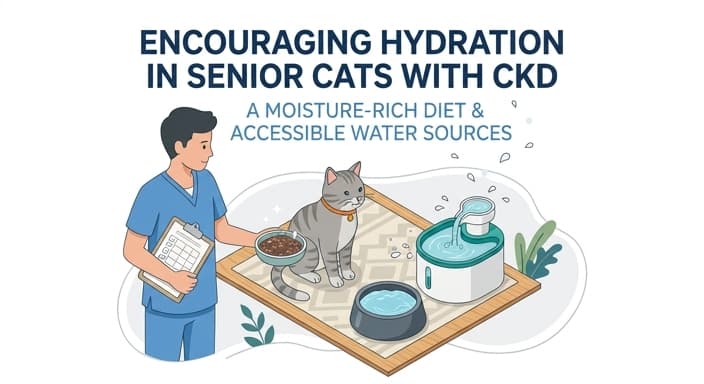
Often overlooked in the conversation about senior nutrition is the crucial role of hydration. Senior cats, in particular, are prone to chronic kidney disease (CKD), and maintaining proper hydration is the most effective way to support renal function. As pets age, their thirst response can become blunted, meaning they may not drink enough to compensate for their physiological needs.
Transitioning a senior pet to a moisture-rich diet—such as high-quality wet food or even adding warm water/bone broth to their kibble—is a simple, high-impact intervention. Increased water intake helps flush toxins through the kidneys, keeps the joints lubricated, and supports healthy skin and coat. When we design a personalized nutrition plan, we look at your pet’s daily water consumption as a vital sign. If your pet is exclusively eating dry food, they are likely in a state of mild, chronic dehydration. By increasing the water content of their diet, we can reduce the workload on their kidneys and improve their overall energy levels almost overnight.
Partnering with Your Veterinarian for Long-Term Success
Personalized nutrition is not a static endeavor; it is a living process that should evolve alongside your pet’s health. As your pet ages, their needs will shift—what worked at age eight may not be sufficient at age twelve. This is why regular re-evaluations are essential. Every six months, I recommend a senior wellness panel that includes a CBC, chemistry profile, and urinalysis. These diagnostics act as a "report card" for your nutrition plan, showing us whether the protein levels are appropriate, if the kidneys are supported, and if we need to adjust the levels of specific antioxidants or minerals.
Remember, you are the primary observer of your pet’s daily life. You see the subtle changes in their gait, their enthusiasm for dinner, and their sleep patterns. When you bring this observational data to your veterinary team, we can move from generic guidance to a truly bespoke nutritional strategy. By treating nutrition as a clinical intervention rather than a daily chore, you are not just feeding your pet—you are fueling their longevity and ensuring that their golden years are as vibrant and comfortable as possible.
Common Questions
🤔
Frequently Asked Questions
What is personalized nutrition for senior pets, and why is it different from typical senior diets?▼
Personalized nutrition for seniors is precision care tailored to a pet’s unique medical history, diagnostic results, and lifestyle, not a generic 'less is more' approach. It targets muscle maintenance, energy, organ health, and inflammatory status through individualized nutrient profiles. This approach moves beyond one-size-fits-all senior diets by adjusting protein quality, micronutrients, and bioactive ingredients to each pet.
How do clinicians tailor a senior pet's diet using diagnostics?▼
Clinicians use blood panels to assess renal and hepatic function, along with inflammatory markers, and combine this with body condition scoring and medical history. They translate these data into specific targets for protein quality, protein-to-phosphorus balance, fat, fiber, and micronutrients. The plan is implemented with a monitored feeding strategy and adjusted as test results and clinical signs evolve.
What nutrients and supplements are commonly emphasized in senior plans, and how are dosages determined?▼
Commonly emphasized nutrients include high-quality, digestible protein, EPA/DHA omega-3 fatty acids, and antioxidants. For joints and mobility, glucosamine, chondroitin, and undenatured collagen type II may be included, dosed to the pet’s weight and inflammatory burden. Dosages are not universal; they are tailored based on kidney and liver function, body condition, and response, ensuring clinically meaningful effects.
How can pet owners start implementing a personalized plan at home, and what should they track?▼
Begin with a veterinary evaluation to establish baselines and a body condition score. Transition gradually to the new plan with close monitoring for tolerance and changes. Track weight, body condition, energy level, appetite, stool quality, and signs of joint stiffness or cognitive changes, and share updates with your veterinarian. Schedule regular rechecks to adjust protein targets, nutrient levels, and supplements as your pet ages.