Blog6/7/2026
Sustainable Refillable Packaging for Pet Supplies and Care
7 mins Read
The Briefing
Quick takeaways for the curious
Many pet owners overlook the plastic waste from grooming bottles, treat packaging, and litter containers, assuming the footprint only comes from pet food.
We are shifting toward circular pet parenting, where refillable packaging becomes the primary tool to reduce plastic waste and the chemical load in homes.
The Convenience Trap promotes buying new single-use plastics for convenience, which fuels a waste crisis and can expose pets to low-grade plastics and chemical leaching.
A true sustainability assessment uses three pillars—material durability, ingredient concentration, and logistics efficiency—then favors concentrated refills that ship less water and waste.
Transitioning to refillables can be done in steps, not a cold turkey, by starting with high-use products and adopting a closed-loop approach so hardware is reused.
There is a pervasive misconception among many pet owners that our environmental footprint as pet guardians is limited to the food our companions eat, often overlooking the massive, hidden mountain of plastic waste generated by shampoo bottles, treat bags, and litter containers. As a veterinarian consultant, I frequently see pet parents who are deeply committed to their pet’s health but remain unaware that the single-use plastic economy is not just a threat to the planet, but a contributor to a "throwaway culture" that prioritizes convenience over the long-term well-being of the ecosystems our pets inhabit.
We are moving away from the outdated notion that pet care sustainability is a "niche" interest for the eco-conscious few, and toward a comprehensive understanding of "circular pet parenting," where refillable packaging serves as the primary tool to reduce the chemical load and plastic waste entering our homes. True environmental stewardship for a pet owner is not just about recycling a stray box; it is about recognizing that our pets are sensitive to the microplastics and chemical residues often associated with low-quality, single-use manufacturing, and that transitioning to refillable systems is the most compassionate way to ensure our pets’ environment remains as clean as their health standards.
The Convenience Trap: Why Single-Use Plastic Is Harming Your Pet
The most dangerous myth in the modern pet care world is the "Convenience Fallacy"—the belief that buying a new, pre-packaged plastic bottle of grooming spray or supplement every month is a harmless necessity of pet ownership. In reality, the pet industry is one of the largest contributors to global plastic waste, with millions of tons of non-recyclable multi-layer laminates and high-density plastics ending up in landfills annually.
From a veterinary perspective, the concern isn't just ecological; it is physiological. Many single-use plastic containers, particularly those containing low-grade plastics, can experience chemical leaching when stored in hot warehouses or sunlit delivery trucks. When we choose refillable systems—often made from durable glass, aluminum, or high-grade, BPA-free silicone—we are inherently reducing the risk of endocrine-disrupting chemicals migrating into the products our pets ingest or wear on their skin. By choosing brands that utilize "closed-loop" systems where you keep the hardware and only buy the "software" (the product itself), you are effectively opting out of a cycle that prioritizes cheap production over material integrity.
Assessing the Sustainability Lifecycle of Pet Supplies
To truly shift toward a sustainable household, we must apply the same clinical rigor to our shopping habits that we do to our pet’s preventive care. Not all "eco-friendly" packaging is created equal. When evaluating a brand, look for three pillars of integrity: material durability, ingredient concentration, and logistics efficiency.
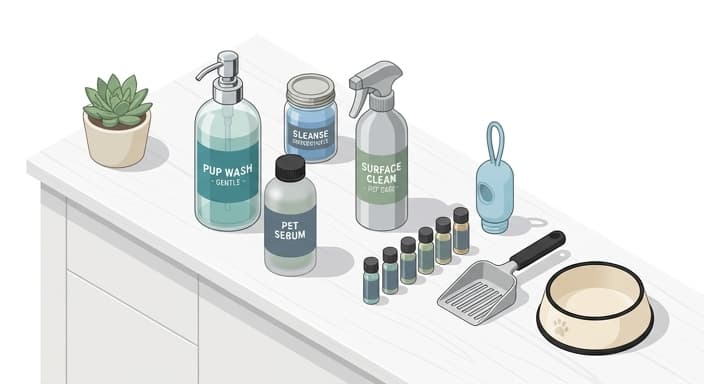
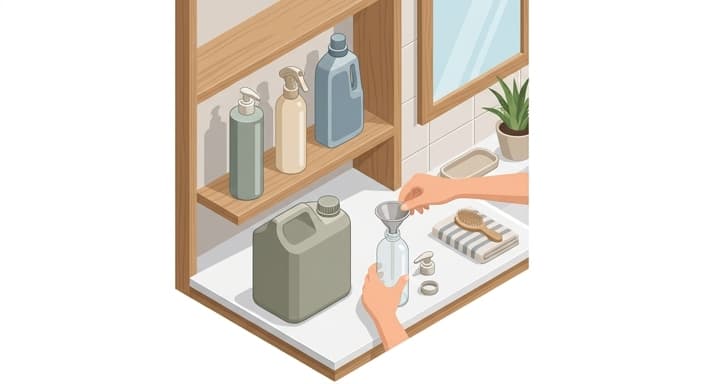
Concentrated refill systems are the gold standard for a reason. By buying a small, concentrated vial of shampoo or cleaner and mixing it with water at home in a permanent, high-quality dispenser, you are eliminating the need to ship "water weight." This dramatically lowers the carbon footprint associated with shipping, while simultaneously providing you with a higher-quality product. As a veterinarian, I often tell my clients that if the first ingredient in a bottle is water, you are essentially paying for shipping and plastic, not for the therapeutic benefits of the product itself. Refillable concentrates allow for more potent, active ingredients without the bulk, saving both your wallet and the planet.
Transitioning to a Refillable Home: A Step-by-Step Guide
Making the switch to refillable pet supplies doesn't have to happen overnight. In fact, a "cold turkey" approach often leads to burnout. Instead, treat your transition like a medical protocol: start with the products you use the most frequently.
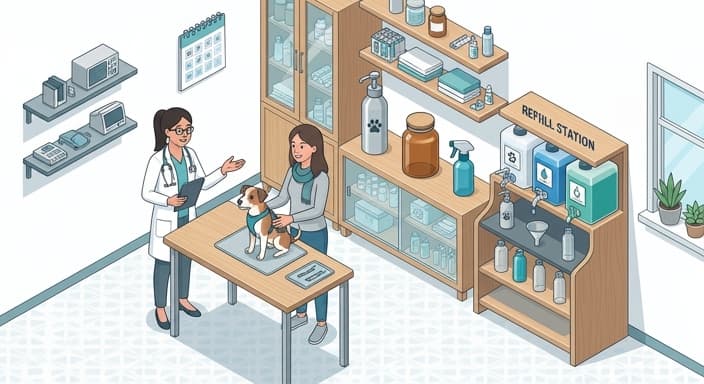
Begin with your grooming and cleaning supplies. Grooming shampoos, detanglers, and floor cleaners used for pet-safe home sanitation are the easiest starting points. Look for companies that provide aluminum canisters or glass bottles with high-quality pumps. Once you have the "vessel," you are set for the long haul. Next, consider your pet’s supplements. Many modern brands now offer "refill pouches" that are home-compostable or fully recyclable, allowing you to pour the contents into a permanent ceramic or glass jar.
The goal is to create a station in your home where "refilling" becomes a ritual rather than a chore. Keep your refill concentrates stored in a cool, dark cabinet, and designate a specific day of the month to "top off" your primary dispensers. By turning these tasks into a habit, you reduce the decision fatigue that often leads us back to the convenience of single-use, non-recyclable plastics.
The Veterinary Perspective: Why Material Quality Matters
In my clinical practice, I have seen a rise in contact dermatitis and unexplained skin sensitivities in pets that correlate with the frequent rotation of mass-produced, single-use grooming products. When we rely on cheap plastic packaging, the manufacturing quality of the plastic is often secondary to the price point, which can lead to stability issues for the product inside.
Refillable systems, conversely, are almost exclusively marketed by boutique or premium brands that prioritize the shelf-stability and purity of their formulas. Because the packaging is designed to be kept and cleaned, the contents are often formulated without the harsh preservatives required to keep a product "stable" for years on a retail shelf. When you use a refillable system, you are often getting a fresher, more potent product. You are also avoiding the potential for micro-plastic migration, which is an emerging area of concern in veterinary toxicology. By choosing companies that invest in high-quality, reusable packaging, you are indirectly voting for higher standards in the formulation of the products themselves.
Navigating Greenwashing in the Pet Industry
As the demand for sustainable pet supplies grows, so does the prevalence of "greenwashing." This is a critical point for the informed pet guardian. Many brands will use earthy colors, photos of leaves, or vague terms like "natural" or "eco-friendly" on their labels, yet continue to use non-recyclable multi-layer pouches that are essentially impossible to process at standard recycling facilities.
To avoid falling for these marketing traps, look for transparency. A truly sustainable brand will tell you exactly what their packaging is made of (e.g., "100% post-consumer recycled aluminum" or "non-toxic food-grade silicone"). They will provide clear instructions on how to dispose of the refill packaging, and they will be upfront about their carbon offset programs. If a company claims to be sustainable but cannot explain the material science behind their refill system, proceed with caution. Ask yourself: Is the refill system truly designed for reuse, or is it just a slightly smaller piece of plastic that still ends up in the bin? True sustainability is found in the longevity of the container, not just the messaging on the label.
Future-Proofing Your Pet’s Lifestyle
Choosing refillable packaging is more than just a small act of environmental kindness; it is a commitment to a standard of excellence in pet care. When we move away from the disposable model, we simplify our lives and elevate the quality of the products we bring into our homes. We stop viewing our pets’ supplies as temporary, throwaway items and start viewing them as investments in their health and our shared environment.
The shift toward sustainability is not about achieving perfection. It is about making intentional choices that compound over the life of your pet. By auditing your supply cabinet, supporting brands that prioritize circular economics, and demanding transparency in packaging, you are helping to create a future where the pet industry is defined by its stewardship rather than its waste. Your pet may not understand the science behind the refillable pump, but they will certainly benefit from the cleaner, more intentional care that comes along with it. As we look toward the future of pet ownership, let us prioritize a legacy that leaves the planet a little better for the next generation of four-legged companions.
Common Questions
🤔
Frequently Asked Questions
What is the environmental impact of conventional pet care packaging?▼
Conventional pet care packaging contributes massively to plastic waste, with millions of tons of non-recyclable laminates and high-density plastics ending up in landfills annually. Single-use containers can experience chemical leaching when stored in hot warehouses or delivery trucks, potentially exposing pets to contaminants. Choosing refillable systems made from durable materials like glass, aluminum, or BPA-free silicone reduces plastic input and lowers the risk of chemical exposure, while supporting a closed-loop model where the hardware is reused.
What is circular pet parenting and why does it matter?▼
Circular pet parenting centers on keeping packaging and materials in use for as long as possible, primarily through refillable systems. It reduces the chemical and plastic load entering homes and the environment, protecting pet health and ecosystems. By treating the packaging system as a shared resource, owners can maintain convenience while advancing sustainability.
How should I evaluate eco-friendly pet packaging?▼
Look for three pillars of integrity: material durability, ingredient concentration, and logistics efficiency. Favor concentrated refills that you mix at home, which eliminates shipping water weight and reduces overall carbon footprint. If the first ingredient in a bottle is water, you’re effectively paying for shipping and plastic rather than therapeutic value, so prioritize products with potent active ingredients and minimal fillers.
How can I start transitioning to refillable pet supplies at home?▼
Treat the switch like a medical protocol: plan a gradual transition rather than a sudden change. Start with the products you use most frequently and introduce a durable, reusable dispenser, then replace other items over time. Focus on brands that offer closed-loop systems where you keep the hardware and simply replenish the product, which makes the shift sustainable and manageable.