Blog5/10/2026
Sustainable Enrichment Toys for Indoor Rabbits Guide
6 mins Read
The Briefing
Quick takeaways for the curious
Indoor rabbits require constant mental and physical stimulation through sustainable enrichment to promote gut health, dental wear, and overall well-being.
Foraging-based feeding transforms mealtimes into problem-solving opportunities that slow consumption and deliver rewarding dopamine feedback.
When selecting enrichment toys, safety and natural materials are critical to prevent gastrointestinal issues and toxin exposure.
Digging and excavation are natural instincts; providing dedicated outlets can protect furniture and satisfy that urge.
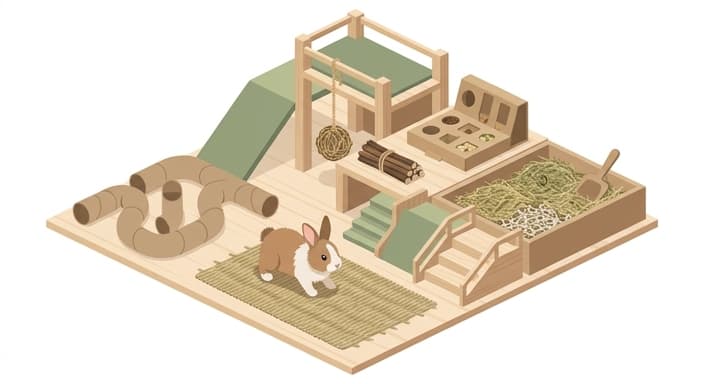
A dynamic habitat with varied textures, tunnels, and chew outlets helps indoor rabbits stay active and mentally engaged.
There is a pervasive misconception among rabbit owners that a docile, sedentary bunny is a content one, often overlooking the biological reality that the domestic rabbit (Oryctolagus cuniculus) is a highly intelligent, crepuscular prey animal hardwired for constant foraging, excavating, and complex problem-solving. As a veterinarian consultant, I frequently see "indoor apathy"—a state where rabbits become destructive or depressed simply because their domestic environment lacks the intellectual stimulation required for their species-specific needs.
We are moving away from the outdated notion that a rabbit’s life should be defined by the walls of a cage or a decorative hutch, and toward a more comprehensive understanding of environmental enrichment as a prerequisite for physical and psychological health. True wellness for an indoor rabbit is not just about providing hay and water; it is about creating a dynamic habitat that mimics the challenges of the wild, encouraging natural behaviors that keep their digestive systems moving, their teeth ground down, and their minds sharp.
The Foraging Instinct: Why "Bowls Are Boring"
To understand why traditional food bowls are suboptimal for rabbit health, we must look at the way their evolutionary history has shaped their physiology. In the wild, rabbits spend up to 80% of their waking hours foraging. This constant movement serves a dual purpose: it provides the necessary fiber intake to maintain gut motility—a critical factor in preventing life-threatening gastrointestinal stasis—and it keeps their minds engaged in a perpetual "search and retrieve" loop.
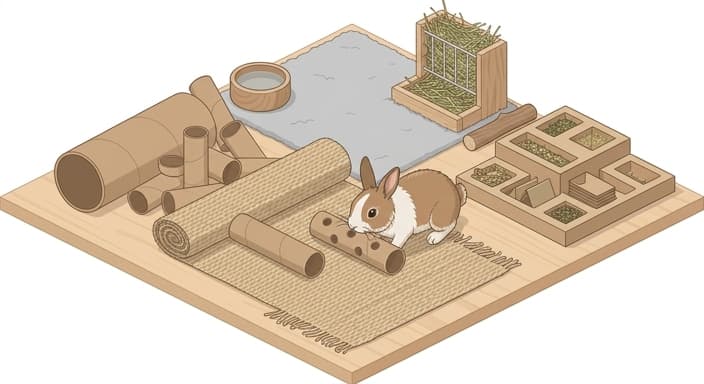
When we serve a rabbit’s entire daily portion of pellets in a ceramic bowl, we are essentially stripping them of their primary occupation. Instead of scavenging, they consume their meal in minutes, leaving them with hours of idle time that often manifests as bar-chewing, carpet-digging, or compulsive grooming. Transitioning to sustainable enrichment means turning mealtime into a scavenger hunt. By utilizing untreated cardboard tubes, woven seagrass mats, or paper-based puzzle feeders, you force your rabbit to "work" for their food. This shift not only slows down their eating pace but also provides a vital dopamine reward that keeps them mentally balanced.
Sustainable Materials: Safety Over Aesthetics
When selecting enrichment toys, the "vet-approved" stamp of approval hinges entirely on material safety. Because rabbits are obligate chewers—their teeth grow continuously throughout their lives—they will inevitably ingest whatever they play with. As a veterinarian, I have treated far too many cases of impaction caused by synthetic fibers, plastics, or toxic dyes found in mass-market pet toys.
Sustainability is not just an environmental preference; it is a health requirement. Opt for untreated applewood sticks, willow balls, organic sisal rope, and unbleached cardboard. These materials are biodegradable, digestible in small amounts, and—most importantly—free from the chemical glues and plastic resins that pose significant risks to your rabbit’s delicate gastrointestinal tract. If you are foraging for materials like branches, ensure they are from rabbit-safe trees (such as apple, pear, or hazel) and have not been treated with pesticides. By choosing natural, sustainable options, you are effectively creating a "chew-safe" environment where your rabbit can express their natural instincts without the risk of heavy metal poisoning or bowel obstruction.
Designing the "Digging Box": Channeling Natural Excavation
One of the most frequent behavioral complaints I hear from rabbit owners is the destruction of baseboards and rugs. It is important to remember that digging is not "bad behavior"—it is a hardwired instinct. Female rabbits in particular are biologically driven to excavate burrows, and when we fail to provide an outlet for this energy, they will naturally look for the closest substitute, which is often your living room furniture.
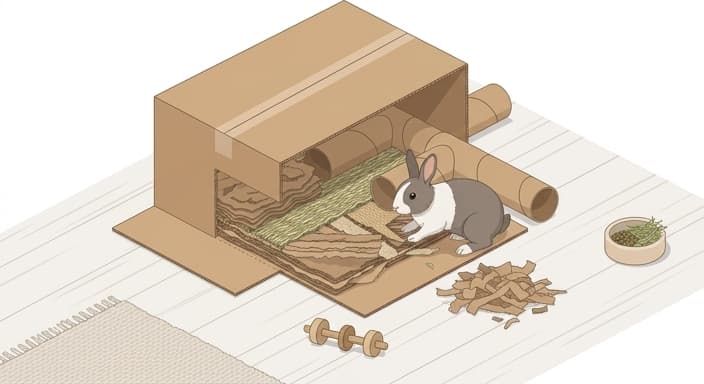
A sustainable digging box is a simple, cost-effective solution that transforms your rabbit's environment. Take a large, shallow cardboard box and fill it with safe, sensory-rich materials like shredded packing paper, dried leaves, or even clean, chemical-free Timothy hay. You can hide small pieces of fruit or dried herbs at the bottom to encourage "bunnies in the middle" behavior. This provides a tactile experience that mimics the earthiness of a real burrow. By rotating the contents of the box—perhaps using a different paper texture one week and a layer of untreated seagrass the next—you keep the activity novel and exciting, effectively satisfying their urge to dig in a way that protects your home and boosts their confidence.
The Cognitive Challenge: Problem-Solving Through Play
Beyond foraging and digging, the rabbit brain craves abstract problem-solving. Rabbits are surprisingly adept at learning spatial relationships and causality. Sustainable enrichment can be taken a step further by introducing "obstacle courses" or "hide-and-seek" setups using common household items.
For instance, creating a tunnel system using cardboard boxes with multiple exits encourages your rabbit to explore and map their territory, which builds environmental confidence. You can also utilize "puzzle boards" made of wood, where the rabbit must nudge a sliding piece to reveal a treat. This engages their problem-solving centers, forcing them to think critically rather than just reacting to stimuli. When a rabbit successfully solves a puzzle, the resulting sense of agency is profound. It moves them from a passive participant in their own life to an active explorer, which significantly lowers stress levels and helps prevent the development of stereotypic behaviors, such as rhythmic head-swaying or excessive cage-biting.
Creating a Routine of Dynamic Enrichment
The key to long-term success with enrichment is rotation. A toy that is left in the center of the room for three weeks ceases to be "enrichment" and becomes "furniture." To keep your rabbit’s mind engaged, adopt a rotation schedule. Keep a bin of toys and swap them out weekly. When a toy is reintroduced after a period of absence, it regains its status as a "novel object," which triggers the rabbit’s investigative instinct anew.
Furthermore, remember that your participation is the ultimate enrichment. While solo play is important, rabbits are deeply social creatures. Spending time on the floor at their eye level, allowing them to climb on you, or engaging in gentle grooming sessions builds a bond that acts as a psychological buffer against anxiety. Your rabbit is an intelligent, complex individual with specific needs that go far beyond the basics of food and shelter. By embracing sustainable, natural, and mentally stimulating enrichment, you are not just keeping your rabbit occupied; you are honoring their evolutionary heritage and ensuring they live a life that is as rich and fulfilling as it is long.
True environmental wellness for a rabbit is a continuous process of observation and adjustment. When we provide the right tools for them to exercise their natural instincts—foraging, digging, and solving problems—we see a transformation from a bored, sedentary animal into a curious, vibrant companion. By moving away from plastic-heavy, commercial distractions and toward natural, sustainable enrichment, we align ourselves with the biological needs of our rabbits, ensuring a healthier, happier life for these remarkable creatures.
Common Questions
🤔
Frequently Asked Questions
What is sustainable enrichment for indoor rabbits?▼
Sustainable enrichment refers to providing activities and materials that engage a rabbit's foraging, digging, and problem-solving in a way that is safe and sustainable for their health. It means using durable, safe, natural materials and arranging the environment to encourage exploration rather than passive consumption. The goal is to support gut motility, dental health, and psychological balance by turning daily routines into active, varied challenges. Always supervise and rotate toys to prevent wear or ingestion issues.
Why should mealtime be a scavenger hunt rather than a bowl?▼
A bowl-based meal is quick and leaves hours of idle time that can lead to destructive behaviors. Foraging while eating slows intake, provides necessary fiber and gut motility, and delivers dopamine rewards through solving puzzles. This aligns with rabbits' wild history and reduces boredom-driven behaviors. Use puzzles, tubes, or feeders to extend foraging time.
What materials are safe for enrichment toys?▼
Choose untreated, natural materials like applewood sticks, willow balls, organic sisal rope, and unbleached cardboard. These are biodegradable and generally edible in small amounts, reducing risk of GI obstruction or chemical exposure. Avoid plastics, synthetic fibers, and toxic dyes that can cause impaction or poisoning. Always inspect toys for wear and replace as needed.
How can I design a digging box and address digging behavior?▼
Create a digging box with a shallow tray filled with safe substrate (e.g., shredded paper, hay, or a rabbit-safe soil mix). Place it in a quiet, low-traffic corner and rotate its contents to maintain novelty. Use positive reinforcement to encourage your rabbit to dig in the box rather than furniture. If stubborn, add new textures or scents and ensure the box is inviting and accessible.