Blog5/22/2026
Sustainable DIY Dog Enrichment Toys You Can Make at Home
7 mins Read
The Briefing
Quick takeaways for the curious
Sustainable DIY enrichment leverages household items to stimulate dogs' natural foraging and problem-solving, reducing reliance on mass-produced toys and minimizing waste.
The approach centers on cognitive wellness, recognizing that mental engagement matters just as much as physical exercise or nutrition, and can help regulate a dog's mood.
Contrafreeloading explains why dogs benefit from working for food even when it is readily available, making DIY puzzles more meaningful and satisfying.
Repurposing materials like cardboard boxes and old textiles provides safe, engaging puzzles while lowering the environmental pawprint of enrichment.
Safety, supervision, and gradual progression are essential to ensure puzzles challenge without encouraging chewing hazards or GI risks.
There is a pervasive misconception among many pet owners that canine enrichment must come in the form of expensive, mass-produced plastic gadgets that inevitably end up in landfills, often overlooking the biological reality that a dog’s cognitive needs are best met through complex, sensory-rich problem solving. As a veterinarian consultant, I frequently see owners who equate "keeping a dog busy" with buying the latest trendy puzzle toy, failing to realize that these items are often ecologically taxing and sometimes lack the nuance required to truly stimulate a canine’s ancestral drive to forage, hunt, and manipulate their environment.
We are moving away from the outdated notion that a dog’s playtime must be curated by big-box retailers, and toward a comprehensive understanding of "cognitive sustainability," where we utilize the materials already present in our homes to foster neuroplasticity and emotional regulation. True wellness for a companion animal is not just about physical exercise or premium nutrition; it is about recognizing that mental exhaustion is just as vital as physical exertion and that our stewardship as pet parents includes reducing the "environmental pawprint" of our enrichment strategies while simultaneously sharpening our dogs' problem-solving capabilities.
The Science of Foraging: Beyond the Boredom Buster
To understand why sustainable DIY enrichment is superior to many store-bought options, we must first look at the ethological concept of "contrafreeloading." This is the observed behavior where animals choose to work for their food even when free food is readily available. In the wild, a dog’s day is dominated by the search for resources; in our homes, they are often handed their meals in a bowl, which eliminates an entire biological drive. When we create DIY enrichment toys, we aren’t just "keeping them busy"—we are providing a meaningful outlet for their innate hunting instincts.
From a clinical perspective, providing consistent, low-stress cognitive challenges can significantly mitigate the development of anxiety-related behaviors. When a dog engages in scent work or intricate problem-solving, their brain releases dopamine and serotonin, which help to stabilize their mood. By using household items like cardboard boxes, old t-shirts, or egg cartons, we are repurposing materials that would otherwise be discarded, effectively turning "trash" into a therapeutic tool. This approach respects the dog’s intelligence while reinforcing a lifestyle that prioritizes mindful consumption and creative problem solving.
The Cardboard Conundrum: Safe and Effective DIY Structures
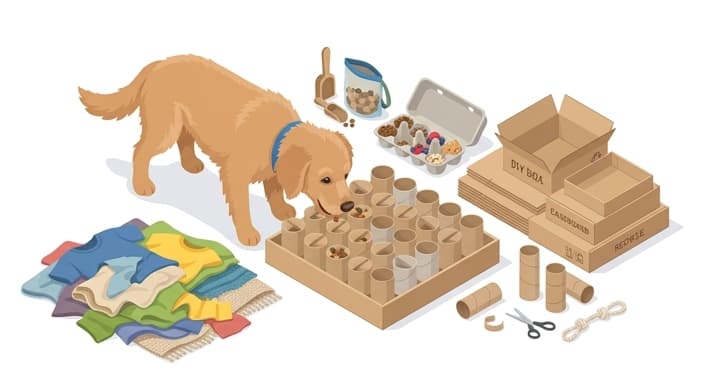
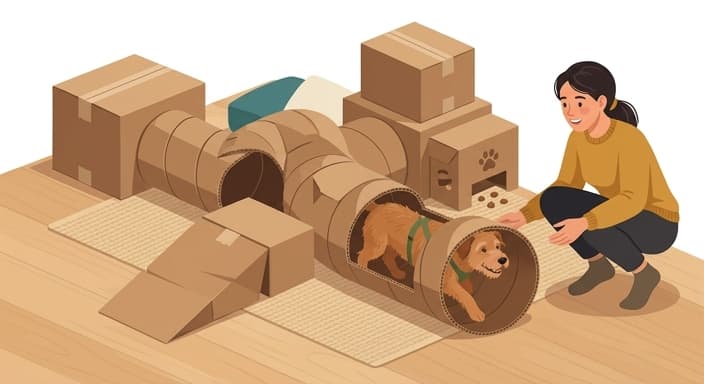
One of the most accessible materials for enrichment is the humble cardboard box or toilet paper roll. However, as a veterinarian, I must emphasize that safety is paramount. When constructing DIY toys, you must ensure that all adhesives, staples, and plastic tape are removed to prevent gastrointestinal obstructions. The goal is to create a "foraging scavenger hunt" that encourages the dog to use their nose—their most powerful sensory organ—to locate hidden treats.
A simple, highly effective project is the "snuffle box." By taking a variety of cardboard tubes and placing them upright inside a larger, shallow box, you can create a puzzle that requires the dog to nudge or knock over individual tubes to reach hidden kibble or high-value rewards. This engages their olfactory system and requires them to navigate physical obstacles. For dogs that are prone to shredding, I recommend supervising these initial sessions to ensure they are interacting with the structure as a puzzle rather than a chew toy. Over time, you can increase the complexity by folding the ends of the tubes or burying treats deeper within the box, forcing the dog to slow down and use their brain rather than their teeth.
Textiles and Tugging: Upcycling for Mental Health
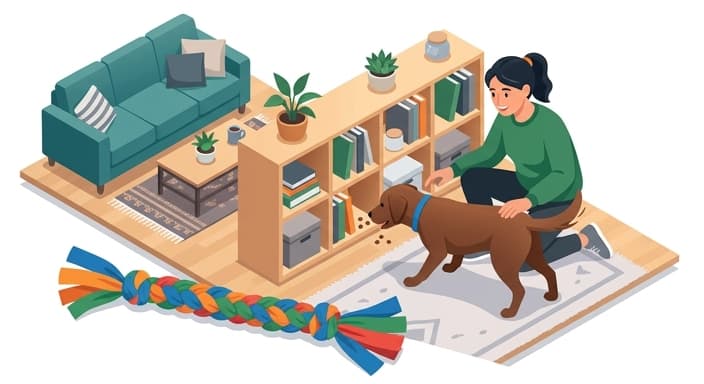
We all have old t-shirts, towels, or cotton sheets that are destined for the rag bin. Instead of discarding these, they can be transformed into durable, washable, and eco-friendly enrichment toys. The classic "braided tug" is a staple for a reason: it provides an outlet for physical aggression and social bonding, which is critical for a dog’s emotional health. However, we can take this a step further by creating "scent-hide" blankets.
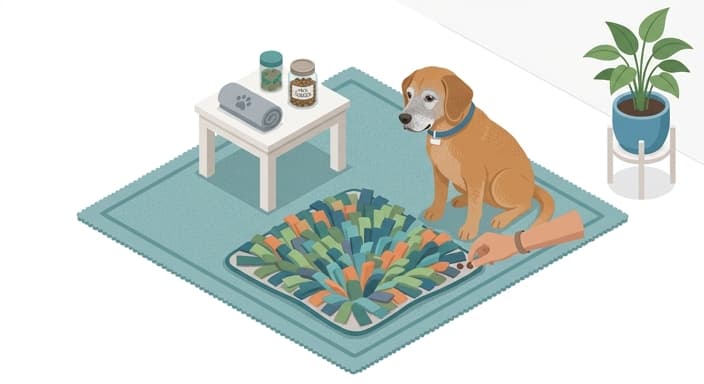
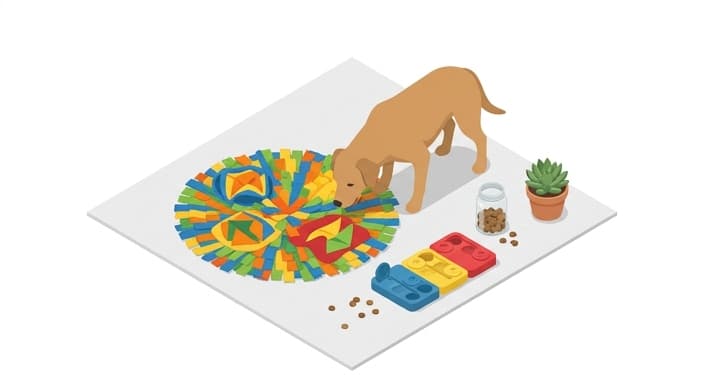
By taking an old fleece blanket or heavy cotton towel and tying knots at regular intervals, or by layering pieces of fabric and hiding treats in the crevices, you create a makeshift snuffle mat. These are excellent for dogs that eat too quickly, as they force the dog to use their nose to "unearth" their meal. Unlike plastic puzzle feeders, which can harbor bacteria in tight crevices, these DIY textile toys can be tossed in the washing machine on a hot cycle, ensuring that your enrichment tools remain hygienic and free of buildup. This circular approach to pet care reduces the demand for new, synthetic materials while providing a safe, soft, and satisfying way for your dog to "hunt" for their breakfast.
The "Scent-Walk" Principle: Integrating Environment into Enrichment
Enrichment isn't always about a physical object; sometimes, it is about how we present the world to our dogs. A core component of sustainable enrichment is the "sniffari"—a walk where the dog is allowed to dictate the pace and duration of their sniffing. This is the most natural form of enrichment, requiring no carbon footprint and zero waste. To pair this with DIY toys, consider bringing a small "scent pouch" on your walk.
You can craft this from a simple cotton sock with a drawstring, filled with a strong-smelling, dog-safe herb like lavender or chamomile, or even a bit of dried liver. During your walk, hide the pouch in a tree hollow or under a rock and encourage your dog to find it. This builds a deeper bond between owner and dog, as you are working together as a team to locate "prey." By shifting our focus from buying toys to creating shared experiences, we reduce the ecological burden of our pet care while enhancing the quality of the time we spend together. These moments of collaborative exploration are often more intellectually stimulating for a dog than a solitary hour spent with a plastic puzzle toy.
Clinical Considerations for DIY Success
While DIY enrichment is largely beneficial, it is important to tailor the difficulty to your dog’s age, breed, and physical health. A senior dog with arthritis should not be expected to jump for a toy, while a high-energy working breed might become frustrated by a puzzle that is too simple. As a consultant, I always recommend the "Three-Second Rule": if your dog cannot figure out how to access the reward within three minutes of concentrated effort, the puzzle is likely too difficult, which can lead to learned helplessness rather than confidence-building.
Always monitor your dog’s behavior during these activities. If they start to exhibit signs of stress—such as excessive panting, vocalizing, or tail tucking—they may need a simpler task. Furthermore, keep a sharp eye on their chewing habits. If your dog is a "destroyer" that attempts to ingest materials like cardboard or fabric, these specific DIY toys should only be used under strict supervision or substituted with sturdier, non-toxic alternatives like natural hemp rope or untreated wood. The objective of sustainable enrichment is to provide a safe, engaging, and low-waste lifestyle that supports the dog’s natural behaviors. By observing their individual preferences and adapting our DIY strategies accordingly, we can provide a rich, fulfilling, and environmentally conscious environment for our companions.
Ultimately, the most effective enrichment tool is not found on a store shelf, but in the intentionality of our engagement with our dogs. By embracing DIY solutions, we are not only reducing our reliance on unsustainable manufacturing practices but also deepening our understanding of what truly motivates our pets. Whether it is a simple cardboard scavenger hunt or a repurposed fabric snuffle mat, these efforts foster a stronger bond, a sharper mind, and a healthier planet. True enrichment is a commitment to the well-being of our dogs and the world they inhabit, proving that the best care is often the kind we create ourselves.
Common Questions
🤔
Frequently Asked Questions
What is contrafreeloading and how does it relate to DIY enrichment?▼
Contrafreeloading is the behavior of animals choosing to work for their food even when free food is available. In dogs, DIY enrichment taps into this drive by turning meals into puzzles and foraging tasks, which makes the activity more meaningful. This approach supports neuroplasticity and emotional regulation by providing a cognitive challenge that aligns with natural instincts. By designing at-home puzzles, you encourage sustained engagement rather than passive feeding.
Which household materials are safe and effective for DIY enrichment?▼
Safe options include cardboard boxes, paper tubes, old T-shirts, towels, and cotton sheets that can be repurposed into scavenger hunts and nose-work. Always remove adhesives, staples, and plastic tape to prevent ingestion or obstructions, and supervise dogs prone to shredding. Avoid small choking hazards and ensure materials are non-toxic and free of sharp edges. Start with simple setups and monitor your dog's response before increasing complexity.
How can I start implementing sustainable enrichment with minimal waste?▼
Begin by auditing items you already own and selecting a few safe, low-cost projects like a snuffle box or a scent-based search. Rotate materials to maintain novelty and gradually increase puzzle difficulty as your dog improves. Use meals or portions of meals as rewards within these puzzles to reinforce foraging behavior. This approach keeps enrichment eco-friendly while sharpening problem-solving skills.
How do I assess progress and adapt the enrichment to my dog's needs?▼
Look for signs of engagement, curiosity, and steady problem-solving rather than frustration. If a task stalls or triggers anxiety, reduce difficulty or shorten sessions, then gradually reintroduce challenge. Track outcomes such as reduced anxiety-related behaviors and longer sustained focus during puzzles. Adjust the materials, pace, and reward structure to match your dog's age, health, and temperament.