Blog6/5/2026
Personalized Nutrition Plans for Senior Pets: Tailored Wellness
6 mins Read
The Briefing
Quick takeaways for the curious
Senior nutrition is not just a labeled 'Senior' bag; aging is individualized and requires precision beyond off-the-shelf diets.
Personalized nutrition serves as the primary tool to delay age-related infirmities by addressing metabolic changes, reduced absorption, systemic inflammation, and cellular oxidative stress.
A one-size-fits-all 'Senior' diet fails because different pets have unique metabolic needs based on age, breed, and existing health conditions.
A baseline veterinary assessment with CBC, chemistry, and urinalysis guides dietary decisions and helps tailor macro- and micronutrient balances to bloodwork and body condition.
Designing a plan around nutrient bioavailability and density accounts for declining GI efficiency and supports muscle mass, energy, and overall quality of life.
There is a pervasive misconception among many pet owners that senior nutrition is merely a matter of switching to a bag labeled "Senior" at the grocery store, often overlooking the biological reality that aging is not a uniform process but a highly individual physiological decline. As a veterinarian consultant, I frequently see owners who treat their aging companions as if they were smaller versions of their younger selves, failing to realize that the metabolic, hormonal, and musculoskeletal shifts occurring in a senior pet require a level of precision that off-the-shelf "maintenance" diets simply cannot provide.
We are moving away from the outdated notion that senior pet care is a passive exercise in "slowing down," and toward a comprehensive understanding of "metabolic optimization," where personalized nutrition serves as the primary intervention to delay the onset of age-related infirmities. True vitality for a companion animal in their twilight years is not just about calorie restriction; it is about recognizing that their ancestral physiology is facing unique challenges—such as reduced nutrient absorption, systemic inflammation, and cellular oxidative stress—and that actively tailoring their caloric and micronutrient intake is the most powerful tool we have to preserve their quality of life.
The Lifecycle Fallacy: Why "One-Size-Fits-All" Senior Diets Fail
The most dangerous myth in the senior pet world is the "Senior Label" trap. Many owners believe that because a pet has reached the age of seven or eight, they automatically require the same nutritional profile as every other aging animal. In reality, a ten-year-old Great Dane has entirely different metabolic requirements than a ten-year-old Chihuahua, and a cat with early-stage renal insufficiency requires a drastically different phosphorus-to-protein ratio than an equally aged cat with a healthy endocrine system.
Mass-produced "senior" diets are often formulated with a generic reduction in calories and an increase in fiber to combat weight gain, which is a common byproduct of decreased activity. However, this approach can be detrimental to the "frail senior"—the pet who is losing muscle mass (sarcopenia) and struggling to maintain a healthy body condition. When we categorize all senior pets into one bucket, we ignore the nuance of their specific health markers. Personalized nutrition is not a luxury; it is a clinical necessity that accounts for blood work, body condition scores (BCS), and pre-existing chronic conditions. By shifting to a diet tailored to the individual’s current blood chemistry, we stop managing symptoms and start supporting physiological function.
Assessing the Individual: Beyond the Scale
When I consult with owners about personalized nutrition, we start by discarding the bathroom scale as our only metric of health. Weight is a blunt instrument; what we really need to track is body composition. Muscle mass is the metabolic engine of our pets, and as they age, the loss of this tissue leads to weakness, instability, and a higher risk of injury.
A personalized plan begins with a baseline veterinary assessment, including a complete blood count (CBC), serum chemistry panel, and urinalysis. These diagnostics reveal the "silent" stressors—elevated kidney values, subclinical inflammation, or mild liver enzyme fluctuations—that demand dietary intervention before they become life-altering diseases. For instance, a senior dog showing the first signs of cognitive dysfunction might benefit from a diet enriched with medium-chain triglycerides (MCTs) and antioxidants, whereas a cat with early-stage dental disease might need specific kibble textures or hydration-focused wet diets to maintain oral comfort and kidney health.

The Role of Bioavailability and Nutrient Density
As pets age, their gastrointestinal efficiency often declines. They may produce fewer digestive enzymes or have a diminished ability to synthesize certain nutrients from raw or complex ingredients. This is where "nutrient density" becomes the cornerstone of a senior’s diet. Instead of feeding more, we must focus on feeding better.
For the senior pet, bioavailability is everything. We prioritize high-biological-value proteins that are easily digestible, ensuring that the animal can access essential amino acids without placing unnecessary strain on the kidneys or liver. Furthermore, we look at the anti-inflammatory profile of the food. Omega-3 fatty acids, specifically EPA and DHA sourced from fish oil, are non-negotiable for the senior pet. These fatty acids act as a natural, systemic anti-inflammatory, helping to soothe arthritic joints and support cognitive function. When we customize a diet to include these concentrated nutrients, we are essentially providing "nutritional medicine" that works at the cellular level to dampen the fires of systemic inflammation that characterize the aging process.
Navigating Supplements: Strategic Additions to the Bowl
Once the foundation of a high-quality, personalized diet is set, we move to targeted supplementation. It is a mistake to treat every supplement as a "one-size-fits-all" solution. The senior pet’s supplement regimen should be as personalized as their diet. For the dog with joint stiffness, a combination of glucosamine, chondroitin, and green-lipped mussel is standard; however, for the cat with early-stage heart disease, we might focus on taurine and L-carnitine supplementation.
We must also be cautious of "supplement fatigue," where the owner adds so many powders and pills to the bowl that the food becomes unpalatable. The goal is to integrate these nutrients into the diet in the most efficient way possible. Many premium or therapeutic diets now come with these compounds pre-formulated, but for pets with complex needs, working with a veterinary nutritionist to create a balanced, home-cooked, or base-mix diet may be the best path forward. Always remember: supplements are meant to fill specific gaps, not to replace the essential foundational nutrition provided by a complete and balanced diet.
Monitoring and Iteration: The Dynamic Nature of Aging
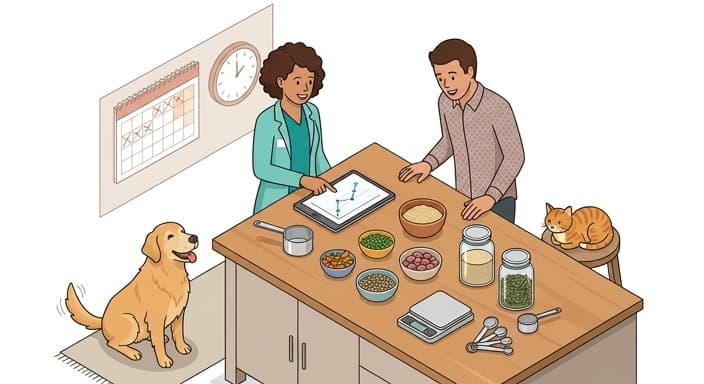
One of the most important lessons I impart to my clients is that a nutrition plan is a living document. A plan that works for a 12-year-old dog today may need to be adjusted when that same dog turns 13. Aging is a dynamic process, and our dietary approach must be equally flexible.
We implement a feedback loop: every six months, we re-evaluate the pet’s body condition, mobility, and blood markers. If the blood work shows a trend toward higher creatinine, we adjust the phosphorus intake. If the pet is losing muscle mass despite eating well, we look at increasing the protein quality or adding moderate, controlled exercise to stimulate muscle synthesis. This iterative process prevents us from getting stuck in a rut of "good enough." It empowers owners to see themselves as active partners in their pet’s health, turning every meal into a proactive opportunity to influence their pet’s longevity and comfort.
The Compassionate Choice
At the end of the day, the food we put in our pets' bowls is one of the most frequent expressions of love we can provide. When we choose to move beyond the convenience of generic senior diets and embrace the rigor of personalized nutrition, we are choosing to honor the unique life history of our companions. We are acknowledging that their aging bodies deserve the same level of care and consideration that we give to our own health.
By focusing on metabolic optimization, prioritizing high-quality, bioavailable proteins, and remaining vigilant with regular veterinary monitoring, we can meaningfully extend the window of "healthy aging." Our senior pets are not merely waiting out the clock; they are experiencing their golden years, and with the right nutritional support, those years can be characterized by comfort, engagement, and a deep, enduring sense of well-being. Your pet has given you years of loyalty; providing them with a nutrition plan that respects their changing physiology is the ultimate way to pay that gift forward.
Common Questions
🤔
Frequently Asked Questions
Why isn't a generic 'Senior' diet enough for most aging pets?▼
Aging is not uniform, and a ten-year-old Great Dane has very different metabolic needs from a ten-year-old Chihuahua. Generic senior diets often focus mainly on calorie reduction and fiber, which can be detrimental for frail seniors losing muscle mass. Personalized nutrition uses individual health markers and body condition to tailor protein, fat, minerals, and micronutrients. This approach moves beyond symptom management to supporting the pet’s underlying physiology.
What steps compose a personalized senior nutrition plan?▼
It begins with a baseline veterinary assessment, including CBC, chemistry panel, and urinalysis, plus an accurate body condition score. The clinician interprets these results to identify subtle issues like early kidney changes, inflammation, or liver enzyme fluctuations. Based on these findings, the plan adjusts macronutrients and micronutrients—such as protein levels, phosphorus balance, and targeted additives like MCTs or antioxidants—and is revisited as health markers evolve.
What should owners monitor beyond the scale?▼
Body composition and muscle mass are crucial, because weight alone obscures sarcopenia and loss of lean tissue. Regular monitoring should include repeat blood work and updated body condition scores to detect changes in organ function or subclinical inflammation. Observing trends in mobility, cognitive signs, dental health, and hydration also informs necessary dietary adjustments.
What dietary features support metabolic optimization in senior pets?▼
Prioritize bioavailability and nutrient density to compensate for declining GI efficiency and absorption. Ensure adequate high-quality protein to preserve lean mass, and tailor minerals to organ health—such as moderating phosphorus for kidney risk. Consider components like medium-chain triglycerides for cognitive support and antioxidants for systemic inflammation, along with hydration-focused textures and dental-friendly formats as needed.