Blog5/4/2026
Mental Health Enrichment for Indoor Cats: Cognitive Play
6 mins Read
The Briefing
Quick takeaways for the curious
Indoor cats require continuous mental and physical enrichment because their predatory brain remains active even in domestic life.
A boring feeding routine and lack of problem-solving outlets can trigger stress, behavioral problems, and health risks.
An enrichment plan should engage the cat’s senses—smell, sound, and touch—through rotating scents, safe herbs, ambient sounds, and interactive toys.
Foraging and work-to-eat strategies turn meals into cognitive challenges, improving satisfaction and helping prevent weight and metabolic issues.
A practical enrichment program uses safe, non-toxic items, gradually increases difficulty, and rotates stimuli to keep indoor cats curious and thriving.
There is a persistent, outdated myth in the modern pet care community that an indoor cat’s life is perfectly fulfilled by a bowl of dry kibble, a sunny windowsill, and the occasional swat at a feather wand. As a veterinarian consultant, I frequently speak with well-meaning cat parents who are perplexed by their feline’s "naughty" behaviors—shredded curtains, middle-of-the-night zoomies, or persistent vocalizing—only to realize that these are rarely expressions of malice, but rather symptoms of a profound lack of environmental stimulation. We are finally moving toward a more sophisticated, holistic standard of feline wellness that views mental enrichment not as an optional luxury, but as a biological necessity, effectively shifting the focus from mere survival to thriving through cognitive engagement.
The Evolutionary Imperative: Why Boredom is a Health Risk
To understand why enrichment is vital for our indoor companions, we must look at the evolutionary biology of the domestic cat. Despite thousands of years of domestication, the feline brain remains wired for the "hunt-stalk-pounce-kill" sequence. In the wild, a cat spends the vast majority of its waking hours engaged in the mental and physical labor required to secure sustenance. When we provide food in a static bowl and remove the need to problem-solve, we create a "boredom vacuum."
From a veterinary perspective, chronic under-stimulation leads to more than just behavioral frustration; it has tangible physiological consequences. Cats who lack outlets for their natural predatory instincts are significantly more prone to stress-related conditions, including idiopathic cystitis (bladder inflammation), over-grooming, and weight-related metabolic disorders. By failing to engage the feline brain, we inadvertently encourage a sedentary, anxiety-prone state that suppresses their immune function and shortens their vitality. Enriching their environment isn’t just about "fun"—it is about respecting their predatory nature and providing the biological fulfillment their DNA demands.

Sensory Stimulation: Engaging the Feline Mind
The most effective way to begin an enrichment program is to tap into the cat’s highly specialized sensory suite. While humans are visual creatures, cats navigate their world through a complex interplay of scent, sound, and tactile feedback. To enrich your cat's indoor life, you must curate an "indoor landscape" that invites them to investigate rather than simply exist.
Consider the "olfactory playground." Cats have a highly developed vomeronasal organ, or Jacobson’s organ, which allows them to "taste" the air. Providing safe, intermittent exposure to silver vine, valerian root, or high-quality catnip can trigger investigative behaviors that stimulate the brain. Furthermore, rotating "scent items"—such as a piece of cardboard from a new environment or a safe, non-toxic herb—gives the cat a fresh mystery to solve each day.
Auditory enrichment is equally powerful. Many indoor cats live in a "sonic desert." Introducing high-frequency, nature-based ambient sounds—such as recorded bird calls or running water—can pique their interest without the overstimulation of loud human appliances. The goal is to create an environment that feels alive, shifting their perception of the home from a static box to a dynamic territory that requires constant, gentle monitoring.
Foraging and the "Work-to-Eat" Philosophy
One of the most transformative shifts a pet parent can make is to abolish the "free-fed bowl" model. In the wild, a cat’s food intake is tied directly to physical exertion and mental mapping. By introducing puzzle feeders and foraging opportunities, you mimic this natural cycle, turning a mundane meal into a rewarding cognitive challenge.
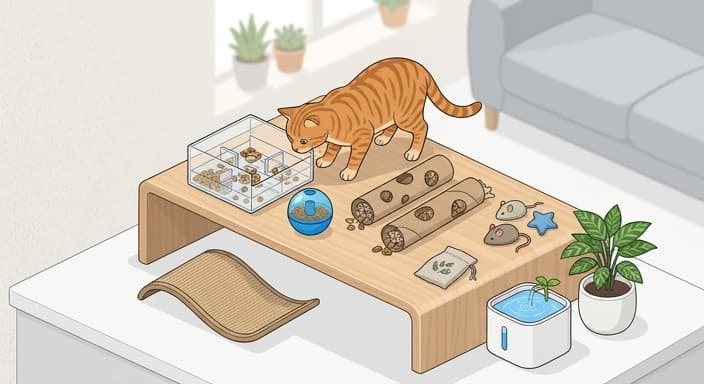
Start by ditching the ceramic bowl in favor of slow-feeders, treat-dispensing balls, or even DIY options like cardboard toilet paper rolls folded at the ends with holes cut out. These tools force the cat to use their paws and whiskers to manipulate objects, engaging their problem-solving centers. When a cat has to "work" for their food, they experience a surge of dopamine—the "reward" chemical—which provides a sense of accomplishment that a static bowl simply cannot offer.
For multi-cat households, foraging is particularly helpful in reducing resource guarding and territorial stress. By spreading smaller "foraging stations" throughout the home, you allow cats to eat in a way that feels decentralized and safe, effectively lowering the tension that often builds when multiple cats compete for a single, centralized feeding spot.
Vertical Territory and the "Catification" of Space
When we talk about environmental enrichment, we often focus on toys, but the most important enrichment tool is the architecture of the home itself. Cats are arboreal by nature; they feel most secure when they occupy the highest point in a room. This is not just a preference—it is a survival mechanism. An indoor cat without access to vertical space is a cat that is constantly "on the ground" and potentially vulnerable, which increases their baseline anxiety.
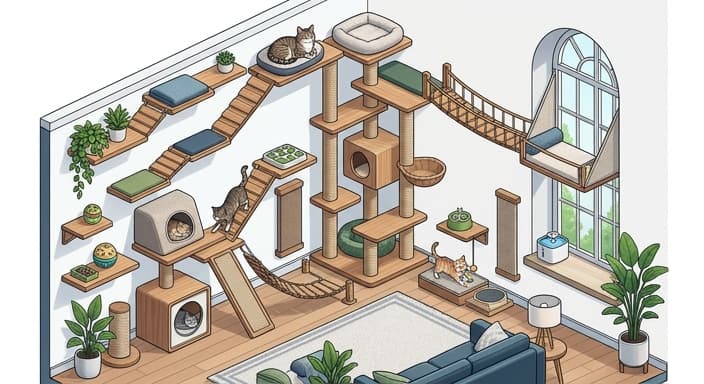
"Catification" involves creating a multi-level environment where your cat can patrol, observe, and retreat. This can be as simple as clearing off a bookshelf, installing a cat tree that reaches near ceiling height, or mounting floating shelves to create a "cat highway" across your living room. When a cat has a vertical path that allows them to traverse the room without ever touching the floor, their confidence increases dramatically.
This verticality is a form of environmental enrichment that works even when you aren't home. By providing a vantage point from which they can watch the "wildlife" (even if it’s just the mail carrier or a squirrel outside the window), you are providing them with hours of passive, meditative entertainment. A cat that has a high, secure place to observe their domain is a cat that feels in control of its territory, which is the cornerstone of feline mental health.
The Role of Consistent, Structured Play
While toys and furniture are essential, they cannot replace the bond formed through structured, interactive play. Many owners try to play with their cats by simply waving a toy in their face, but this often leads to frustration. To truly enrich your cat, you must mimic the behavior of prey.
Use a wand toy to animate the "prey" properly: make it skitter across the floor, hide it behind furniture, and have it move away from the cat rather than toward them. Most importantly, always allow the cat to "catch" the toy at the end of the session. This "hunt-catch-eat-groom-sleep" sequence is the natural biological arc for a predator. After a high-energy play session, follow up with a meal or a high-value treat. This cements the feeling of a successful hunt, triggers the release of serotonin during the grooming process, and leads to the deep, restorative sleep that every healthy cat needs. Consistency is key; even fifteen minutes of dedicated, high-quality interaction twice a day can radically transform a bored, reactive cat into a calm, content companion.
Mental health for indoor cats is not about buying every gadget on the market; it is about honoring the wild, inquisitive spirit that lives within your house cat. By providing opportunities for sensory engagement, physical challenge through foraging, vertical sanctuary, and structured predatory play, you are not just caring for a pet—you are cultivating a thriving, resilient partner. Our cats give us their companionship, their warmth, and their unique, quirky personalities; in return, the most profound gift we can offer them is an environment that challenges their minds as much as it comforts their bodies. Through these intentional, small shifts in our daily routines, we can ensure that our indoor cats live not just long lives, but rich, deeply satisfied ones.
Common Questions
🤔
Frequently Asked Questions
Why is enrichment important for indoor cats?▼
Enrichment matters because indoor cats retain strong predatory instincts that must be engaged to stay mentally and physically healthy. Without enrichment, cats may develop stress-related behaviors, increased anxiety, and health issues such as urinary problems or obesity. Providing varied sensory and problem-solving experiences respects their biology and supports immune function and vitality.
How do I start an enrichment routine at home?▼
Begin by assessing your space and your cat’s preferences, then introduce one or two safe enrichment options at a time. Start with simple puzzles or scent-based activities and gradually increase complexity as your cat adapts. Monitor their response and adjust depth and duration to avoid overstimulation. Establish a daily routine so enrichment becomes a predictable, enjoyable part of life.
What are safe enrichment options I can try?▼
Safe options include puzzle feeders and treat-dispensing toys, cardboard boxes and paper bags for hiding and exploring, vertical climbing shelves and perches, and safe herbs or scents like catnip or valerian in limited amounts. You can also introduce ambient nature sounds or birdsong and rotate toys to maintain novelty. Always supervise new items for safety and ensure materials are non-toxic and cat-safe.
How can I tell if enrichment is helping my cat?▼
Look for signs of improved well-being such as calmer behavior, reduced nocturnal disruptions, and more purposeful exploration of the environment. A balanced appetite, stable weight, and fewer stress-related behaviors like over-grooming or destructive scratching indicate positive effects. If behaviors worsen or new problems arise, reassess the activities, safety, and pacing of the enrichment plan.