Blog5/15/2026
Indoor Rabbit Enrichment: Safe, Stimulating Home Habitat
6 mins Read
The Briefing
Quick takeaways for the curious
Enrichment is a fundamental welfare requirement for indoor rabbits, not a luxury, because rabbits are intelligent, foraging prey animals whose natural behaviors are largely suppressed indoors.
A spacious enclosure alone cannot meet their needs; a sterile indoor landscape requires deliberate, safe, and stimulating interventions to prevent chronic stress and related health issues.
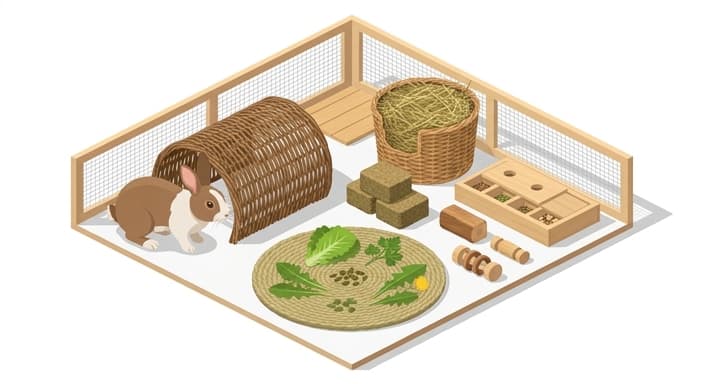
Providing safe outlets for chewing, digging, and jumping—using materials like untreated kiln-dried wood (apple, pear, willow), seagrass mats, untreated wicker, and compressed hay structures—helps maintain dental wear and prevent ingestion of hazardous items.
Foraging-based enrichment mimics natural ecology by allowing trickle feeding and constant exploration, which supports gut motility and reduces boredom.
Supervision during introduction of new items and ongoing assessment of safety are essential because even natural materials can cause problems if ingested in excess; a gradual, monitored approach reduces risk and helps tailor enrichment to the individual rabbit.
There is a pervasive misconception among modern rabbit owners that a spacious enclosure and a steady supply of timothy hay are sufficient to satisfy the complex behavioral needs of a lagomorph, often overlooking the biological reality that rabbits are highly intelligent, inquisitive prey animals designed by evolution to spend their waking hours foraging, digging, and patrolling vast territories. As a veterinarian consultant, I frequently see patients presenting with "boredom-induced pathologies"—ranging from chronic gastrointestinal stasis caused by sedentary lethargy to severe self-mutilation and cage-aggression—and I have found that the most significant advancement in rabbit care is the shift toward "ethological stewardship," where the indoor environment we curate is filtered through a lens of natural instinctual fulfillment.
We are moving away from the outdated notion that rabbits are low-maintenance "starter pets" meant to exist in a solitary hutch and toward a comprehensive understanding of their cognitive complexity. True wellness for an indoor rabbit is not just about preventing obesity or dental disease; it is about recognizing that an indoor environment is a sterile, artificial landscape that requires deliberate, safe, and stimulating interventions to prevent the silent, chronic stress that leads to life-limiting behavioral and physical issues.
The Behavioral Ecology of Indoor Enrichment
To understand why enrichment is a clinical imperative, we must first recognize the physiological reality of the rabbit’s ancestral drive. In the wild, rabbits do not merely exist; they solve problems. They navigate complex burrow systems, discriminate between edible and non-edible vegetation, and engage in social hierarchies that keep their minds sharp and their bodies agile. When we bring a rabbit into an indoor home, we often strip away these opportunities for agency, leading to a state of learned helplessness or, conversely, destructive outbursts.
Enrichment is not a luxury; it is a fundamental welfare requirement. When a rabbit lacks a target for its natural behaviors—such as chewing, digging, or jumping—it will inevitably redirect those urges toward your baseboards, electrical cords, or its own fur. By providing safe, species-appropriate outlets, we are not just "playing" with our pets; we are managing their psychological health, lowering their cortisol levels, and ensuring that their digestive systems remain motile through natural physical activity.
The Science of Safe Chewing: Protecting the Oral Cavity
Because rabbits possess teeth that grow continuously throughout their lives, chewing is as vital to them as breathing. However, the modern home is filled with hazards, from synthetic upholstery stuffing to chemically treated woods and toxic houseplant debris. As a veterinarian, I have removed countless foreign bodies from the stomachs of rabbits that were simply trying to satisfy a natural urge to gnaw on inappropriate household items.
Safe enrichment begins with material selection. We must prioritize untreated, kiln-dried woods like apple, pear, or willow, which offer the perfect resistance for dental wear without the risk of splintering or chemical ingestion. Seagrass mats, untreated wicker baskets, and compressed timothy hay structures are excellent alternatives that provide the tactile satisfaction of destruction without the veterinary emergency. When introducing new items, always supervise the initial interaction to ensure your rabbit is not consuming large quantities of non-digestible material, as even natural fibers can cause impaction if ingested in excess.
Creating a Foraging Sanctuary: Mimicking Natural Instincts
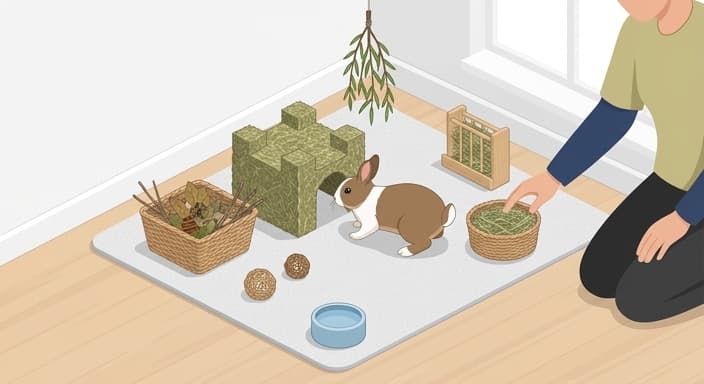
In the wild, a rabbit spends the majority of its active hours foraging. They are "trickle feeders," meaning they are biologically programmed to graze constantly on small amounts of fiber-rich vegetation. When we dump a bowl of pellets twice a day, we are ignoring this evolutionary rhythm. Foraging enrichment is one of the most effective ways to reduce anxiety and prevent obesity, as it forces the rabbit to work for its meals, mimicking the mental engagement required in a natural habitat.
Consider using puzzle feeders or "snuffle mats" designed for small animals, or simply scattering high-quality hay throughout their enclosure to encourage movement. You can also construct DIY foraging towers using empty cardboard toilet paper rolls stuffed with dried herbs and orchard grass. By turning a meal into a problem-solving exercise, we effectively double the time a rabbit spends engaged in positive, stimulating behavior. This mental work acts as a natural sedative, helping to tire out the rabbit in a healthy way that promotes restful, deep sleep afterward.
The Necessity of Digging and Verticality
Rabbits are prolific diggers, a behavior rooted in the need to create burrows for safety and thermoregulation. In an apartment or house, this often manifests as scratching at carpets or digging into upholstery. To channel this energy safely, we must provide dedicated "digging boxes." A simple plastic storage bin filled with organic, pesticide-free potting soil, shredded plain paper, or even a deep layer of timothy hay can transform a frustrated rabbit into a content one.
Beyond horizontal activity, we must also address the need for verticality. While rabbits are not climbers in the feline sense, they are "sentinel" animals; they feel safest when they can survey their surroundings from an elevated position. Providing sturdy platforms, wooden step-stools, or cat-sized tunnels allows them to observe their environment with confidence. When a rabbit feels it has a secure vantage point, its baseline stress level drops significantly, allowing it to engage more fearlessly with the rest of the enrichment tools you have provided.

Clinical Considerations for Enrichment Safety
While the goal of enrichment is to maximize engagement, as a veterinarian, I must emphasize that safety protocols are non-negotiable. Every enrichment item must be evaluated for its "ingestion potential." For example, while cardboard is generally safe, avoid pieces with heavy inks, glossy coatings, or staples. Similarly, while cloth tunnels can be fun, they pose a significant gastrointestinal risk if the rabbit begins to consume the fabric fibers. Always inspect toys daily for signs of heavy wear or loose threads, and remove them immediately if they become compromised.
Furthermore, enrichment should be rotated. Rabbits are curious, but they are also creatures of habit who can become bored with the same items indefinitely. By cycling your enrichment tools—keeping some in storage and introducing "new" ones every week—you maintain a high level of novelty that keeps the rabbit’s brain actively engaged. This dynamic environment is the key to preventing the "caged-animal syndrome" and ensuring that your rabbit lives a life that is not just long, but truly vibrant and fulfilling.
Ultimately, the goal of indoor rabbit enrichment is to bridge the gap between their wild ancestral roots and the safety of our homes. By providing opportunities to chew, forage, dig, and explore, we empower our rabbits to live out their natural behaviors in a controlled, loving environment. Remember that each rabbit is an individual with unique preferences; some may prefer a complex maze of cardboard boxes, while others might find joy in a simple pile of orchard grass. Observe their choices, prioritize their safety, and continue to challenge their curious minds. Through this intentional approach to husbandry, we honor their wild spirit and ensure they thrive as cherished members of our families for years to come.
Common Questions
🤔
Frequently Asked Questions
Why is enrichment a clinical imperative for indoor rabbits?▼
Rabbits are highly intelligent, evolved to forage and solve problems; without adequate enrichment indoors, they can become bored, stressed, and develop behavioral and physiological problems such as gastrointestinal stasis or self-mutilation. Ethological stewardship emphasizes designing environments that fulfill instinctive needs, which can lower stress hormones and support digestive health. This approach is essential to prevent life-limiting conditions and promote overall well-being.
What materials are safe for chewing and why?▼
Safe chewing starts with choosing materials that resist splintering and avoid chemical hazards. Untreated kiln-dried woods like apple, pear, or willow provide durable dental wear without toxic exposure. Seagrass mats, untreated wicker, and compressed timothy hay structures offer satisfying tactile and destructive outlets that reduce veterinary emergencies. Always supervise the initial interaction to ensure the rabbit does not ingest large amounts of non-digestible material.
How can I create a foraging sanctuary at home?▼
Indoor enrichment should mimic a rabbit’s natural trickle-feeding behavior by providing constant access to forage rather than relying on a single pellet feeding time. Scatter hay, provide puzzle feeders, and hide forage in safe containers or around the enclosure to stimulate exploration and problem-solving. Rotate toys and foraging tasks to maintain novelty, while ensuring all materials are safe and easy to clean.
What signs indicate my rabbit needs more enrichment and how should I respond?▼
Watch for boredom- or stress-related behaviors such as pacing, cage aggression, repetitive overgrooming, or chewing inappropriate items. If these arise, assess whether there are sufficient outlets for chewing, digging, and exploration, and enrich the environment accordingly. Implement a plan to rotate stimuli, introduce new safe items gradually, and consult a veterinarian if behavioral or health concerns persist.