Blog5/6/2026
Functional Mushroom Supplements for Pet Wellness: Immune & Brain
6 mins Read
The Briefing
Quick takeaways for the curious
Functional mushroom varieties like Reishi, Turkey Tail, Lion's Mane, and Cordyceps offer more than basic nutrition by delivering bioactive compounds that modulate the immune system, support cognitive function, and help manage inflammation in pets.
Unlike culinary mushrooms, functional varieties contain higher concentrations of beta-glucans, triterpenes, and polysaccharides that act as biological response modifiers to support homeostasis.
Beta-glucans in these mushrooms can help balance the immune system, potentially aiding aging pets with immune exhaustion while avoiding autoimmune flare-ups.
Lion's Mane shows promise for cognitive longevity by supporting nerve growth factor production, which may help with age-related cognitive decline in dogs and cats.
Effective use of mushroom supplements hinges on quality, proper dosing, and veterinary guidance to ensure they complement other treatments and address individual health needs.
There is a persistent, outdated myth in the modern pet care community that the secret to a long, vibrant life for our companions lies solely in the quality of their kibble or the frequency of their walks. As a veterinarian consultant, I frequently speak with devoted pet parents who are searching for that "missing piece" to help their senior dog regain their spark or their anxious cat find a sense of calm, only to discover they have been overlooking the extraordinary, centuries-old potential of functional mushrooms. We are finally moving toward a more sophisticated, holistic standard of veterinary wellness that views mycotherapy—the use of medicinal mushrooms—not as a fringe "alternative" practice, but as a robust, science-backed approach to supporting the immune system, cognitive function, and inflammatory response in our beloved pets.
The Myco-Revolution: Understanding Functional Mushrooms vs. Culinary Varieties
To understand why functional mushrooms are gaining such traction in veterinary medicine, we must first distinguish between the mushrooms you might put in a salad and those categorized as "medicinal" or "functional." While common white button mushrooms offer basic nutrition, functional varieties—such as Reishi, Turkey Tail, Lion’s Mane, and Cordyceps—contain high concentrations of bioactive compounds like beta-glucans, triterpenes, and polysaccharides. These compounds act as biological response modifiers, meaning they help the body modulate its own systems rather than simply suppressing or forcing a reaction.
From a veterinary perspective, the magic of these fungi lies in their ability to support homeostasis. Whether it is the immunomodulating power of Turkey Tail, which has been studied for its potential in supporting canine patients with hemangiosarcoma, or the neuroprotective qualities of Lion’s Mane, these mushrooms provide a foundational layer of wellness that modern diets often lack. Unlike many synthetic supplements that act as "band-aids" for specific symptoms, functional mushrooms work systemically to bolster the internal terrain, making the body more resilient against the stressors of aging, environmental toxins, and chronic inflammation.
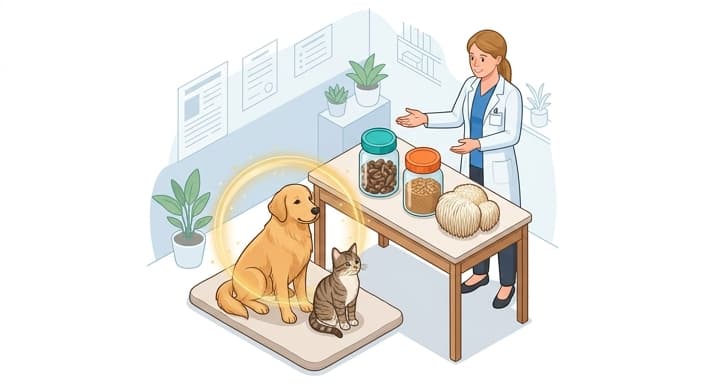
Targeting the Immune System: The Power of Beta-Glucans
The primary reason many veterinarians are now integrating mushrooms into treatment plans is their profound impact on the immune system. Many of our pets suffer from "immune exhaustion"—a state where the body is constantly fighting low-level inflammation or struggling with allergies, leaving the immune system either over-reactive or sluggish. Functional mushrooms, particularly Turkey Tail (Trametes versicolor) and Shiitake, are packed with beta-glucans. These complex sugars bind to immune cell receptors, effectively "waking up" the immune system to identify and neutralize threats more efficiently.
When I advise pet parents on immune support, I explain that we aren't trying to "boost" the immune system to the point of chaos (which could exacerbate autoimmune issues); we are trying to balance it. This is the hallmark of an adaptogen. If an immune system is suppressed, these mushrooms help stimulate it; if it is overactive (as seen in many skin-related allergies), they help regulate the inflammatory response. This makes them a versatile tool in the holistic medicine kit, particularly for aging pets whose immune responses have naturally begun to decline.
Cognitive Longevity and the "Lion’s Mane" Effect
One of the most heart-wrenching aspects of my clinical practice is watching a senior dog or cat succumb to the effects of cognitive decline. Symptoms like staring at walls, getting stuck in corners, or disrupted sleep-wake cycles are classic markers of canine or feline cognitive dysfunction. This is where Lion’s Mane (Hericium erinaceus) has truly changed the game. Research into this unique mushroom suggests it stimulates the production of Nerve Growth Factor (NGF), a protein essential for the maintenance and survival of neurons.
In practice, I have seen remarkable anecdotal improvements in pets placed on a consistent Lion’s Mane protocol. Owners often report that their senior pets seem "more present," more responsive to commands, and more interested in their environment. While it is not a cure for advanced neurological disease, using it as a preventative measure for middle-aged pets can be a powerful way to preserve cognitive health before the signs of aging become pronounced. When combined with omega-3 fatty acids, Lion’s Mane provides a dual-action strategy for keeping the brain sharp and the central nervous system firing correctly.

Energy, Stamina, and the Adaptogenic Advantage
Beyond immunity and brain health, we often look to mushrooms like Cordyceps (Cordyceps militaris) to support physical vitality. Cordyceps are famous in the athletic world for improving oxygen utilization and ATP production, which is the cellular "currency" of energy. For the active dog who loves long hikes, or the pet recovering from a period of illness, Cordyceps can provide a natural, sustained energy boost without the jittery side effects of stimulants.
From a clinical standpoint, I emphasize that "energy" is not just about running faster; it is about metabolic efficiency. By supporting the mitochondria—the powerhouse of the cell—Cordyceps helps the body recover from exercise more effectively and minimizes the oxidative stress that leads to muscle fatigue. If your dog is struggling to keep up during weekend adventures, or if your cat is becoming lethargic, integrating a high-quality, whole-mushroom extract can often be the missing link in restoring their natural zest for life.
Quality Control: How to Choose the Right Supplement
As with any supplement industry, the "functional mushroom" market is flooded with products of varying quality. Not all mushroom powders are created equal, and as a veterinarian, I urge you to be a discerning consumer. Many low-quality supplements on the market are actually just mycelium grown on grain, meaning the product is mostly starch (filler) and contains very little of the actual beneficial fungal compounds.
When shopping for your pet, look for these three key indicators of quality:
- Fruiting Body vs. Mycelium: Ensure the product is made from the "fruiting body" of the mushroom—the actual cap and stem—which contains the highest concentration of beta-glucans and triterpenes.
- Third-Party Testing: Look for brands that provide a Certificate of Analysis (COA) confirming the product is free from heavy metals, pesticides, and mold.
- Extraction Method: Because the medicinal compounds are locked inside a tough, woody cell wall called chitin, the mushroom must be "double-extracted" (using both hot water and alcohol) to make these compounds bioavailable for your pet’s digestive system. If the label doesn't specify an extraction process, your pet is likely passing most of the nutrients through undigested.
Always consult your primary veterinarian before adding a new supplement to your pet's regimen, especially if they are currently on medication for heart or immune-related conditions. While functional mushrooms are incredibly safe, their potential to interact with certain pharmaceuticals means a quick "vet-check" is always the smartest first step.
The integration of functional mushrooms into our pets' lives represents a shift toward a more proactive, nature-aligned approach to veterinary care. By harnessing the power of these ancient fungi—whether for immune modulation, cognitive support, or physical vitality—we are providing our dogs and cats with the tools they need to navigate the stressors of the modern world with resilience and grace. When we treat the body as a whole, focusing on the quality of their internal terrain, we move beyond merely treating illness and toward a life of vibrant, sustained wellness for our best friends.
Common Questions
🤔
Frequently Asked Questions
What are functional mushrooms and how do they differ from culinary mushrooms?▼
Functional mushrooms refer to medicinal varieties such as Reishi, Turkey Tail, Lion's Mane, and Cordyceps that contain higher concentrations of bioactive compounds like beta-glucans and polysaccharides. These compounds act as immune modulators and support cognitive and inflammatory responses, rather than simply providing basic nutrition. In contrast, culinary mushrooms are primarily consumed for flavor and general nutrition with far lower levels of these medicinal constituents. For pets, functional mushrooms are used as part of a holistic wellness approach under veterinary guidance.
How do beta-glucans in functional mushrooms support a pet's immune system?▼
Beta-glucans are complex sugars that bind to receptors on immune cells, helping to modulate and balance immune activity rather to the point of chaos or suppression. They can help awaken the immune system to recognize threats more efficiently while also dampening excessive inflammation when needed. This adaptogenic effect can be particularly helpful in aging pets with chronic inflammation or allergies, and should be used as part of a broader treatment plan supervised by a veterinarian.
Can functional mushrooms help with cognitive aging in pets?▼
There is evidence suggesting Lion's Mane may stimulate nerve growth factor production, a protein important for neuronal health, which could support cognitive function in aging pets. While exciting, these effects are still being explored in veterinary contexts, and results can vary between individuals. Functional mushrooms should be considered as a complementary tool within a comprehensive care plan.
How should owners incorporate functional mushroom supplements safely?▼
Prioritize high-quality, veterinary-grade products and follow dosing guidelines provided by a veterinarian or the product manufacturer. Start with a low dose and monitor for any adverse reactions, such as GI upset or changes in skin or energy, and discontinue if concerns arise. Do not replace prescribed medications or treatments; discuss timing and integration with your veterinarian to ensure compatibility with existing therapies and the pet’s health status.