Blog5/17/2026
Eco-Friendly Enrichment Toys for Dogs: Sustainable Play
6 mins Read
The Briefing
Quick takeaways for the curious
Enrichment is a fundamental requirement for a dog’s neurocognitive health and behavioral stability, not a disposable distraction.
A shift toward ecological toy stewardship filters play objects through sustainability and sensory engagement, addressing boredom-induced issues.
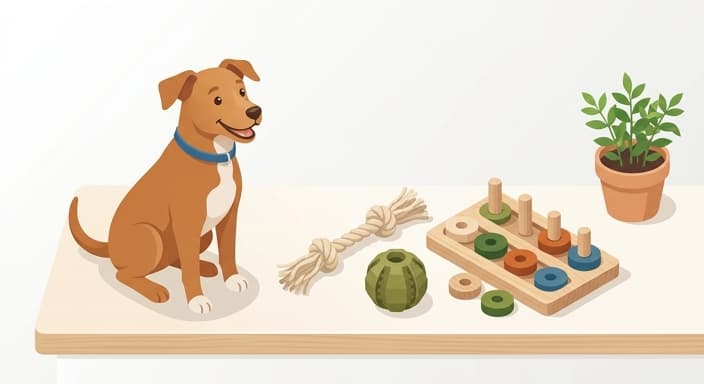
Eco-friendly enrichment toys made from natural rubber, organic hemp, or sustainably harvested wood offer a distinct sensory profile that supports foraging, problem-solving, and tactile exploration.
These materials provide scents and textures closer to a dog’s natural prey, reducing frustration and destructive behavior while avoiding microplastic ingestion.
Choosing non-toxic, durable, and responsibly sourced toys minimizes chemical exposure and environmental waste, making play both healthier for dogs and the planet.
There is a pervasive misconception among modern pet owners that dog toys are merely disposable distractions designed to keep a canine occupied while we work, often overlooking the biological reality that enrichment is a fundamental requirement for neurocognitive health and behavioral stability. As a veterinarian consultant, I frequently see patients presenting with "boredom-induced maladaptive syndromes"—ranging from chronic destructive chewing and separation anxiety to compulsive repetitive behaviors—and I have found that the most significant advancement in canine enrichment is the shift toward "ecological toy stewardship," where the objects we provide are filtered through a lens of sustainability and sensory engagement rather than cheap, synthetic convenience.
We are moving away from the outdated notion that a dog’s need for play is satisfied by mass-produced plastic trinkets destined for the landfill, and toward a comprehensive understanding of the canine’s ancestral need for foraging, problem-solving, and tactile exploration. True wellness for a dog is not just about balanced nutrition or routine physical exams; it is about recognizing that the environment we curate for their play is a primary lever for long-term mental health and that the transition to eco-friendly, durable, and non-toxic enrichment tools is the most effective way to eliminate the common, life-limiting consequences of synthetic chemical exposure and environmental waste.
The Ethology of Enrichment and Sensory Engagement
To understand why eco-friendly enrichment is a clinical imperative, we must first recognize the physiological reality of the canine brain. Dogs are evolutionary opportunists whose ancestors spent the vast majority of their waking hours engaged in the "foraging loop"—a complex sequence of sniffing, tracking, identifying, and manipulating objects to secure sustenance. When we provide a dog with a mass-produced, scentless, and static synthetic toy, we are effectively bypassing this neurological hardwiring. This leads to a state of "sensory deficit," where the dog remains physically restless despite having a toy in their mouth.
Eco-friendly enrichment toys, particularly those crafted from natural rubber, organic hemp, or sustainably harvested wood, offer a distinct sensory profile. Natural materials hold scents differently than petroleum-based plastics, providing the olfactory feedback that is crucial for canine engagement. Furthermore, these materials often possess a unique texture that mimics the resistance of natural prey, satisfying the dog's innate instinct to chew and manipulate without the risk of microplastic ingestion. By choosing toys that align with their evolutionary biology, we reduce the frustration that manifests as destructive household behavior and promote a state of "flow" that is essential for a calm, well-adjusted pet.
The Hidden Risks of Conventional Plastic Toys
Many conventional dog toys are manufactured using questionable polymers, phthalates, and heavy metals that can leach into a dog’s saliva during prolonged chewing. As a veterinarian, I have treated numerous cases of stomatitis and gastrointestinal inflammation that can be traced back to the mechanical abrasion of cheap, low-grade plastic toys. When a dog shreds a synthetic toy, they are not only creating litter that will sit in a landfill for centuries, but they are also at high risk of ingesting jagged fragments that can cause intestinal blockages or lacerations.
Transitioning to eco-friendly alternatives is not just an act of environmental preservation; it is a clinical strategy for harm reduction. Natural rubber (hevea) is non-toxic, biodegradable, and remarkably resilient. Unlike synthetic rubber or plastic, it does not become brittle when exposed to sunlight or extreme temperatures, and it offers a "give" that is much kinder to a dog’s developing or aging teeth. When we prioritize materials that are certified non-toxic and sustainably sourced, we are creating a protective barrier between our pets and the chemical pollutants that are becoming increasingly prevalent in the companion animal industry.

Implementing Foraging-Based Enrichment Strategies
The pinnacle of canine enrichment is the integration of food-based problem-solving. In the wild, dogs do not receive their calories from a stationary bowl; they earn them. Using eco-friendly snuffle mats made from organic cotton or natural rubber puzzle feeders encourages a dog to utilize their olfactory bulbs and problem-solving cortex. This "mental exhaustion" is far more effective at calming a hyperactive dog than an hour of repetitive fetch.
From a clinical perspective, I often recommend "scavenger-style" feeding to clients managing dogs with weight-related issues or metabolic instability. By slowing the pace of ingestion through natural, sustainable puzzle toys, we allow the satiety signals to reach the brain at the appropriate physiological interval. This simple shift—moving from a bowl to an eco-friendly enrichment device—can mitigate the risk of bloat, improve digestion, and provide a sense of accomplishment that is vital for a dog’s self-esteem. When selecting these devices, look for manufacturers that prioritize circularity—brands that use recycled materials or offer take-back programs—as these companies typically maintain higher safety standards for their raw materials.
Sustainable Material Selection: A Guide for Pet Parents
When shopping for toys, the term "eco-friendly" can often be used as a marketing veneer. To ensure you are making a truly beneficial choice for your dog and the planet, you must look beyond the packaging. Hemp is a stellar choice for tug toys; it is naturally antimicrobial, requires very little water to grow, and is incredibly strong. It provides the necessary friction to help clean teeth while remaining completely biodegradable at the end of its life cycle.
For dogs that are "power chewers," natural, sustainably sourced wood (such as coffee wood or olive wood) is often superior to antler, which can be far too hard and cause slab fractures of the carnassial teeth. Natural wood provides a satisfying crunch and can be safely ingested in small, fibrous amounts, unlike plastic shards. Always ensure that the wood is sourced from sustainable forestry practices to avoid contributing to deforestation. By curating a rotation of these natural toys, you provide the cognitive variety your dog craves while minimizing your household's ecological footprint.

The Long-Term Impact of Mindful Play
The cumulative effect of choosing sustainable, enrichment-focused toys is a dog that is not only physically healthy but psychologically resilient. When we move away from the "disposable" mindset, we foster a deeper connection with our pets. We begin to observe their preferences, their problem-solving styles, and their distinct personalities. This observation is the cornerstone of preventative veterinary care; by knowing your dog’s "normal" play behavior, you are much more likely to notice the subtle behavioral changes that might indicate early-stage pain or illness.
Furthermore, by reducing the influx of non-recyclable plastic into our homes, we contribute to a cleaner environment, which indirectly benefits the health of all animals. Every time you choose a toy made from natural rubber or organic fibers over a mass-produced plastic alternative, you are casting a vote for a more sustainable industry. As the demand for high-quality, eco-conscious pet products grows, manufacturers are incentivized to move away from toxic chemicals and unsustainable manufacturing processes, ultimately making the pet industry safer for everyone.
Conclusion: A Holistic Approach to Canine Wellness
Enrichment is not an optional luxury or a way to keep a dog "busy" while we are occupied; it is a clinical necessity for the healthy functioning of the canine brain. By intentionally selecting eco-friendly toys that respect the evolutionary history of our companions, we provide them with the sensory, cognitive, and physical stimulation they need to thrive. As pet owners, we serve as the gatekeepers of our dogs' environments. By choosing sustainable materials, we are making a commitment to their long-term health and the preservation of the world we share with them. True wellness is a cycle—one that begins with a thoughtful choice in the pet aisle and ends with a calm, fulfilled, and healthy dog at our side.
Common Questions
🤔
Frequently Asked Questions
What makes eco-friendly enrichment toys different from conventional plastic toys?▼
Eco-friendly toys use natural materials like natural rubber, organic hemp, and sustainably harvested wood, offering scents and textures that engage the canine olfactory system and chewing instincts. They are typically non-toxic and more durable than cheap plastics. By aligning with dogs' evolutionary foraging behavior, these toys can reduce boredom and destructive behaviors. They promote sensory-rich play that supports mental health.
Are there health risks associated with traditional plastic dog toys?▼
Yes. Many plastics contain polymers, phthalates, and heavy metals that can leach into saliva during chewing. Chewing on low-quality plastics can contribute to stomatitis and gastrointestinal inflammation. If fragments are swallowed, there is a risk of blockages or lacerations. Eco-friendly options reduce exposure to these hazards.
How can I transition my dog to eco-friendly enrichment toys?▼
Begin by replacing a few plastic items with certified non-toxic, natural-material toys. Introduce scent and varied textures gradually to match your dog's foraging instincts. Supervise early play to ensure safe use and avoid toy failure. Rotate toys to maintain novelty and engagement.
How do I evaluate safety and sustainability when selecting toys?▼
Look for non-toxic certifications and evidence of sustainably sourced materials. Avoid toys with small detachable parts that could be swallowed. Choose durable designs that resist tearing and microplastic shedding. Support brands that disclose sourcing and manufacturing practices.