Blog5/9/2026
Aquascaping Basics for a Healthy Planted Tank: Balance & Growth
6 mins Read
The Briefing
Quick takeaways for the curious
A healthy planted tank is a complex, living ecosystem that balances chemistry, botany, and microbiology rather than simply providing water and light.
Common problems like new tank syndrome and algae are often caused by misunderstandings of the nitrogen cycle and how fish waste interacts with plant growth.
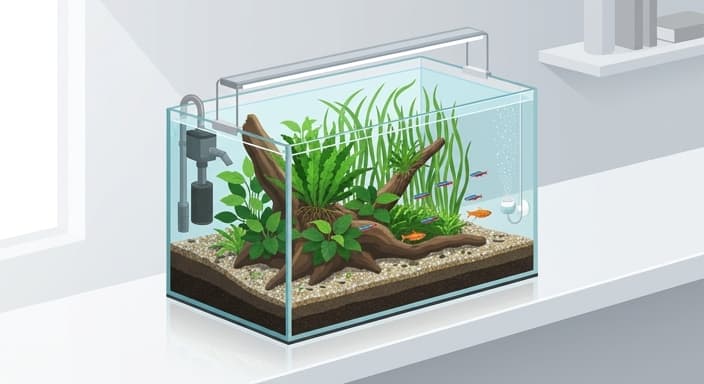
Aquascaping should be viewed as environmental stewardship, aiming for a self-regulating habitat that mimics natural filtration and oxygenation rather than just aesthetics.
Plants are the heart of the biological engine; they absorb ammonia, nitrites, and nitrates, provide shelter for beneficial bacteria, and their health serves as an early warning system for imbalances.
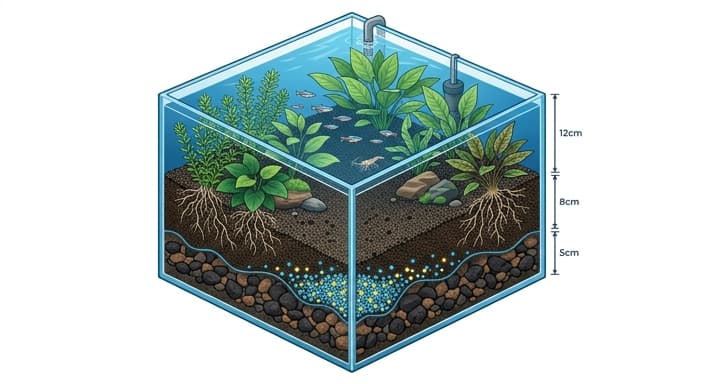
Substrate matters most: use a nutrient-rich, specialized aquarium soil for heavy feeders, because roots take up nutrients and the porous substrate hosts beneficial bacteria.
There is a pervasive misconception among aquarium enthusiasts that a planted tank is merely a decorative centerpiece requiring little more than water and light, often overlooking the biological reality that a healthy aquascape is a complex, living ecosystem that demands a delicate balance of chemistry, botany, and microbiology. As a veterinarian consultant who specializes in the intersection of aquatic health and environmental stability, I frequently see "new tank syndrome" or algae-choked systems that stem from a fundamental misunderstanding of the symbiotic relationship between plant life, fish waste, and the nitrogen cycle.
We are moving away from the outdated notion that a planted tank is just "plants in gravel" and toward a more comprehensive understanding of aquascaping as a form of environmental stewardship. True wellness for your aquatic inhabitants is not just about keeping the water clear; it is about creating a thriving, self-regulating habitat that mimics the natural filtration and oxygenation processes found in the wild.
The Biological Engine: Why Plants Are the Heart of Your Tank
To understand why plants are vital, we must look at the way a closed ecosystem processes waste. In a standard aquarium, fish produce ammonia through respiration and waste—a substance that is highly toxic to them. In a healthy planted tank, however, aquatic plants act as the primary biological scrubbers. They absorb ammonia, nitrites, and nitrates as nutrients, effectively "breathing" the waste that would otherwise compromise the health of your fish.
When we integrate live plants, we are essentially outsourcing the heavy lifting of water filtration to the flora. A well-planted tank provides more than just aesthetic beauty; it provides shelter for shy fish, grazing surfaces for beneficial bacteria, and a constant supply of oxygen. When your plants are thriving, they become the most reliable indicators of your tank's health—if your flora is wilting, your water chemistry is likely out of balance, providing you with a biological early-warning system before your fish begin to show symptoms of stress.
Mastering the Substrate: The Foundation of Growth
Many beginners treat substrate as an afterthought, opting for inert decorative pebbles that offer no nutritional value to their plants. In my experience, the substrate is the most critical component of a planted tank’s long-term success. Plants draw the vast majority of their nutrients through their roots, not just their leaves. If you are keeping "heavy feeders" like Cryptocoryne or Amazon swords, an inert gravel bed is essentially a nutritional desert.
I recommend using a specialized, nutrient-rich aquarium soil specifically designed for planted tanks. These substrates are baked or processed to hold onto essential macro and micronutrients, providing a slow-release "buffet" for your plant roots. Furthermore, these substrates are often porous, which creates a massive surface area for beneficial bacteria to colonize. This bacterial colony is the unsung hero of your tank, working around the clock to break down organic debris and keep the ecosystem stable.
Light, CO2, and the Balance of Photosynthesis
The most common point of frustration for the novice aquascaper is the dreaded "algae bloom." It is a pervasive myth that algae is simply a sign of a "dirty" tank. In reality, algae is almost always a sign of an imbalance in light or nutrient availability. Plants require three primary inputs to photosynthesize: light, carbon dioxide (CO2), and nutrients. If your lighting is too intense for the amount of CO2 available, your plants will effectively "stall," and the resulting surplus of light will fuel an explosion of opportunistic algae.
For beginners, I advocate for the "Low-Tech" approach: low-to-medium lighting combined with slow-growing, hardy plants like Anubias, Java Fern, and Vallisneria. By keeping your lighting duration limited to 6–8 hours per day and avoiding the temptation to over-fertilize, you keep the ecosystem in a state of equilibrium. If you choose to venture into "High-Tech" aquascaping, which involves high-intensity lighting and pressurized CO2 injection, you must be prepared to match that input with a rigorous fertilization schedule and weekly water changes. The key is consistency; sudden changes in light or nutrients are the primary stressors that trigger plant decay and algae growth.
Selecting Your Flora: Matching Needs to Environment
When choosing plants for your aquascape, it is tempting to pick based purely on color and size. However, as a professional, I urge you to think like a gardener. You wouldn't plant a cactus in a swamp, and you shouldn't plant a high-light, nutrient-hungry stem plant in a low-tech tank with standard gravel.
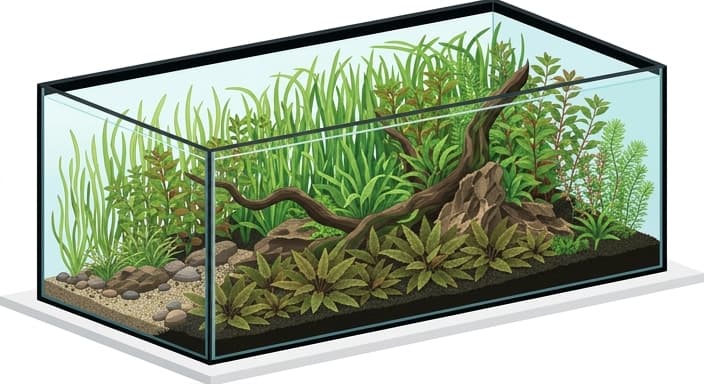
Start by categorizing your plants into three zones: foreground, midground, and background. Foreground plants, like Eleocharis (hairgrass) or Glossostigma, are typically the most demanding and often require high light and regular trimming. Midground plants, such as Cryptocoryne wendtii, are generally hardy and offer excellent structural diversity. Background plants, like Ludwigia or Vallisneria, grow tall and provide the "curtain" that gives your tank depth and perspective. By selecting species that share similar environmental requirements, you simplify your maintenance routine and ensure that one species does not outcompete the others for resources.
Maintenance as Preventative Medicine
In the veterinary world, we often say that "prevention is better than cure," and this holds doubly true for aquascaping. A planted tank should not require daily intervention if it is set up correctly, but it does require a disciplined weekly rhythm. This routine should include a 25% to 50% water change, which serves to remove excess minerals and reset the nutrient balance in the water column.
During your weekly maintenance, take the time to prune yellowing or decaying leaves. Dead plant matter is a primary source of ammonia spikes and can quickly lead to an outbreak of fungi or bacteria that may impact the health of your fish. Furthermore, use this time to check your filter intake and ensure that your flow patterns are not creating "dead spots" where detritus can settle. A healthy tank is a clean tank, and the discipline of weekly maintenance is the single most important factor in preventing disease and ensuring your plants remain vibrant and strong.
The Holistic Approach to Aquatic Wellness
Ultimately, the goal of aquascaping is not to create a static display, but to foster a dynamic, healthy environment where your livestock and flora can thrive in tandem. When you provide the right substrate, manage your light and CO2 levels with care, and maintain a consistent schedule of water changes, you move beyond mere decoration. You become the architect of a living, breathing world. Remember that a planted tank is a long-term commitment; it will evolve over time, and your ability to observe and respond to those changes is what separates a novice from a true master of the hobby. By focusing on the biological needs of your tank, you ensure a serene, beautiful, and sustainable home for your aquatic companions for years to come.
Common Questions
🤔
Frequently Asked Questions
What makes a planted tank more than just 'plants in gravel'?▼
A planted tank is a living ecosystem, not a static display. It relies on the nitrogen cycle and the daily interactions between plants, fish waste, and bacteria to process waste and stabilize water quality. When plants thrive, they function as the primary biological scrubbers, removing ammonia, nitrites, and nitrates from the water. This self-regulating balance reduces stress on fish and creates a more resilient aquarium overall.
Why is substrate so important for plant growth?▼
Plants feed primarily through their roots, so the substrate must supply macro and micronutrients. A nutrient-rich soil designed for planted tanks provides slow-release nutrition and a large surface area for beneficial bacteria. Inert gravel offers little nutritional support, which can leave heavy feeders like Cryptocoryne or Amazon swords undernourished. Choosing the right substrate is foundational for long-term plant health and tank stability.
How do light, CO2, and nutrients interact to prevent algae?▼
Algae blooms are usually a symptom of an imbalance between light and nutrients. If lighting is too intense for the amount of CO2 and fertilizers available, plants stall and algae can proliferate on surplus light. A balanced, low-tech approach uses modest lighting with slow-growing species and careful monitoring of carbon dioxide and nutrient inputs. Regular maintenance and plant health are the best defense against recurring algae.
What is a good beginner setup for a low-tech planted tank?▼
For beginners, a low-tech planted tank means low-to-medium lighting, 6–8 hours of exposure, and hardy plants like Anubias, Java Fern, and Vallisneria. Use a nutrient-rich substrate designed for planted tanks rather than inert gravel, so roots have access to slow-release minerals. Start with simple fertilizer regimens and avoid overstocking fish to keep nutrient levels in balance. With stable water parameters and healthy plant growth, you’ll enjoy a resilient, visually pleasing aquascape.